

Revive Rusty And Worn-Out Garden Tools With A Common Pantry Staple
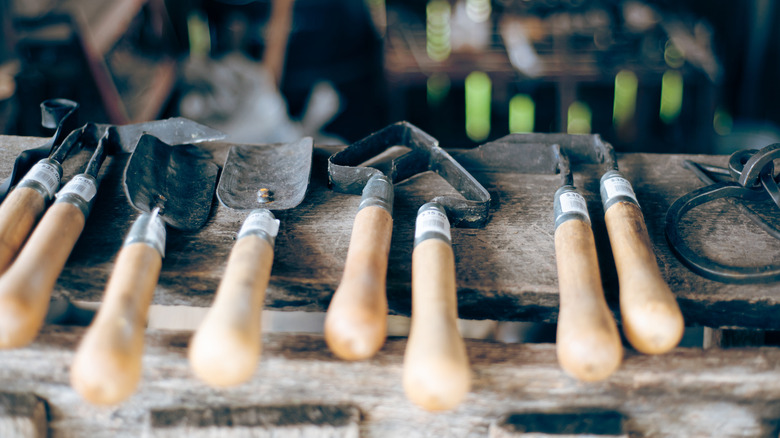
If your essential gardening tools are speckled with rust spots and are starting to look dull and aged, you're facing a common woe. Even if you take excellent care of your gardening tools, rust can happen. Formed when iron, oxygen, and moisture mingle together, rust can appear on the metal surfaces of your trowels, weeders, and hand forks over time. This is thanks to all of the damp soil and minerals you're working with in your yard and planters. And in addition to making your go-to gardening tools look less than their best, those rust spots can grow over time. But there's a common pantry staple you can reach for that'll stop rust in its tracks and revive your old tools: ketchup.
Ketchup might be one of the most popular condiments around and a pantry food you should always have on hand, but it's also a surprisingly effective rust-eliminating solution. This bold red, tomato-based sauce can make rust disappear, and it's all thanks to ketchup's acidic nature. Tomatoes, the main ingredient in ketchup, have citric acid while vinegar (a key ketchup ingredient) adds acetic acid; both of these acids can loosen surface-level rust. Acids in general will work as handy household rust removers, and vinegar itself is often recommended for small tools thanks to its acidity. Ketchup is something of the perfect combination of acidic ingredients, making it a great choice to reach for if your gardening tools are looking rusty and not-so-shiny.
Ketchup can take care of surface-level rust
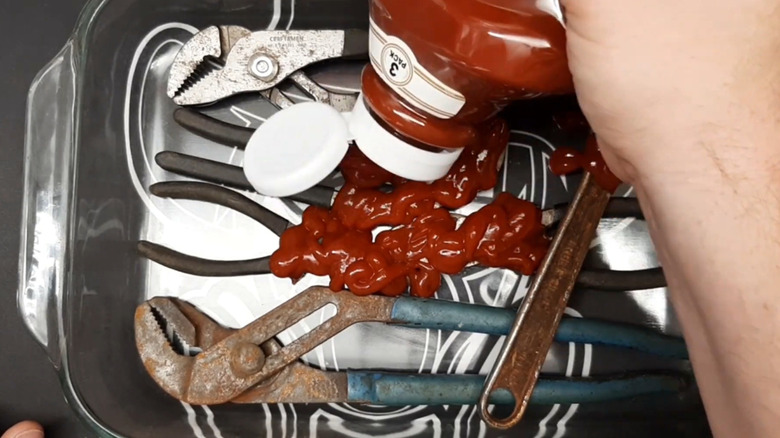
When you're ready to make those rust spots on your go-to gardening tools disappear, it's an easy process. Grab the ketchup you have hanging out in your pantry (any ketchup will do; you don't need a special formula) and lay your tools out. Apply a layer of the condiment to any areas of rust, or, if you want a more all-encompassing treatment, you can slather ketchup over the entirety of the metal surface. Let the ketchup sit for 15 minutes or, if you want to "soak" your tools longer, you can let it sit overnight for 24 hours. Larger tools or bigger rust spots may require extra time. In any case, you may be able to see a visible change in the ketchup once it starts dissolving rust; its bright red color may start to turn brown and muddy. Finish by gently wiping or scrubbing the tools with a toothbrush or cloth, then a final rinse and dry.
It's important to note that ketchup is best used for small spots of surface-level rust stains. If your rust stains don't disappear after wiping away the ketchup and washing your tools, you can try something abrasive like sandpaper to scrub them away. However, if you're dealing with a significant amount of rust, odds are you'll need something tougher to remove every last speck of rust. And if rust has caused damage like pitted surfaces, brittle metal, or areas of weakness (if your metal bends, that's a bad sign!), you will likely need to replace your overly-oxidized tools.