

Sprinkle This Around Door And Window Frames To Keep Ants Out Of Your Home
We may receive a commission on purchases made from links.
Ants have plenty of good qualities, including persistence and the ability to work together to survive, but those very qualities make them a pain to have around the house. If there's even a tiny opening to allow them into the house, a scout will find it and quickly spread the word, and the next thing you know, you've got a full-on infestation. Once that happens, it's much harder to get rid of ants than it would be if you'd managed to keep them out in the first place. But it turns out there's a safe way to keep ants out (safe for humans and pets — not for ants). You can create a barrier using a natural product that has long been a staple for garden pest control — diatomaceous earth, or DE for short.
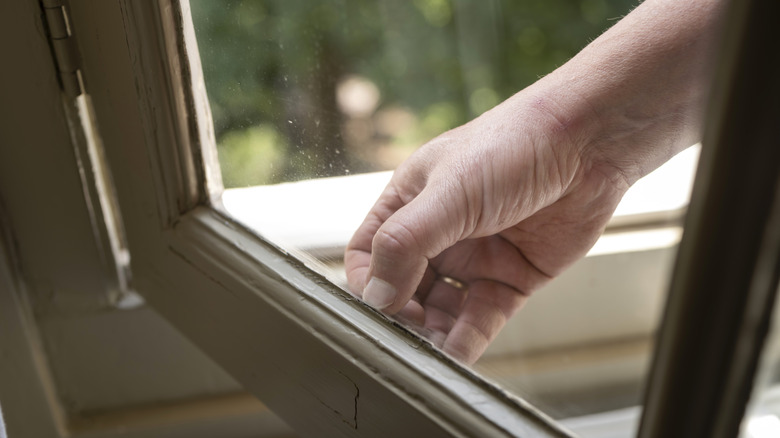
You could try to seal your home against these marauders, but you might find yourself fighting a losing battle. Some species are so small they can squeeze their way through microscopic cracks, and even if you manage to completely seal the foundation, they can still enter through gaps in door and window frames. This is why diatomaceous earth is an effective strategy, establishing a barrier the ants can't cross.
What Is diatomaceous earth, how does it work, and is it safe?

Diatomaceous earth is mined from the earth, but it's actually the skeletal remains of tiny aquatic organisms called diatoms. Over millennia, these have collected in stream and river beds, lake bottoms, and ocean floors that have since dried out. The first DE pesticide products came on the market in 1960, and today you can find DE powder at any garden center. A four-pound bag of Safer Brand Crawling Insect Killer Dust costs $17.99 at Ace Hardware.
While not a chemical pesticide, DE is deadly to ants, as well as other insects with a hard exoskeleton, such as bedbugs, fleas, and even cockroaches and beetles. It isn't a poison, so you don't have to entice insects to ingest it by baiting them, and it isn't a mere repellent, like cinnamon, cloves, or lemon peels. It gets rid of ants fast by lacerating the exoskeletons of any that come into contact with it. They shrivel up and die.
Food grade DE is generally harmless to humans and animals and is in fact an ingredient in many toothpastes, foods, beverages, and even medicines. It can, however, irritate the skin and eyes, and inhaling it may cause soreness in the nose and nasal cavities. Because it's a fine powder, there's a good chance of contact when you spread it outside on a breezy day, so sensitive people should wear protective clothing, eye protection, and a mask.
How to make a protective ant barrier with DE
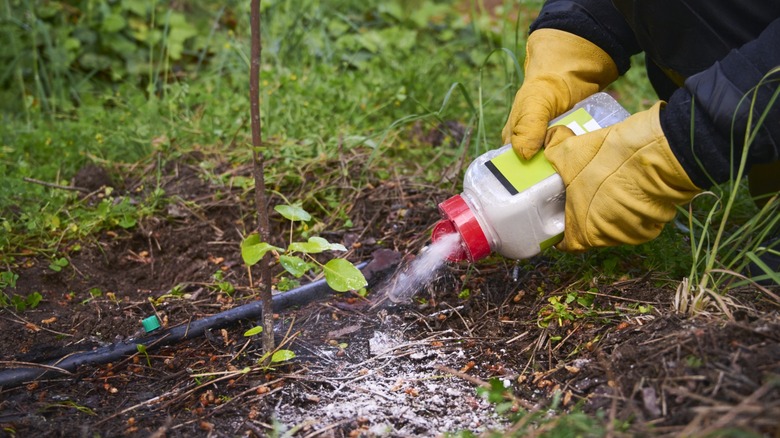
Diatomaceous earth is just one of many natural control remedies to keep the bugs at bay, but it's one of the most effective ones for ants if you use it correctly. You can spread it indoors or out to create a barrier, but the barrier should be unbroken, so the ants can't find a way through. It's also important to remember that it only works if it stays dry, so if you spread it on wet ground or in a moist place in your house, it won't do much good.
Start indoors by sprinkling or squeezing DE from a dusting applicator (like this Diatomaceous Earth Powder Duster Applicator from Home Depot) around places where you see ant activity. Use a feather duster to get the powder where you want it. If ants are coming in underneath a door or through a gap in a window frame, that's a good place to create a barrier, but keep in mind you may have to refresh it whenever someone disturbs it by opening the door or window. You can also go outside and spread the powder along your foundation. If you do that, the barrier should be from six to 12 inches wide. Watch for activity around the areas where you spread the DE and keep replenishing the barrier until the ants have gone away. At that point, you can clean up the powder and wash down the surfaces.