

What A Little Bit Of Cinnamon Could Do For Your Indoor Plants
We may receive a commission on purchases made from links.
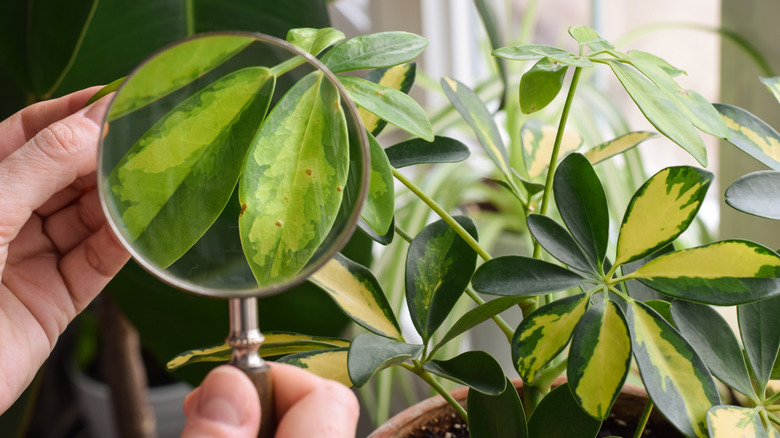
If your indoor plant is looking a little worse for wear, with wilting, spotted leaves, or withering buds, you may have a pest problem. Common plant pests like mealybugs, aphids, fungus gnats, and thrips can wreak havoc on your greenery. There are plenty of ways to manage indoor plant pests, from chemical insecticides to less toxic substances like neem oil, but to keep your healthy plants from getting hit by a new infestation, you can reach for something that's probably sitting in your pantry- cinnamon. This popular spice is a natural deterrent to many types of indoor plant pests.
Many gardeners use cinnamon in outside garden beds to keep pests at bay, and this spice will do the same for your indoor plants. Cinnamon has a strong scent that discourages pests from setting up shop on indoor plants, and its chemical components, like cinnamaldehyde, can act as a pesticide and can even prevent egg-laying. The use of cinnamon on plants is largely preventative, although in some cases it can kill pests you already have. For example, one study found that concentrated cinnamon oil was highly effective at killing thrips when applied directly to them in a lab study. Cinnamon has an added benefit of being anti-fungal, meaning its use in your plant soil can help reduce fungus that some pests thrive on.
How to apply cinnamon for best results
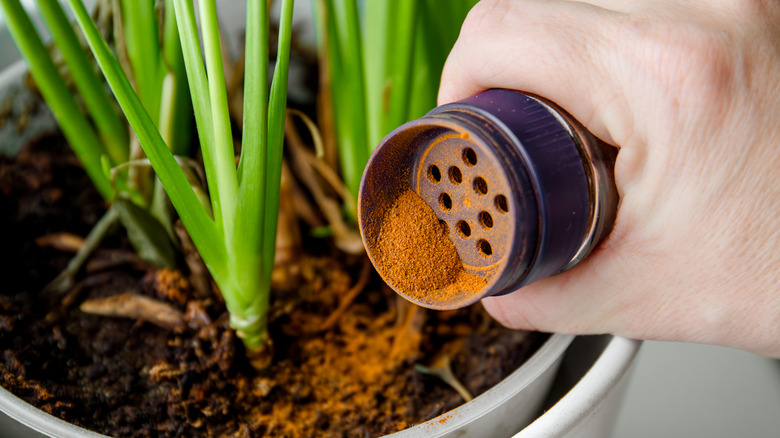
There are two main ways to apply cinnamon to your indoor plants to keep common indoor plant pests away. The first is to simply sprinkle a light layer of cinnamon powder on the surface of your plant's soil, about every two weeks. While this won't kill existing infestations, it will prevent new ones and may inhibit fungus and mold growth. YouTuber Sheffield Made Plants notes that you should buy pure cinnamon powder for this purpose, which is more concentrated than what you might find in a supermarket spice aisle. But don't sprinkle too much cinnamon, because when it gets wet it could actually grow mold.
If you have pests like thrips sucking on your leaves, you can spray your leaves with a mist of diluted cinnamon in water. Plant experts recommend a ratio of about one teaspoon per four cups of warm water, then straining it before use. If you use cinnamon oil, be careful to dilute it as well, or it could burn your leaves.