

The Pantry Staple That Can Kill The Moss Growing In Your Sidewalk Cracks
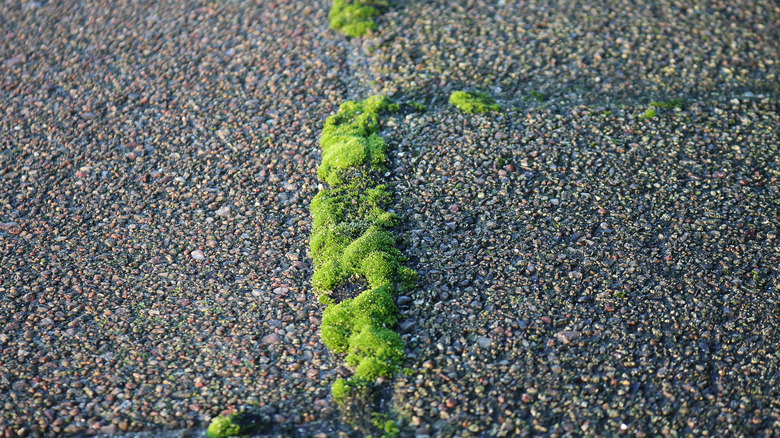
Moss is a common issue around homes, particularly after frequent rain. Known for its preference for coolness, moisture, and shade, this plant can quickly become a nuisance if it starts growing on driveways, roofs, patios, and even walkways. Physical control via sweeping and brushing is normally the best way to manage moss before it grows into a larger problem. Even if you've removed moss from sidewalks for aesthetic and safety purposes, it's common to see remnants still growing in between the cracks. Before buying chemical mossicide products, a cheaper and less toxic solution may already be in your pantry: baking soda.
Just when you thought that baking soda couldn't have any other home-improvement uses, it turns out that this relatively inexpensive product may help with small areas of moss control. This is particularly helpful in cases of sidewalk cracks, where the plant can sneakily thrive in these small areas and cause a slipping hazard.
There are many ways you never thought to use baking soda, and getting rid of moss is one of them. Once moss ceases its growing process, it's then possible to remove the plant from stubborn surfaces such as cracks and crevices. Furthermore, baking soda is arguably a less-smelly option compared to other "natural" moss control methods such as killing moss with white vinegar.
How to use baking soda to control moss in sidewalk cracks
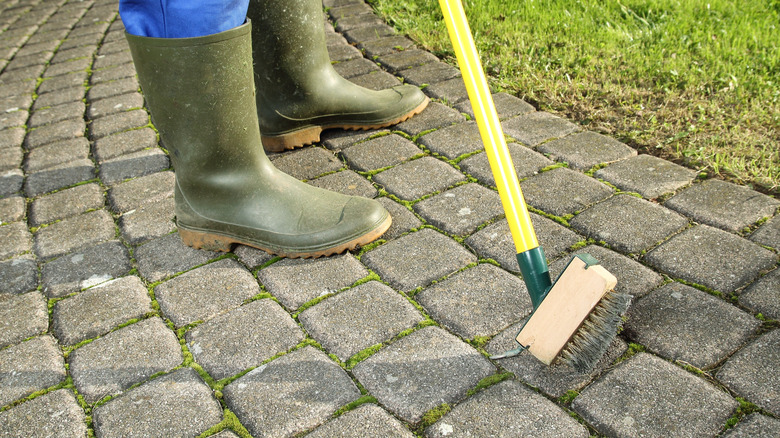
There are two main ways you can use baking soda for moss removal in your sidewalk cracks. The first is relatively straightforward — simply shake out a generous amount of product from a box or bag of baking soda directly onto the sidewalk cracks. Allow the product to sit for a couple of days and then brush it away with a hard-bristled broom or hand-held brush.
The second method involves creating your own sort of natural mossicide spray product. Angi recommends using a large spray bottle with 1 teaspoon of baking soda in 2 cups warm water, and then spraying it onto the moss directly. Ensure that you allow the baking soda-water mixture to coat the moss entirely and allow it to sit for at least several hours. As with sprinkling baking soda powder over the moss directly, you will still need to try to brush away the moss. Be sure to rinse off the sidewalk of all baking soda and moss residue when complete, and repeat as necessary.
It's also worth looking at your upcoming weather forecast before using either of these methods to get rid of moss from sidewalk cracks. Any forecasted rain can wash away the powder or spray bottle solution before it gets an opportunity to take hold. Also, sprinkling dry baking soda powder may not be the best idea on a particularly windy day.
Potential drawbacks to using baking soda for moss control
Baking soda can indeed help to treat moss in those trickier spots along a sidewalk, but it's not a cure-all. For the best results, consider combining this baking soda technique with other methods of moss control, such as reduced shade and water exposure. This can involve simple tasks such as trimming back hedges and trees along your sidewalk, as well as ensuring any water from gutters or sprinklers do not splash the area in excess.
Also, moss tends to be a rather resilient plant with regrowth expected at some point in the future. Just as mossicide will not prevent new moss growth, you should not expect baking soda to be a permanent solution for moss. When all else fails, pressure washing can be another viable solution for moss removal along all parts of your sidewalk. However, this method is usually a last resort for when moss has already grown to a point where it's difficult to remove it via other strategies.
Be sure to keep any pets or children away from the area until you're done with the treatment process. While baking soda is considered non-toxic, it can be harmful to pets when ingested in large amounts — not to mention messy when walked through!