

The Exact Mopping Schedule For Common Floor Types To Keep Them Looking Like New
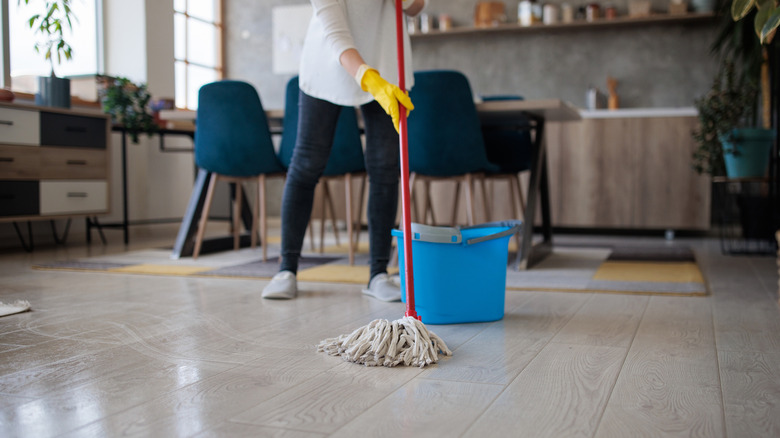
Are your home's tile floors looking a bit dingy, or is your hardwood flooring feeling slightly sticky underfoot? Odds are, it's time to mop them, so daily spills, dirt, and debris don't wind up leaving behind stains or stubborn discoloration. Mopping is a key part of any cleaning routine for hard flooring surfaces, whether you're living with laminate, ceramic, linoleum, stone, or any type of hardwood flooring. It takes more time and effort than, say, vacuuming, but mopping is a critical cleaning task because it visibly improves your floor's appearance and keeps germs in check.
While mopping benefits all hard flooring surfaces, different flooring types require different mopping schedules. There's really no one set rule that everyone should follow, since foot traffic varies by household, and homes with pets and kids are likely to see more muddy footprints, tracked-in dirt, and other messes that require more frequent mopping. But overall, if you're looking to create a consistent mopping schedule for hardwood, tile, laminate, and even linoleum or stone floors, follow the cadence below to keep your floors sparkling clean.
Hardwood floors: mop weekly
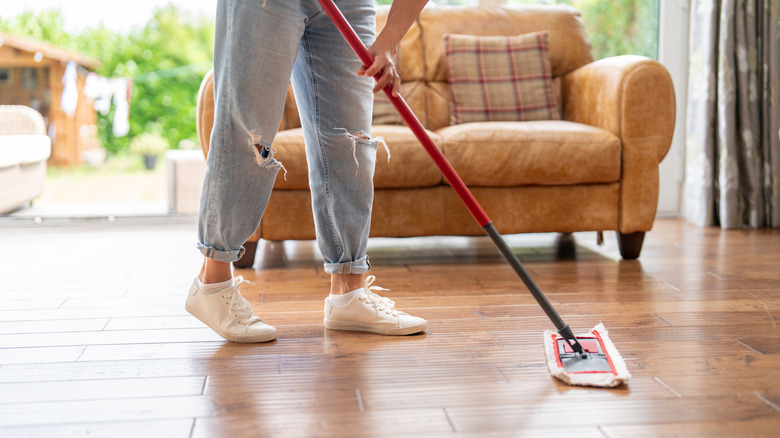
No matter the type of hardwood flooring you might have in your home, whether it's classic or engineered wood, bamboo, or even cork, it's best to mop it once a week for cleanliness and a pristine appearance. In spaces where your hardwood floors are subject to less foot traffic or fewer spills, you will be able to get by with mopping every other week. Conversely, during certain times of the year — or in particularly dirty situations — you may need to increase your mopping schedule to twice a week. For example, winter weather can lead to more dirt getting tracked in, along with potentially damaging additions like salt, so you'll want to mop more often during the snowy months.
Note that hardwood floors are sensitive to moisture — too much of it can lead to damage, along with concerns like warping and gaps developing between boards. So, it's also a good idea to make sure your weekly mopping session is done with a cloth or mop head that's damp, not one that's dripping with water. Also, don't forget to use a hardwood-safe cleaning solution as you mop, so your flooring stays looking as good as new.
Tile floors: mop at least once a week
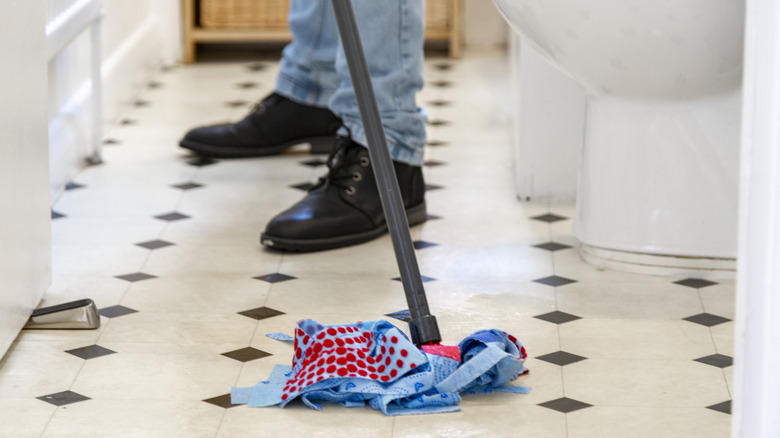
Tile floors often wind up in some of the busiest (and dirtiest!) areas of our homes. Also, the grout between tiles tends to collect dirt. So, for best results, tiled floors should be cleaned more often than other flooring types. Ideally, aim to mop your tile floors at least once per week. If the floor is in the bathroom or kitchen, where messes happen more frequently and dirt can build up quickly, you'll want to increase the frequency and mop your floors twice per week. Mopping twice weekly can also be helpful for spaces like bathrooms, where constant moisture could cause mold and mildew infestations in tile grout.
When you're ready to mop (after sweeping or vacuuming, of course), use water and mild soap to wash away any grime that's stuck to your tile floor. For a streak-free finish, swap your tap water for distilled. The one exception to this mopping procedure is a tile floor comprising natural stone tiles. Since natural stone is typically porous, it may be harmed by the types of cleaning solutions you would normally use on porcelain and ceramic tile.
Laminate floors: mop once every two months
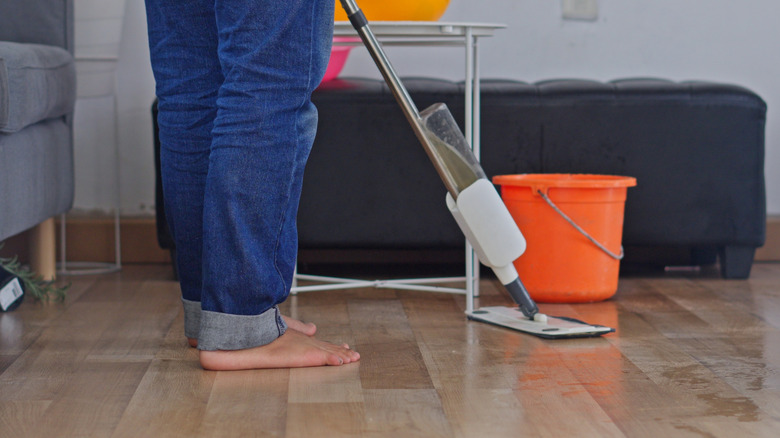
Laminate flooring typically mimics the appearance of hardwood flooring, but you don't need to clean as frequently. Instead, aim to mop laminate floors once every two months. However, that cadence only applies to wet mopping. Laminate is sensitive to moisture and can wind up with damage like bubbling, swelling, or warping when water sits on its surface or seeps between its joints. So, if you have this flooring type, think of mopping as a kind of deep clean rather than a weekly maintenance task.
That said, you should vacuum these floors regularly, at least once a week. To keep your floors looking new (and pick up the everyday dirt and debris that collects on them), you'll also want to dry-mop as part of your weekly maintenance routine. If the floors look like they need a deeper clean on occasion, give a more traditional mopping method a try. Using a commercial cleaning agent or a DIY solution made with mild dish soap, a little vinegar, and water, mop in small sections without getting too much liquid onto the surface and immediately dry the floors as you go. Crucially, use a mop that won't get too saturated, like a flat mop.
Linoleum floors: mop weekly
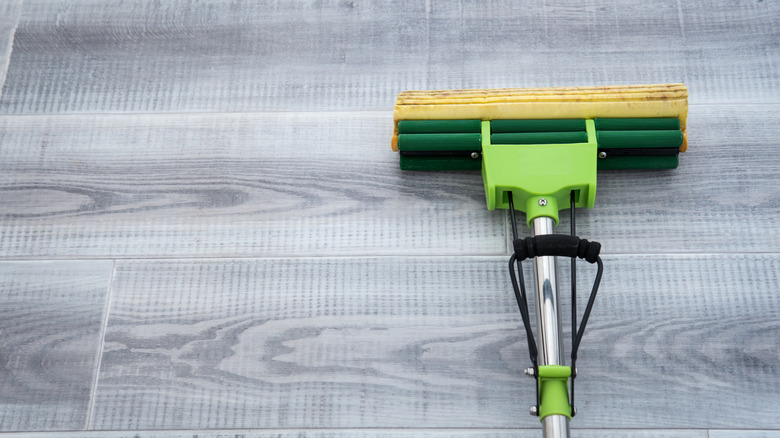
If you have linoleum flooring in your home, good news: Your flooring is very durable thanks to its water-resistant, scratch-resistant, and even antimicrobial nature. And although linoleum can mimic the look of tiles or hardwood flooring (just like laminate), it handles regular wet mopping quite well. Since water damage isn't a concern, aim to mop it once per week.
However, you don't want to reach for acidic or alkaline cleaning solutions to mop this kind of floor. Linoleum floors are manufactured using linseed oil, which can deteriorate if your chosen cleaning solution is too acidic or alkaline. This deterioration leads to cracks, warping, and fading. Instead, a cleaner with a neutral pH is your best choice. Likewise, if you're thinking about taking a steam mop to linoleum, you'll want to reconsider. It's best to stick to the basics and mop linoleum floors with a traditional mop, water, and soap (or your chosen neutral cleaning solution), as the high heat generated by steam mops can damage or warp this flooring type.
Natural stone floors: mop lightly once a week
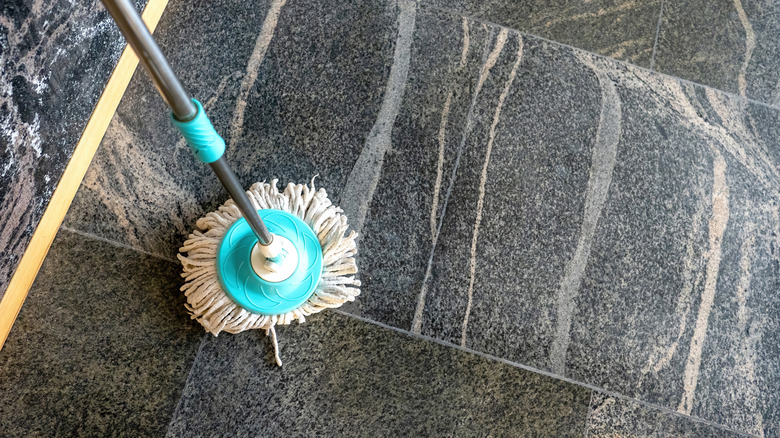
Natural stone tile floors should be mopped once per week. However, the exact cleaning schedule can vary if an area sees significant foot traffic or gets messy quickly, in which case you may want to mop multiple times per week to prevent dirt accumulation. However, it can be risky to mop natural stone tile with a mop that's soaking wet. Instead, you'll want to keep the mop damp, so you don't soak the porous stone or the grout in the joints and cause damage.
Additionally, like with other porous flooring materials, acidic or harsh cleaning solutions like bleach aren't a good fit for use on natural stone. Instead, aim for a gentler cleaning agent with a neutral pH. Most specially formulated stone cleaners have a pH of 7, so they aren't too acidic or alkaline; even so, you should always check the label to be sure. Even if the stone floors in your home are sealed, you should still opt for a gentle mopping solution to protect that sealant.