

How To Clean A Dirty Wood Fence Without A Pressure Washer (It's So Simple)
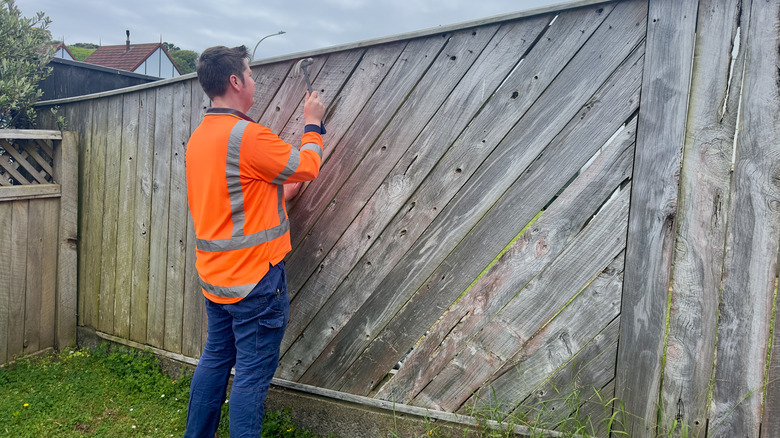
Spring is the time to tidy up the lawn, uncover outdoor furniture, and perhaps clean up that dirty wood fence. Some people prefer using a pressure washer, but this isn't always accessible (or even safe) for all wood fences. In many cases, using a garden hose with the right attachments and techniques is all it takes to get a dirty wood fence cleaned up without having to mess with a pressure washer.
The problem with pressure washing a wood fence is the amount of force the water might hit the structure with. This force is measured in pounds per square inch (PSI), which can range between 350 and up to 4,000 in consumer-grade pressure washers. With a lower (PSI) setting, you may possibly be able to use these cleaning tools on wood, too. The problem is that too much pressure can cause the wood to splinter, thereby creating a bigger problem than the original dirt, pollen, mildew, and algae you were initially trying to get rid of. You might even end up with deeper holes or permanent streaks in the wood, particularly when using a PSI above 2,000. For comparison, the typical pressure delivered through a garden hose ranges between 40 and 60 PSI, although this can be lower or higher based on where you live. While a high-pressure nozzle and some specialized nozzles and hoses may increase water pressure slightly, these do not have the high PSIs of a typical pressure washer. Also, aside from damage risks, a pressure washer may not really be necessary for cleaning up a wood fence, particularly when you're dealing with mild cases of dirt and debris.
Tips for cleaning a wood fence with a garden hose
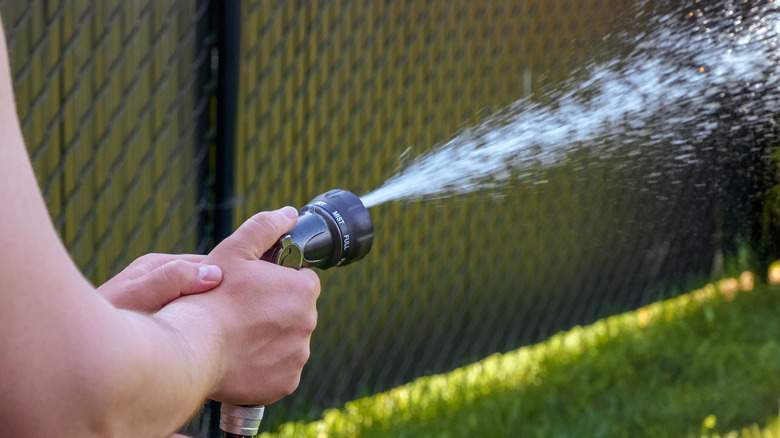
When dealing with mild dirt, mud, pollen, or loose debris like grasses on the common types of fences made of wood, chances are you can easily remove the dirt with a lower PSI option via a garden hose without causing damage or spending a lot of money on extra equipment. Make sure you attach a nozzle with multiple settings so you can easily adjust the water spray strengths based on sections of the fence that are dirtier than others. For example, a "jet stream" setting might work best for heavier dirt caked onto the wood. Just be sure to use the lowest setting possible to get the job done. You don't necessarily need to "jet stream" the entire fence.
Work your way through one section of the fence at a time. Spray the water from top to bottom only— working from the bottom up could increase the risk of residual dirt dripping down and staining the already cleaned lower sections of your fence. Also, take care with using any high nozzle settings near the bottom of the fence where it makes contact with the ground so that you do not inadvertently splash dirt and mud right back onto the fence.
Repeat this cleaning process at least once a year to help maintain your fence. You might also need to wash your wood fence after exceptionally wet weather, as a follow-up to pollen season, or any time you notice there's early signs of dirt or mildew buildup. Catching these problems sooner with a garden hose can help reduce the need for more drastic measures such as heavy scrubbing or pressure washing.
Dealing with a wood fence that's still dirty after rinsing
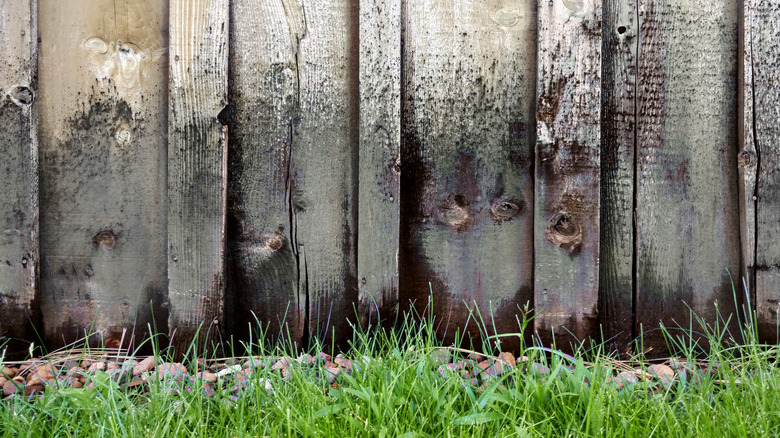
If buildup still remains after cleaning your wood fence with a garden hose, you still might not need to reach for that powerful pressure washer just yet. First, assess what's stuck on your fence. In cases of caked-on mildew, mold, or algae plaguing your wood fence, you could supplement your garden hose rinse with a gentle scrub-down. After getting the fence wet with a garden house, take a long-handled, soft-bristled scrubbing brush and work through these stuck-on substances. Always scrub with the grain and in circular motions to prevent damage. Rinse off thoroughly to remove any residue and to help prevent stains. More stubborn cases may also require the use of a mild detergent to scrub through the grime before rinsing once more.
Sometimes these methods still cannot fully get a wood fence clean, particularly if there has been heavy wet weather in your area in recent months, or if the fence was not cleaned regularly. In such cases, it might be worth checking with a professional fence company for advice. They might be able to apply commercial-grade wood cleaners, or even talk with you about wood fence restoration. Such options might cost more upfront, but they may help to protect your fence investment (especially if it runs along an extensive perimeter) in the long-run.