

You Might Want To Think Twice Before Trying This Sleek Front Door Style
We may receive a commission on purchases made from links.
Homeowners looking for extra curb appeal tend to focus on the front door, the feature that visitors and potential buyers notice first. More and more are choosing sleek designs that incorporate textured fiberglass and composites that mimic the appearance of wood, as well as steel doors painted in vibrant colors. One increasingly popular option is a framed or unframed glass front door. The glass can be clear or frosted, and it can even incorporate showy designs created with etching and vibrant colors.
Who can deny the attraction of glass? It lets the light in, and every house can use a bit more of that. Not to mention, glass is easy to maintain — you can effectively clean glass with just rubbing alcohol — and it won't deteriorate in the weather. But that's not all a front door is supposed to do.
The front door also has to maintain a sense of security in the home. Although a glass door provides good physical security and won't increase the probability of a break-in, it's the least effective for visual security. You could feel like you're living in a fishbowl, which is one reason why, like more than one homeowner, you might come to regret a glass door.
Some of the problems with glass front doors
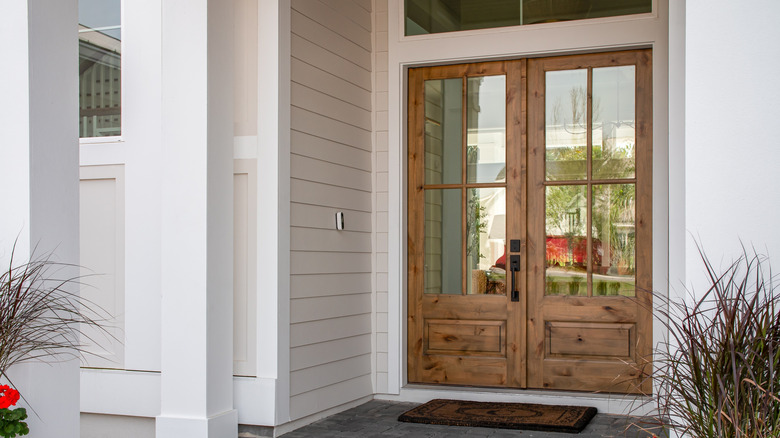
Lack of visual privacy is the main drawback of clear glass doors. Clear glass renders all your movements visible from outside. Even frosted or etched glass does this to some degree, especially at night when the lights are on. Moreover, a glass door allows distracting energy into the home and messes with your concentration. Excitable dogs barking at every strange movement from outside just add to the annoyance.
Another problem is the possibility that the glass can shatter spontaneously. This is a relatively rare phenomenon, but it can happen when the door is subjected to extreme temperature variations or when small amounts of nickel sulphide are introduced during the manufacturing process. Improper installation or a sharp impact — sometimes just closing the door too hard — can also cause a glass door to shatter.
Fogging is a third possible issue with a glass door. Double-paned glass separated by a layer of argon or krypton gas provides decent insulation, but its effectiveness depends on a hermetic seal between the panes. If the seal is broken by wear over the years, the gas leaks out, and moisture-laden air replaces it, forming condensation between the panes, clouding the glass, and causing mold to grow. This isn't an easy problem to fix. You may end up having to replace the glass. On top of that, summer brings another problem. Direct sunlight pouring through the glass can turn your house into a sauna, depending on the direction of the door.
Ways to make a glass door less problematic
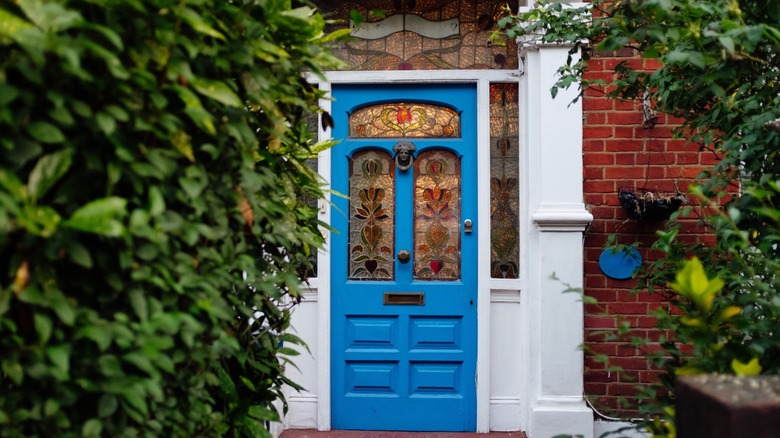
A house that faces south or west and gets full sun in the afternoon can get uncomfortably hot. That doesn't necessarily mean you can't have a glass door, but you'll likely need to provide shade — either by planting trees or bushes that block the sun or installing an awning over the door.
A glass door probably wouldn't be your first choice if privacy is your main priority, especially if your front door faces a busy street. However, if you weigh privacy against design appeal, and the appeal of glass wins, your best bet is to choose a door with frosted or colored glass. Otherwise, you'll likely end up covering the door with drapes or a curtain. If you have to do that, a solid wood or composite door might be a better option.
Some type of security alarm system is essential for a home with a glass door, because glass makes it easier for burglars to track movements inside your house. If you don't want to install a whole-house security system — which you should do if you're often away — an inexpensive alarm (like the Sanjie Door Window Alarms) that attaches directly to the door is a good alternative that will wake you up when someone tries to force the door open.