

Why Smart Homeowners Are Putting Vinegar On Their Dingy White Baseboards
We may receive a commission on purchases made from links.
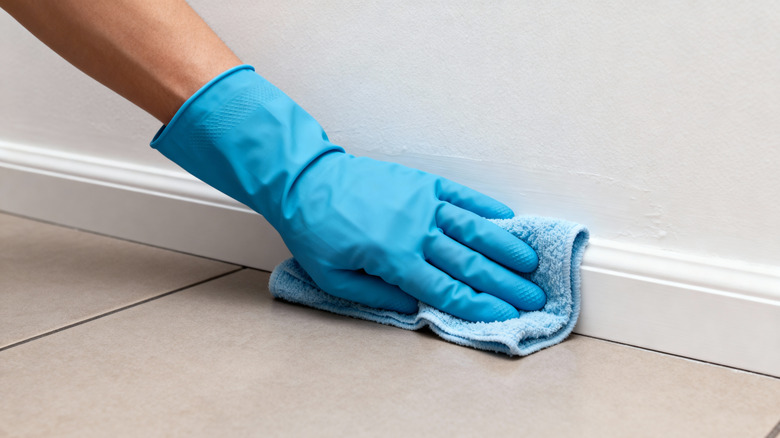
Your house might be sparkling after you clean your hardwood floors or mop your tile. But if you have baseboards throughout your home — specifically, white baseboards — their not-so-spotless appearance could be dragging the overall look down. No matter the type of baseboard molding you have, their proximity to your floors makes these decorative touches places that attract dust and dirt from all of the foot traffic that passes by. Plus, the tiny ledges and small creases baseboards typically have collect debris such as dust and pet hair. White baseboards can look less than pristine and develop stains over time as a result, and running a dust rag along them often isn't enough to restore their appearance. Instead, you might want to try reaching into your pantry for vinegar, which numerous homeowners on social media praise as a smart solution for brightening baseboards. To clean baseboards with vinegar, you'll also need water and a cloth; some homeowners even add peppermint oil to the mix.
Cleaning baseboards is usually a task that requires multiple stages: dusting them with a cloth or vacuum cleaning attachment, then wiping them down with a cleaning solution like water and dish soap. You can even try using a melamine foam sponge like those Magic Erasers for stains, but since these are abrasive, they can damage certain paint finishes or even remove some of your baseboard paint altogether. And these methods don't always deliver a thorough clean. Cleaning baseboards with vinegar, on the other hand, can remove stains and common messes like dust and grime all in one go. Once vinegar tackles common baseboard stains like shoe scuffs and general dirt, it should have your white baseboards looking much fresher and brighter.
How to use vinegar for whiter, brighter baseboards
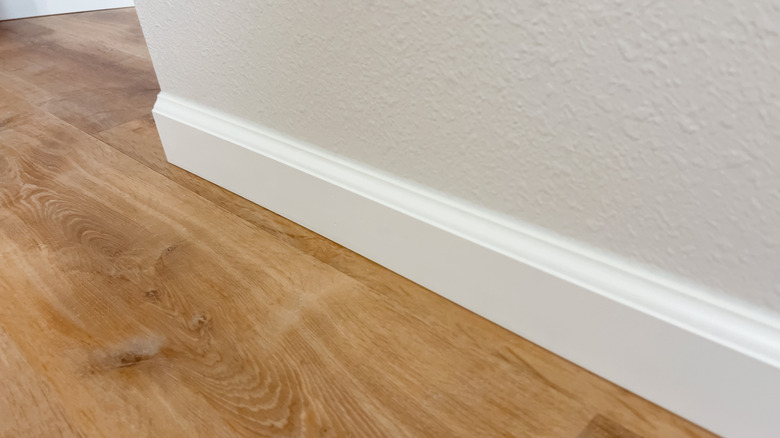
There are a few different ways you can use vinegar to clean your baseboards and take them from dirty and dingy to freshly white once again. But before you apply any kind of DIY vinegar cleaning solution to your baseboards, it's important to dust them first. Once dusting is done, you can use a simple water and vinegar mixture made of 1 cup warm water and 1 to 2 tablespoons of distilled white vinegar. Dip a cloth into the liquid, wring it out so it's slightly damp, then wipe it across your baseboards. For a stronger solution, or to target stains and marks, you can also mix one part vinegar and one part water and apply it the same way.
You can also use water, vinegar, and baking soda to make a cleaning solution that both cleans and removes stains on baseboards. Mix water and vinegar together using a 1:1 ratio — you can apply it with the same cloth-dipping method above or in a spray bottle — and separately, mix baking soda and water together until the two form a paste. Apply the vinegar and water solution and, as you encounter stains that need extra TLC, you can smear on that baking soda paste, then gently scrub it away.
Worried about vinegar potentially damaging or removing the white paint on your baseboards? It is an acidic liquid, so you should test it in a small area first. If it's too potent, you can dilute the vinegar further by increasing the amount of water you're using in your DIY cleaning solution.
Homeowners are cleaning baseboards with many different vinegar formulas
In addition to being effective yet gentle on paint, DIYing a vinegar cleaning solution for your white baseboards is pretty versatile. You can combine water, vinegar, and dish soap (and even a little peppermint essential oil for fragrance) like carolina.mccauley on Instagram and @mama_mila_ on TikTok, a formula made up of gentle yet effective ingredients that the former notes "breaks down grease and built-up dirt." courtjacobs.home on Instagram recommends using the 1 cup of hot water and 2 tablespoons of vinegar formula to get dirt off baseboards as an alternative to store-bought cleaning products.
Similarly, virginiahlane on Instagram suggests using vinegar and water to tackle the gunk hanging out on your once-pristine baseboards. We'd recommend skipping the fabric softener she suggests adding in, though. It can leave behind a sticky residue, which might defeat the whole point of using vinegar to get rid of stubborn, stuck-on dirt.
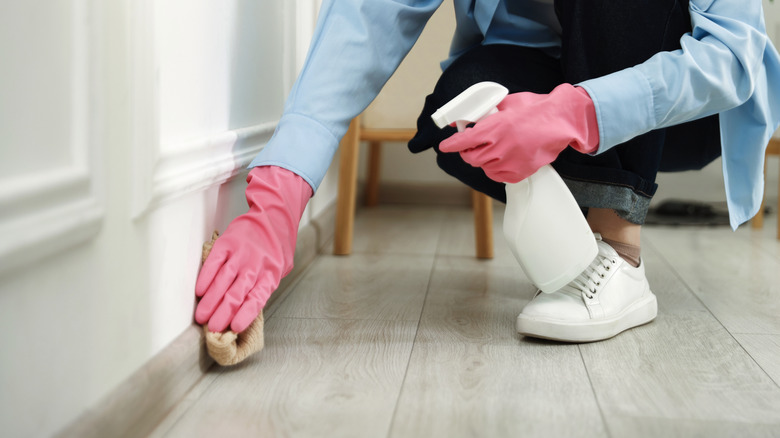
You can also stick with a simple 1:1 ratio like we mentioned above, but make application easier by pouring 1 cup of vinegar and 1 cup of warm water into a spray bottle, as @ehow recommends on TikTok. There's no cloth-soaking or wringing required with this approach; instead, you can easily spritz the solution onto your baseboards and wipe it off.