

Forget Painting Behind The Toilet: Try This Sophisticated Design Alternative Instead
We may receive a commission on purchases made from links.
With all the gorgeous bathroom design ideas out there to inspire an upgrade to your own water closet, just painting the wall behind your toilet feels a bit boring. Instead, consider adding style with some beadboard. This classic look is straightforward to install and brings a spark of interest to this easily neglected corner of the bathroom.
Beadboard is a classic look for bathrooms, evoking a farmhouse or cottage feel. Typically installed to run halfway up the wall, this type of wainscoting isn't expensive, with 4-foot by 8-foot panels costing about $30 each at major hardware stores. Stores like Home Depot and Lowe's can even cut the panels down in-store to make them easier to get home and work with in your space. Remember to also buy enough trim or chair rail to run along the top of your beadboard paneling and finish the look. TikTokker modernfarmhouseglam demonstrates what installing beadboard around your toilet can look like, adding peel-and-stick wallpaper above for a stylish design that beats plain old paint.
Important tips when installing beadboard in the bathroom
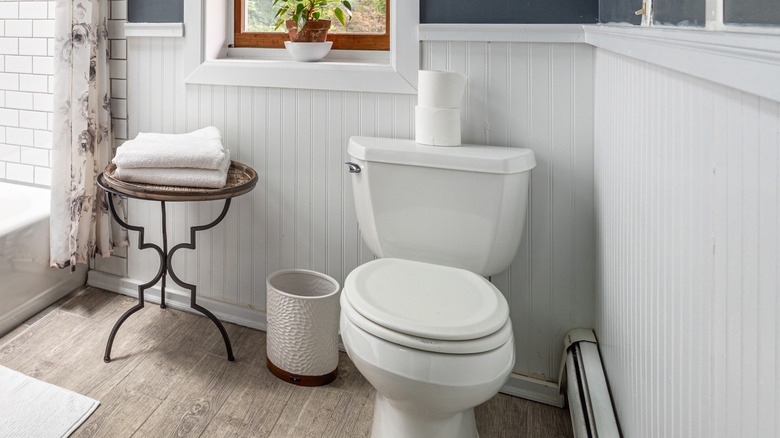
To master this toilet area upgrade, you'll need to use materials made to handle bathroom humidity, and since you are working around a toilet, choosing a finish that you can easily keep clean is also critical. Redditers who've installed this look recommend vinyl tongue-and-groove material like this one from Lowes, which is easy to wipe down and resists moisture damage. Another plus with using this type of material is that you won't need to paint it if you like a simple white look. But if you want a more custom design, you can install typical beadboard made of MDF and apply a moisture-resistant primer before painting it the color of your choice. You'll want to use a paint suitable for bathrooms, like a washable satin or semi-gloss.
YouTuber LRN2DIY shows how to measure and cut your beadboard with a skill saw to ensure the edges match up correctly, as well as how to make cuts to fit your panel around the pipes that run from toilet to wall. If your toilet is right up against your wall, you might need to remove it to properly install beadboard, but many toilets have some space behind them that can accommodate a thin panel. You'll use a construction adhesive like Loctite to affix your beadboard to the wall, and add brad nails to further secure it. DIYer Casey Finn recommends nailing heavy panels into studs to keep your new bathroom upgrade securely in place.