

Transform Inexpensive PVC Pipes Into A Unique Storage Shelf - Here's How
We may receive a commission on purchases made from links.
Sometimes a little extra shelf space can make all the difference between a tidy room and a disaster zone, but new shelving can be expensive. You can save money by buying wood and building storage shelves yourself, as long as you have the necessary woodworking chops. If you don't, no worries — here's a project that calls for inexpensive materials and few carpentry skills. You can make a standing shelf unit strong enough to hold books, plants, and the like simply by cutting PVC pipes and fitting them together to make the frame, then using pre-cut boards for the shelves. This makes a great utility shelf for the basement or bathroom, and it can even add a touch of innovative style to your living room or bedroom.
The type of furniture-grade PVC pipe you would normally use for a project like this costs about $4.80 per foot at Home Depot, but you don't really need that. Standard Schedule 40 PVC water pipe will work just fine, especially if you paint the unit to hide the markings on the pipe. Plus, regular half-inch pipes only cost $0.40 per foot.
Besides that, you'll need a number of ½-inch PVC tees, which cost around $0.79 each. The pipes will fit tightly into these fittings and, because they aren't carrying pressurized water, they'll stay put without glue. However, if you want to be 100% sure the unit stays together, you can also purchase clear PVC cement (like this $7 Oatey PVC Cement) and glue everything together. Finally, there's the shelves themselves. If you don't want to cut them yourself from plywood or MDF, you can order SHELFIX Custom-Cut Melamine Shelf Boards online for also $7 each.
Make a cutting list and cut the pipes
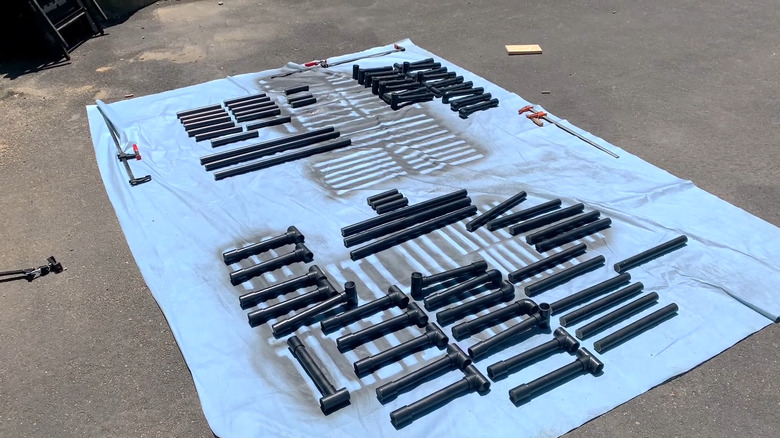
A good first task is to make a list of all the pipes of each length you need. The width, length, and height of the shelving unit are totally up to you. That said, a good starting point is to begin with four pieces for the legs, three long pieces for the horizontal supports, eight pieces for the vertical frame, and twelve short pieces for the side braces. This specific structure requires 18 tees and will give you three shelves. You can also top it off with an optional decorative arch made from PVC electrical conduit. One of the key differences between electrical and plumbing PVC is that electrical PVC is more flexible and can be bent into a semicircular shape.
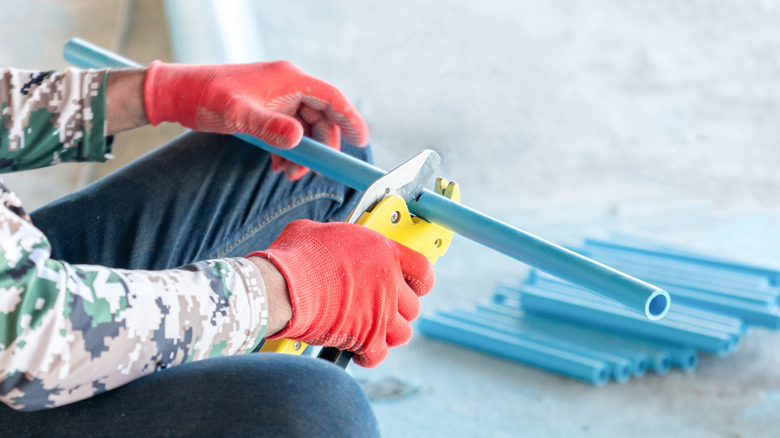
PVC pipe comes in 10-foot lengths, so if you have this list in front of you, you'll be able to plan your cuts to use as much of each 10-foot length as possible. Measure out the lengths you need with a tape measure and make marks for the cuts with a felt-tip marker. You can make the actual cuts with a hacksaw, but if you don't mind spending a little extra money, there's a better way: Use this inexpensive Bates PVC Pipe Cutter. It makes clean cuts without pesky burrs that need to be sanded off before the pipes will slide cleanly into the fittings. Better yet, it does the job in a single, squeezing motion, rather than repetitive and tiresome back-and-forth strokes.
Assembling your PVC storage shelf
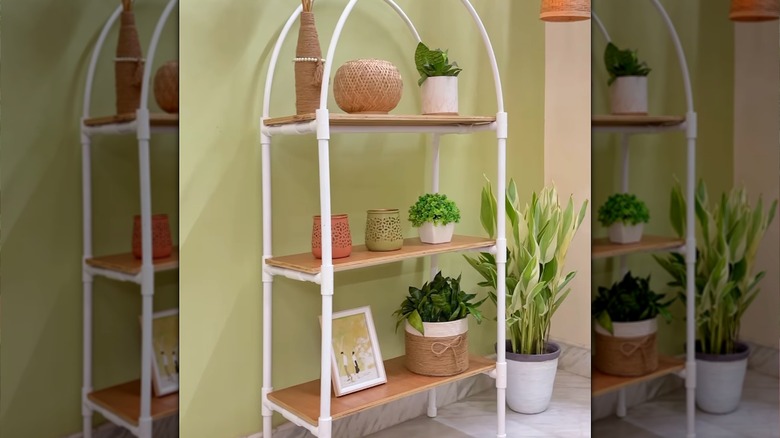
After you've cut all the pipes you need, it's time to assemble them together with tees. Having been de-burred with sandpaper if necessary, the pipes should slide smoothly into the fittings. Make sure you push them in all the way. If you decide to glue the pipes with PVC cement, spread the cement on the outside of the pipe and the inside of the fitting, push the pipe in all the way, and hold it for a few seconds to allow the cement to bind.
Before you place the shelves and set the unit in place, you might want to paint the pipes. Don't just use any paint; you need one designed for plastic, such as Krylon Fusion For Plastic. It comes in a spray can, so you'll want to work somewhere with good ventilation. Before you actually apply the paint, ensure good adhesion by lightly sanding the pipes with 220-grit sandpaper and wiping off the sanding dust with acetone and a rag.
Here are a couple of optional finishing touches to consider (besides the arches on top). One is to slip PVC caps (typically under a dollar each) onto the bottoms of the legs to allow the unit to slide freely on the floor. Another is to screw the shelves to the pipes — 1-inch wood screws work well for this. Pre-drill holes in the shelves, but not the pipes, and when you drive the screws, they'll penetrate the plastic, bite in, and hold securely.