

10 Underrated Spring Flowers That'll Bring Color And Life To Your Garden
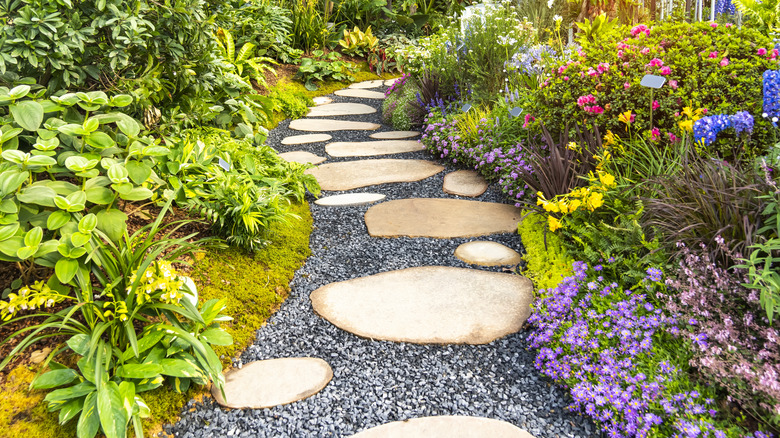
Spring is the season in which everything feels like it's in bloom, and there's really no better way to celebrate this period of warmer days and increased sunlight than by spending time in your lush green garden. While different plants can bloom at different times of the year depending on their growing season (and external factors, like your local weather), spring tends to bring an influx of colorful flowers thanks to its warmer temperatures. The season's longer days and increased daylight activate the proteins in charge of the flowering process in many different plants, signaling that it's time to start growing gorgeous blossoms. It's this process that can fill your garden with flowers in every hue of the rainbow, like bold reds and oranges, deep to light shades of pink, and blue-tinted purples. But in order to fill your garden's beds with color and life, you'll need to choose plants that can deliver exactly that.
There are many different types of flowering plants to consider as you think about adding colorful options into your garden. However, if you're hoping to avoid popular picks like tulips, daffodils, pansies, and petunias while still delivering gorgeously-hued blooms during spring, you'll want to keep plants' typical blooming seasons in mind. We've rounded up some standout underrated flowers that bloom during spring, and each one will add bursts of color and new life into your garden.
Corydalis
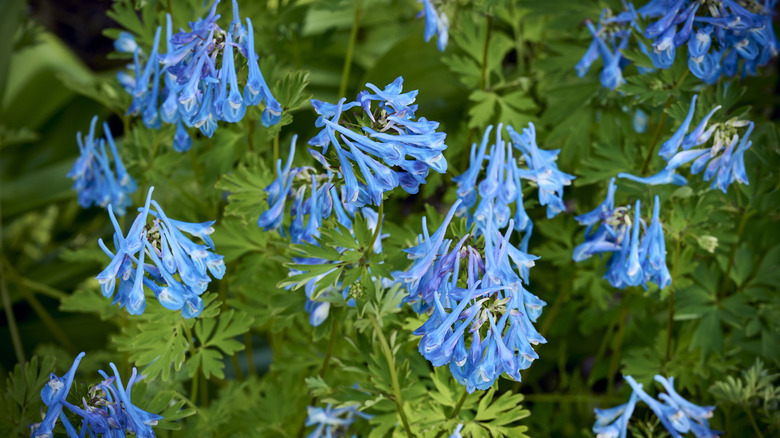
Though its flowers may be somewhat small, corydalis plants (Corydalis) bloom with tubular flowers that range from eye-catching shades of yellow to pastel pinks and vivid blues, offering a wealth of options for those who'd like to add color into their gardens. With more than 400 species in the genus, including perennials and annuals, you can take advantage of varieties like blue corydalis (Corydalis flexuosa, zones 5 to 8) and yellow corydalis (Corydalis lutea, zones 5 to 7). These bloom later in spring, with flowers appearing from May to September depending on the exact plant.
Dicentra
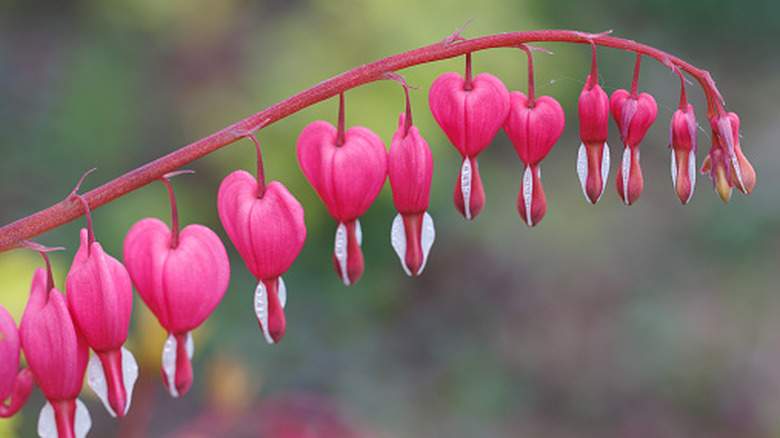
Bleeding hearts (Dicentra, zones 3 to 8) are relatives of another popular spring and summer plant: poppies. And if you're interested in bold, eye-catching color, this is a flower that'll absolutely deliver. This plant's heart-shaped blossoms hang off of its stems, making the flowers look like exquisite jewelry. As an added perk, bleeding hearts are also a pretty low-maintenance plant, so you can enjoy their gorgeous pink look without worrying too much about how they'll thrive. Depending on the exact varietal you choose, the blooming period can begin in spring or even early summer.
Flowering quince
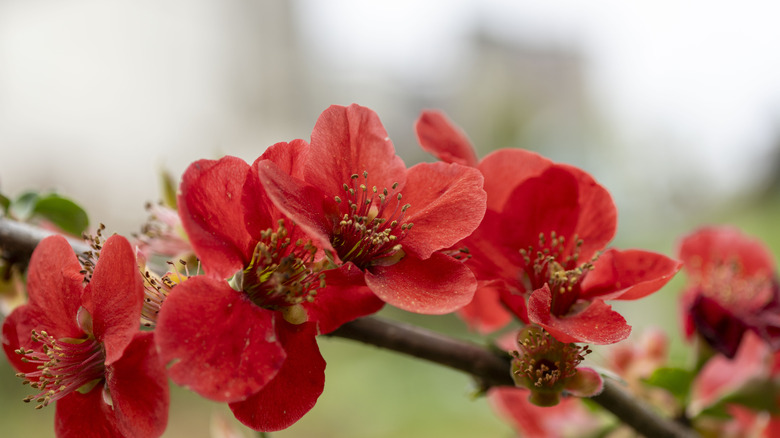
If you love the look of roses but are looking for a less popular spring-blooming flower, flowering quince (Chaenomeles speciosa, zones 4 to 8), fits the bill perfectly. As a member of the Rosacea family, this plant blooms in shades of red throughout March and April, and its blossoms and leaves resemble roses – it's even a flowering plant with thorny stems. If you'd like to add a different bright color to your garden, you can find variations that show off blooms in orange, pink, peach, and even white for a bit of brightness.
Camassia
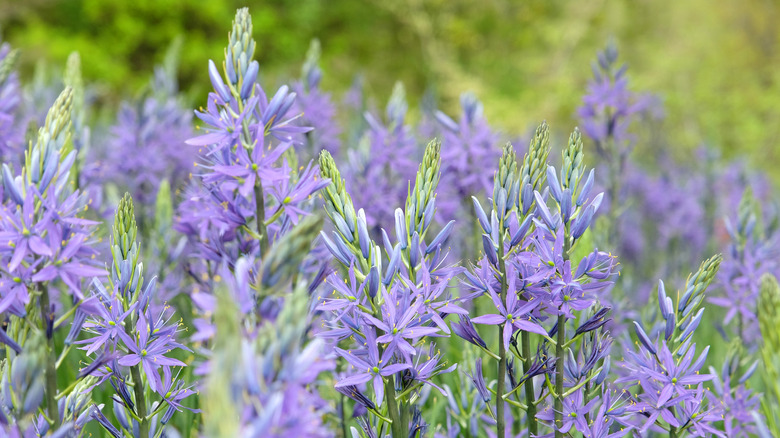
Often called wild hyacinth, camassia (Camassia, zones 3 to 8) is a North America native plant that's typically found in meadows and the edges of woodlands. Like its relative asparagus, this plant stands up stick-straight as it grows and blossoms, showing flowers in hues of pale or deep purple, blue-tinged violet, or even white. Camassia is a later-spring bloomer, with its vibrant flowers typically appearing in late April. If you love the look of lilac, this is an underrated spring alternative that will stand out thanks to its height.
Avens
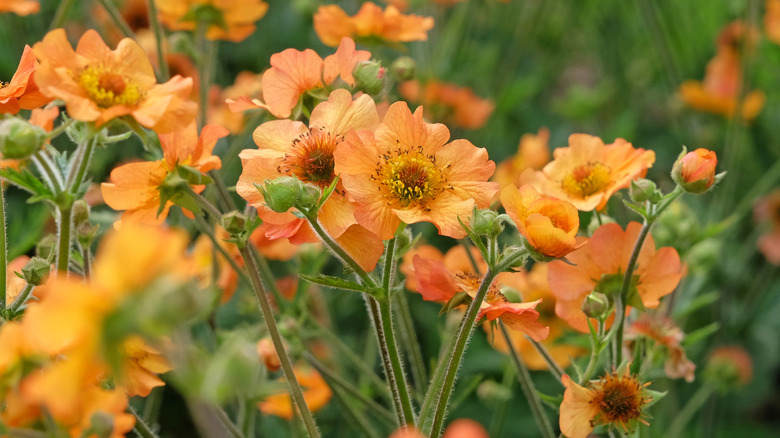
When avens (Geum, zones 5 to 7) blossom in the spring, the warm colors of their flowers will turn heads. As another member of the rose family, this flower can resemble its relatives when it first gets growing. There are more than 50 different species to choose from, but regardless of which kind you choose, this plant will give you plenty of brightly-colored blooms that are contrasted by their darker leaves. Even better, if you're worried about pests, this plant doesn't attract much attention from slugs or other hungry critters.
Pasque flower
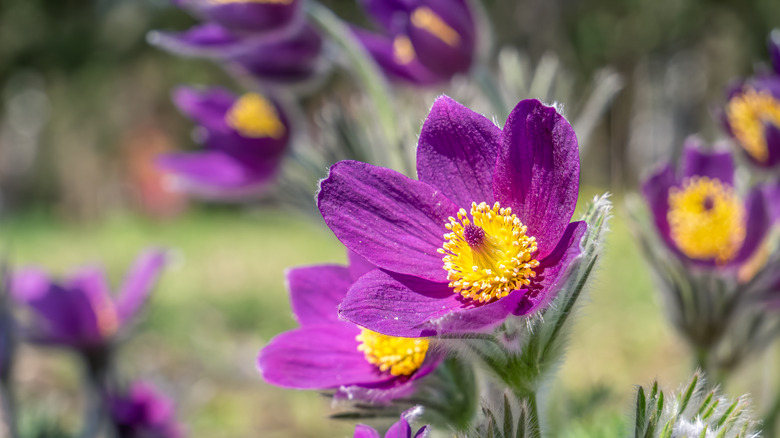
You won't be able to miss the vibrant purple blooms on a pasque flower (Pulsatilla vulgaris, zones 4 to 8) when it's planted in your garden. This stunning perennial will likely be among the first to bloom in spring, showing up as early as March. It'll also stand out thanks to its unique stem and leaves, which are covered with silver hairs that almost look furry. Its flowers make a statement in the garden, as they grow individually on stalks that can rise anywhere from five to eight inches tall.
Phlox
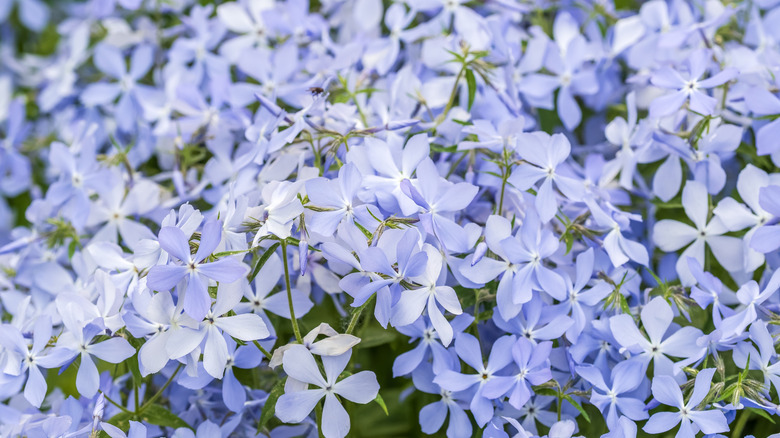
Phlox (Phlox, zones 3 to 9) is an excellent choice for gardeners seeking plenty of choices. This genus is very diverse, with flowering plants that range from close to the ground to boasting tall, upright stems. No matter which varietal you choose, star-shaped blossoms will be plentiful as your phlox grows — and they come in many different colors. You can choose options in deep purples, bright reds, or shades of pink; there are even pastel hues available. There's a phlox for every garden need, too, thanks to spring-blooming options like moss phlox (Phlox subulata).
Masterwort
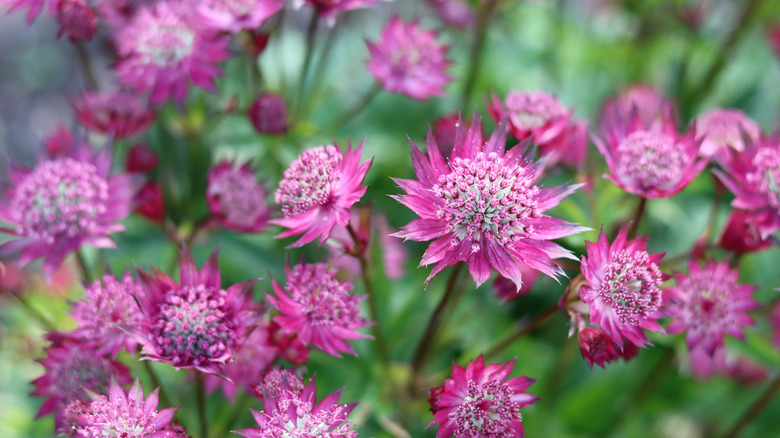
If you're looking to add something different but still vibrant, consider masterwort (Astrantia major, zones 4 to 7). This flowering plant is a wonderfully colorful and underrated pick. Astrantia major is one of its most common varieties, looking a bit like a vibrant pin cushion thanks to its extra-long stamens that seem to poke out from the petals. Flowers appear in hues of white and pink, with the most exciting options leaning into magenta hues. Masterwort typically blooms later in spring, but when it's thriving, its flowers can stick around throughout the summer.
Tickseed or golden tickseed
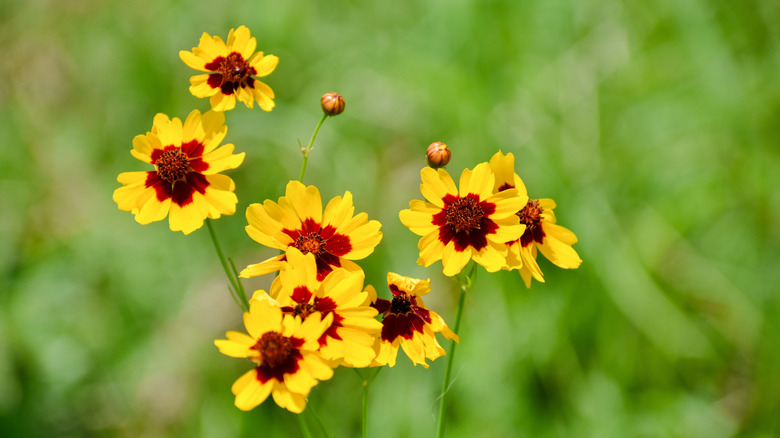
Tickseed (Coreopsis grandiflora, zones 4 to 9) will bring bold, bright yellow flowers into your garden each spring, wonderfully attuning your garden to the flourishing sunlight of the season. It's reminiscent of a daisy with its long stems and sunny style. If you want to add even more distinct color and life, you can opt for a different variation, Golden tickseed (Coreopsis tinctoria, zones 2 to 11), which looks similar but blooms with petals that are tinted with deep reddish-purple in a manner that makes them look almost like black-eyed Susans.
Round-lobed Hepatica
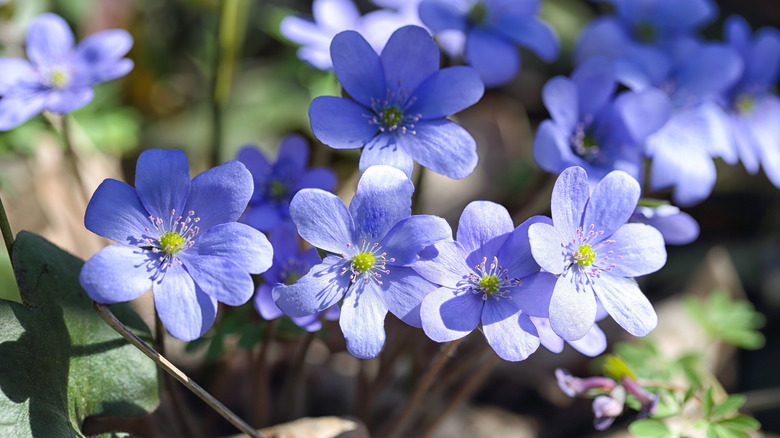
Gorgeously blue, purple, or pink, round-lobed Hepatica (Hepatica americana, zones 4 to 8) looks like a quintessential spring flower. It blooms early on in the season, with its flowers typically appearing in March. And since it's a wildflower, it can easily be overlooked as a potential garden addition. If you're looking for pollinator-friendly picks, it's a great option for bees and butterflies — but it's a bit unique, as round-lobed Hepatica tends to close its petals at night, almost as if it's resting up for the sunny days ahead.