

The Sneaky Drawback To Using Solar Lights In Your Yard
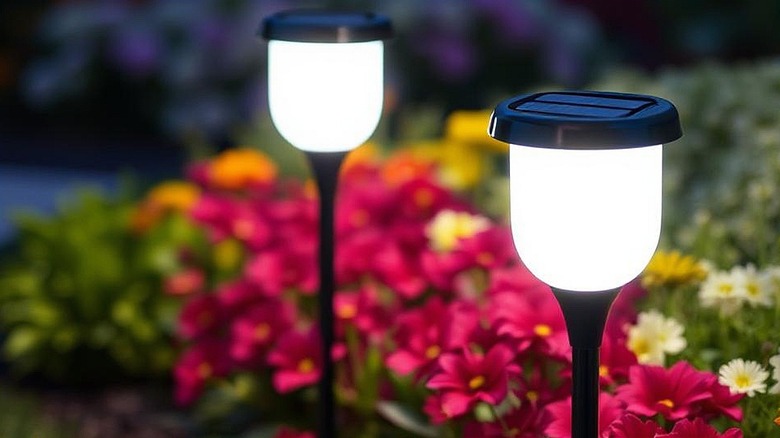
If you're looking for an easy way to light up your yard at night, solar landscape lights seem like a no-brainer. You'll have no problem finding cheap ones if you're on a budget, and you don't have to run cords or draw extra power from your electrical system to use them. Just place each one in a location that gets enough sun to charge the battery, and they will enhance your landscape lighting design night after night ... until they don't. And that's the drawback.
Cheap solar lights aren't designed to last, nor are they as eco-friendly as you might think. Unlike quality low-voltage landscape lights that are typically made of metal, inexpensive solar lights are often plastic, which can crack or warp when exposed to the elements. Not only that, the rechargeable batteries under the panel aren't always the best available, with some only lasting for a little over a year. More expensive solar light fixtures use higher-quality batteries that last a few years longer, but they won't work forever.
Eventually, you'll have to replace the batteries and throw your solar lights away, and this is where they turn out to not be as eco-friendly as you thought. The worst thing you can do is toss the fixture, battery and all, in the trash. Even if you're eco-minded and you toss them in the recycling bin, there's a good chance they'll end up in landfill anyway. Solar landscape lights present an environmental problem, and it's getting worse as more and more are bought because they are cheap and then thrown away and replaced after just a year or two.
Rechargeable solar light batteries must be properly recycled
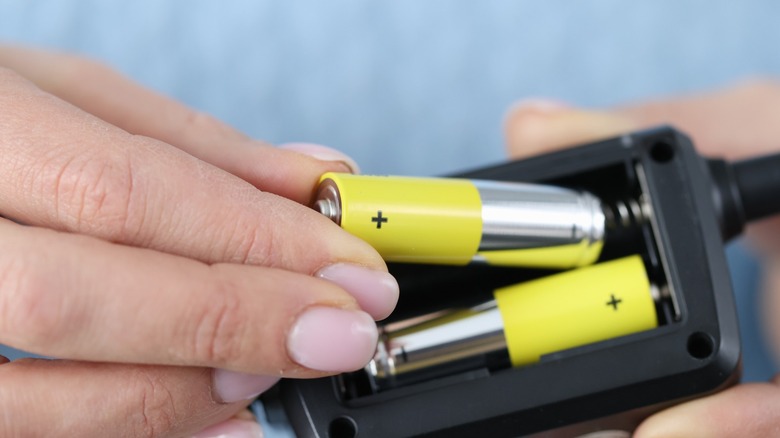
Most solar garden lights get their power from one or two rechargeable AA batteries. The cheapest fixtures might use Ni-Cad (nickel-cadmium) batteries, but many lights use NiMH (nickel-metal hydride), which aren't subject to the memory effect that reduces their storage capacity. The most expensive fixtures feature lithium-ion batteries, which have a higher energy density and a long lifespan.
None of these batteries should end up in landfills, because cadmium, nickel, and lithium are all pollutants that can leach into the soil and eventually the groundwater. Cadmium is known to have a negative effect on plant growth, and it's toxic to humans who consume plants in which it has accumulated. Nickel adversely affects plant germination, growth, and photosynthesis, while lithium raises soil pH and salinity, which also has a toxic impact on plants.
Disposing of rechargeable batteries follows a different process than the one you use for recycling most household items. The EPA recommends putting them in a plastic bag and bringing them to a certified recycler, such as The Home Depot or Batteries Plus. From there, the materials inside the batteries can be used to make new batteries. This means that when you dispose of an old solar light fixture, you should first remove the power source.
How to make sure plastic solar lights get recycled
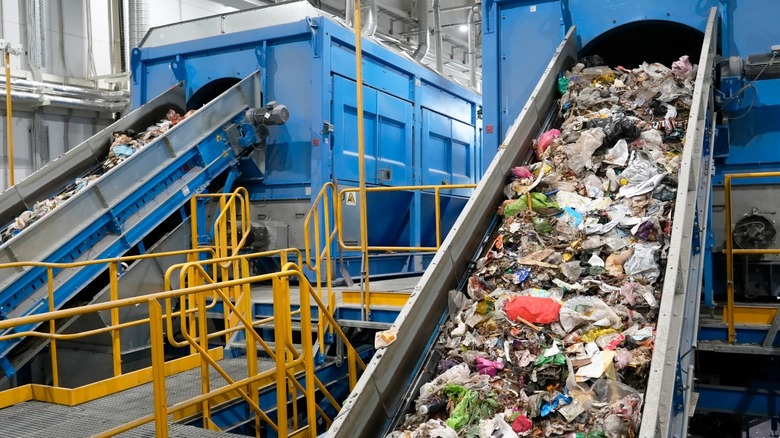
Only 10% of plastic waste is recycled, per the OECD, and plastic accounted for 18.5% of all municipal solid waste added to landfills nationwide in 2018, according to the EPA. The plastics used in solar light fixtures are technically recyclable but only when they are separated. If you throw away the entire fixture without disassembling it, it may get treated as solid waste and go to the landfill.
Plastic doesn't decompose like organic matter. Instead, it breaks down into microplastics in a process that can take hundreds of years. Some of the microplastics become airborne and end up in the soil, the oceans, and eventually the food chain to negatively impact entire ecosystems. Every plastic item that has ever been thrown away instead of being recycled or incinerated is undergoing this process at this moment.
Disassembling a solar light fixture before tossing it in the recycling bin helps limit our own contributions to this problem. Remove the solar cell, battery compartment, and LED. You should dispose of these as hazardous waste, but you might be able to donate them to local hobbyists or community groups who can use them in other lighting projects. Many fixtures contain multiple materials, including metal, plastic, and glass, so separate the materials and throw them in their respective bins. If you can't fix your outdoor solar lights, proper disposal is the way to avoid turning their sneaky drawback into an environmental headache.