

Forget Hanging Curtains: You Can Add Privacy To Glass Doors Without Them
We may receive a commission on purchases made from links.
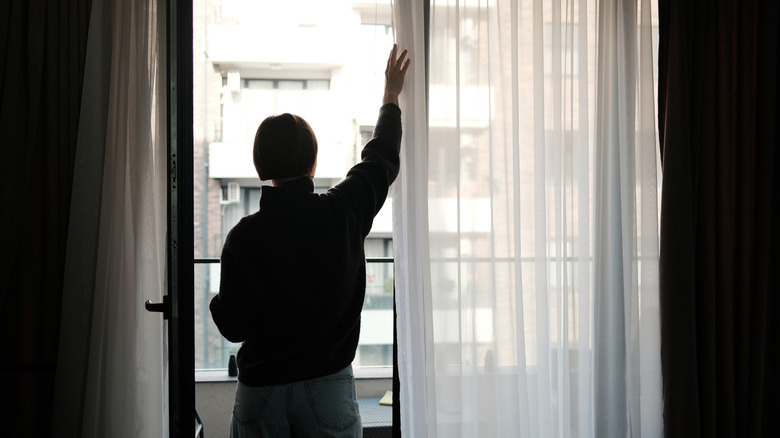
Glass doors can certainly offer a number of benefits to your home. Not only do they look elegant and timeless, but they can also help to bring in some natural light that a solid door might otherwise block. The problem? Whether you have a sliding glass door on your patio or a glass-paneled door, this can ultimately mean you don't have privacy. You certainly don't want your neighbors or passersby seeing through your home. Your first impulse might be to hang certain types of curtains over your glass doors to provide some privacy and peace of mind. But if you don't care for the bulk of hanging curtains, put that curtain rod down and consider a possible alternative: tinted glass.
Tinted glass is a specialized type of glass created with tinted film, usually made with metal oxides. Such film is dark in color, which makes it more difficult to see through the glass, thereby offering privacy without having to add other layers like blinds or curtains. Aside from addressing privacy concerns, tinted glass doors can also block damaging UV rays while still allowing some natural light to filter through your home. These effects may even make your home feel a bit cooler during the hot summer months and possibly reduce air conditioning usage. It also reduces glare, which can be especially helpful for seeing better at certain times of the day. With these benefits in mind, it's easy to see why tinted glass is a favorite in both private homes and commercial buildings alike, especially in warmer climates where the tint can help with comfort and energy usage.
DIY vs. professionally installed tinted glass doors
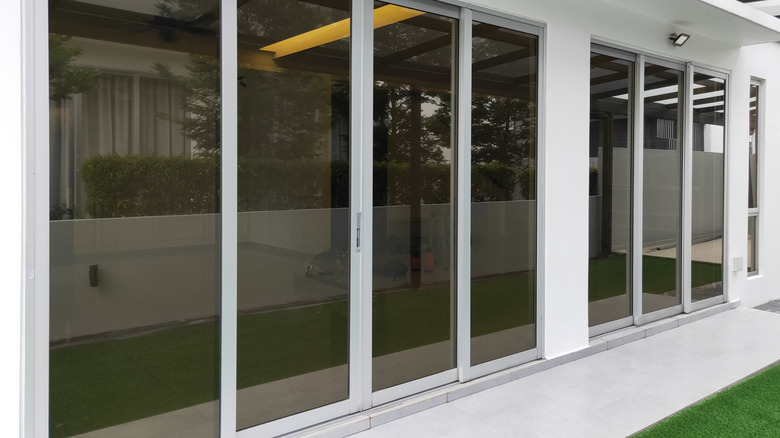
When installing tinted glass doors, you have two main options. You can either buy the film and apply it yourself to existing glass, or have a professional do the work for you. DIY tinted glass is the more affordable option, and it can also help you test out the benefits of tinting before investing in professional installation.
Be sure the film you select is mirrored for privacy, such as the Volcanics One Way Window Privacy Film. First, you'll need to buy the film and cut it to the exact dimensions of the desired glass on your door. Careful application is required to prevent bubbles and for the product to fully cure in place. It's important to follow all product instructions to a T here. As a general rule, know that you will need to clean the glass, apply the cut film, and use a squeegee during the application process.
While it's possible to tint the glass on your home's doors yourself, some homeowners prefer to enlist a professional to ensure proper application and to decrease the risk of damages. Despite its benefits, professional tinted glass is much more expensive than buying a set of curtains or DIY window film. According to 2025 data published by HomeAdvisor, the average cost of tinting existing windows was $612. However, the exact price will depend on the size of the glass door and where you live, along with labor costs. Yet another option is to buy a completely new door that already has tinted glass, but this can cost a few thousand dollars or more.
Tips for cleaning and maintaining tinted glass doors
In theory, tinted glass doors may increase your overall property value, but the exact return on investment is uncertain. Whether you're wanting to install tinted glass doors for increased property value or not, it's important to consider the longevity of tinted glass doors. Over time, the film may degrade and start to peel off, particularly if the door is constantly exposed to wear-and-tear from the elements. You can expect to have to replace the film in the future if you want to maintain the results.
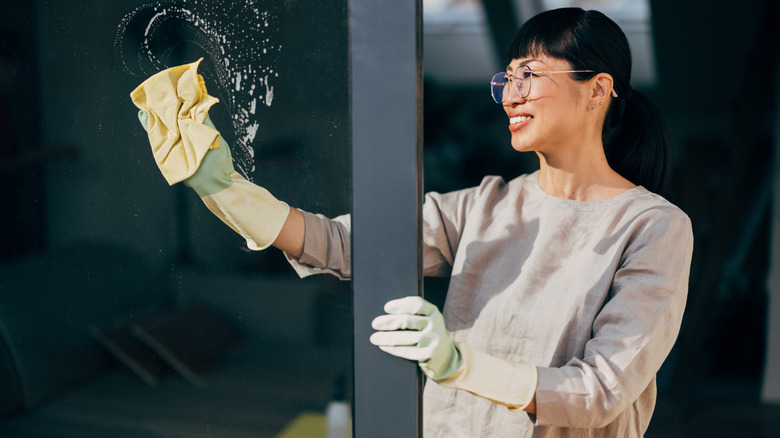
Also, be aware that cleaning tinted glass is a bit different than techniques for washing windows, including those with DIY tinted film. Never clean tinted glass doors with abrasive agents or ammonia-containing glass cleaners, as these can also damage the film and decrease their overall lifespan. Acidic agents and those containing alcohol may also cause damage. Consider using mild dish soap with distilled water as your go-to tinted glass cleaner instead, and gently apply the solution with a microfiber cloth to avoid scratches. It's also best to dry any remaining soapy water with a separate microfiber cloth to finish.