

Stop Grubs From Killing Your Lawn With This One Natural Ingredient
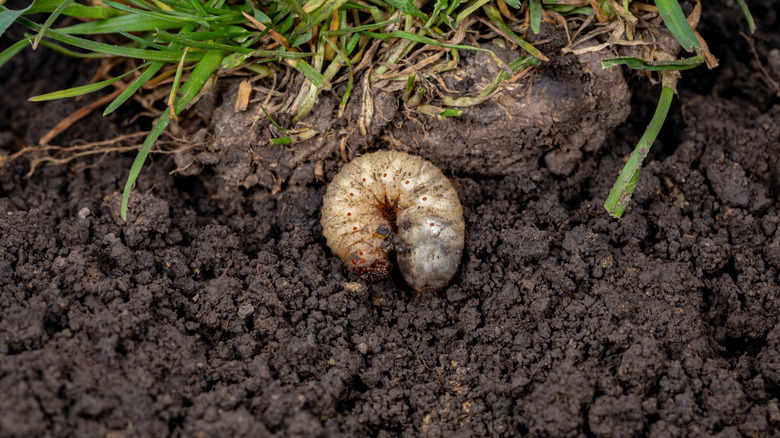
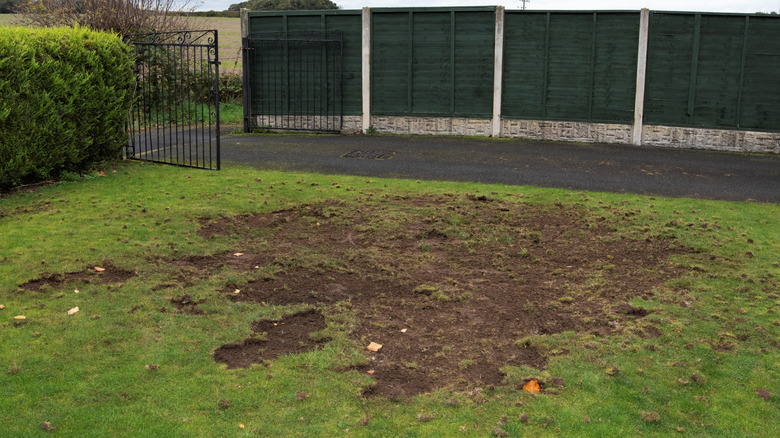
Grubs are insect larvae that belong to numerous types of beetles. While largely invisible as they live underneath the ground, grubs can do quite a lot of damage you can see above ground. When beetles lay their eggs beneath turf on your lawn, the grubs can hatch and feast on grass roots, thereby causing turf degradation. Some of the most notorious signs of a grub problem in home lawns include unexplained yellow or brown patches of grass despite adequate moisture, as well as spots that may easily peel away from light walking or other activities on your turf. A confirmed infestation can understandably make your heart sink, and you certainly want to do what you can to get rid of lawn grubs. This doesn't mean you have to resort to synthetic chemicals in your yard if you don't want them. When used as directed, insecticidal soap is a practical solution used against grubs in home lawns, and it is considered "natural," too.
When you think of the term "insecticides," you might envision synthetic chemicals that can do more harm to your yard than good. While it's true that some insecticides do contain such ingredients, this is not the case with insecticidal soaps. Commercial insecticidal soaps are made with blends of potassium salts derived from fatty acids. These work against pests like grubs on contact by disrupting their cell membranes. Overall, these organic components make insecticidal soap one of the few natural remedies you can use to get rid of grubs. As a bonus, these ingredients are biodegradable, non-toxic to humans, and they don't leave behind any harmful residues once they dry.
How to apply insecticidal soaps for grub control
Prior to considering insecticidal soaps or any other treatment for grubs, it's important to confirm they're in your lawn to begin with. You can do so by digging about 2 inches beneath a suspected dead patch of turf. If you spot numerous white, C-shaped creatures that look like worms, you could be looking at these infamous grubs! According to the University of Hampshire, seeing 10 or more of these grubs in each square foot you investigate usually means there's a severe infestation. While most beetle eggs hatch in late summer, it's possible to see grub damage through early fall, and once again in the spring as soil conditions warm up.
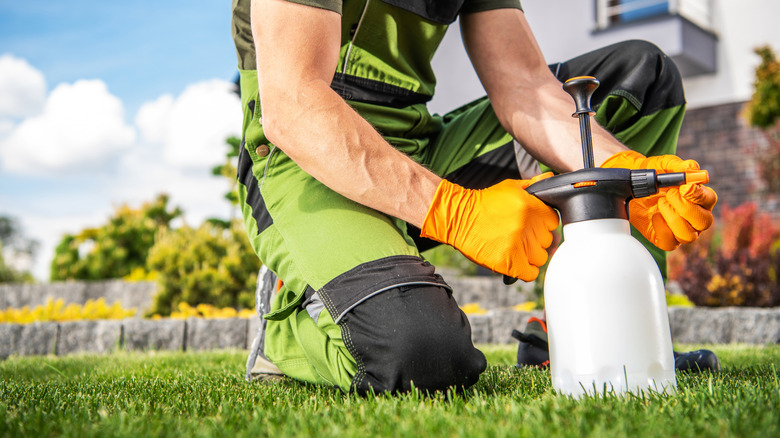
It's important to follow all instructions on the product label. As a rule of thumb, the University of Connecticut recommends diluting 2 ½ tablespoons of the desired insecticidal soap per 1 gallon of water, and spraying it earlier in the morning or in the evening. Water the lawn before and after insecticidal soap applications — doing so helps to encourage grubs closer to the surface and will also help to ensure the product gets closer to the grass roots. Spray to the affected area of turf only.
Before you apply insecticidal soaps as a preventive measure against next season's grubs, know that this product only works against active pest infestations. Not only does there actually need to be grubs in your yard for the product to work, but you might need to rely on multiple applications to resolve a severe grub issue. You'll also need to consider repairing your lawn from grubs in cases of significant damage.
Considerations before using insecticidal soaps
While insecticidal soaps are safe for lawn use, they're also known to cause damage to sensitive plants by causing phototoxicity. Do not apply insecticides if outdoor temperatures exceed 90 degrees Fahrenheit, or if conditions are exceptionally dry or humid in your area. This can cause the product to work less effectively, and possibly cause phototoxicity in nearby plants that may be exposed.
Be careful when applying insecticidal soaps near pollinator-attracting plants you might have around your yard. While the product doesn't cause harm to bees, butterflies, and other pollinators when it's dry, a fresh application near any plants they frequent can be toxic. Also, despite their natural status, insecticidal soaps can still irritate your eyes and skin if you accidentally come into contact with the products. For this reason, it's always a good idea to wear gloves and protective eyewear during each application.
Finally, it's also worth noting that seeing just a few grubs in otherwise healthy turf isn't necessarily a cause for alarm. Ask yourself: Do you see numerous dead spots in your lawn alongside the presence of numerous grubs? Or are there just a couple here and there without visible damage? In the case of the latter, you may not need insecticidal soap just yet. The next time you work to maintain your lawn, also know that well-cared-for turf tends to hold up better to grubs.