

The Flooring Mistake That Property Brothers' Jonathan Scott Can't Stand
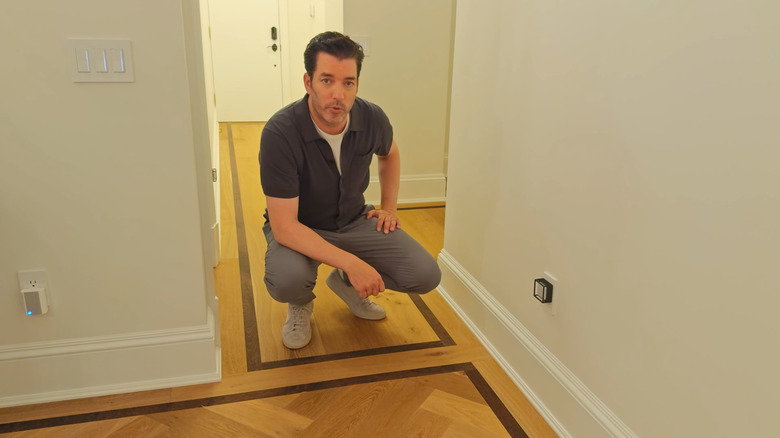
Your floor is one of the largest surface areas in your home. Therefore, making the wrong flooring choice could easily set your whole design off kilter. For some homeowners, that could mean picking a floor color that's too dark. For others, it could be installing trendy patterns that quickly go out of style. But for Property Brothers' Jonathan Scott, one of the biggest mistakes to avoid is using too many types of flooring at once. "I have a rule: You should never see more than two types of flooring from any one place in your home," Scott said in Season 6, Episode 13 of "Forever Home."
That means, if you're standing in a hall and can see the bathroom and a bedroom, you don't want all three spaces to have different flooring. Limiting the number of flooring types in your home will help create a more cohesive design between spaces and provide continuity in sightlines throughout the house. This rule doesn't mean you can only have two types of flooring in the entire home, but reducing visible flooring changes from any one area will help everything feel more put together. The right combination of flooring can also influence everything from the vibes of your home to functionality, so you definitely want to choose wisely.
Tips for limiting the number of flooring types in your home
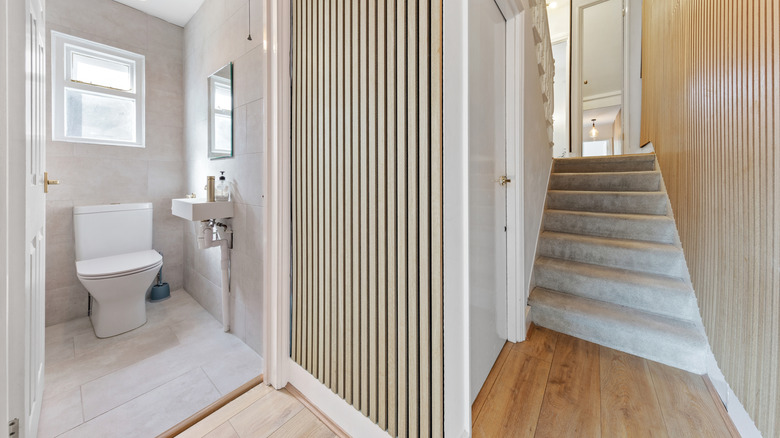
Not all rooms in your home are created equal, and some spaces have unique concerns that can make reducing the number of flooring types a bit tricky. For example, you may want your bedroom floors to feel cozy while keeping the floors in your bathroom and kitchen easy to clean and maintain. Carpet in the bedroom checks the "comfy" box, but using carpet in the bathroom can be a bad idea since it absorbs moisture and promotes mold growth. This is why strategically choosing where you have different types of flooring is key.
Jonathan Scott suggests luxury vinyl planks (LVP) for main living areas because they're durable, attractive, and budget-friendly. Because LVP is also water-resistant, you can easily use the same flooring in the kitchen and bathroom to reduce transitions while opting for another material like carpet in the bedroom. Adding a transition strip between carpet and tile or wood floors can help bridge uneven surfaces and create clearly defined spaces. Alternatively, you could opt for luxury vinyl planks, tile, or hardwood throughout the entire home and use area rugs in the family room or bedroom to soften those spaces.