

Take Mike Holmes' Advice: These 5 Home Upgrades Aren't Worth The Money

HGTV's Mike Holmes knows a thing or two about home upgrades. As of this writing, the professional contractor has completed over 220 renovations on behalf of homeowners who've solicited his advice and help with a wide range of projects. It turns out some of them simply aren't worth it. From installing laminate flooring in certain interior rooms to painting your home's brick exterior, there are several home upgrades Holmes doesn't recommend.
Whether you want to spruce up your space or you're planning to add features that can help your home sell for more money, Holmes advises that you carefully consider both your budget and the overall return on investment before getting started. "There's no point in going broke doing a renovation when you won't see a decent return," he wrote in a Make It Right blog post. "Be smart about your choices."
You may already know that adding an in-ground swimming pool or converting your garage into a bedroom probably won't pay off when you try to sell your home. Holmes says there are several other upgrades that also don't add much (if anything) to your bottom line. But no matter what you have planned, if you want your home improvements to be worth the money, the contractor repeatedly emphasizes that you must do your research, plan carefully, and never, ever rush the job.
Installing the wrong kitchen flooring
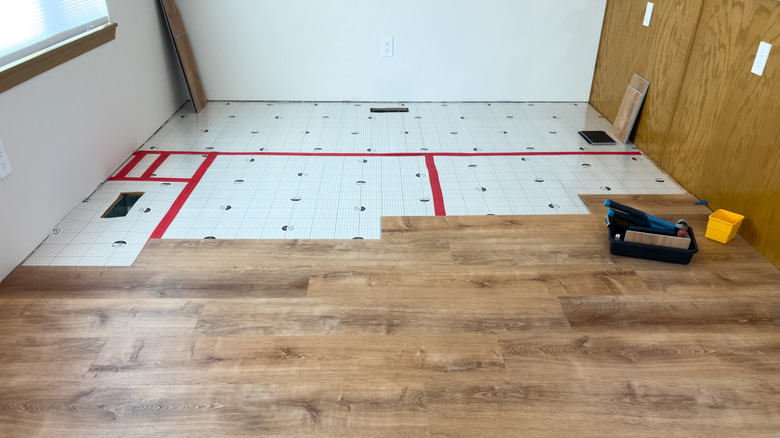
Many realtors swear that kitchens sell houses, so you may be thinking about updating yours. Fresh paint, new hardware, or updated appliances can make a positive impact on potential buyers, but Zillow data indicates that major changes like new flooring won't always provide the return you expect. According to Mike Holmes, that's especially the case if you decide to replace your kitchen floors with the wrong material.
"Wood flooring is inviting but you should think twice about using it on the kitchen floors where high traffic and water can damage the finish. This will lead to early failure," Holmes cautioned on the Make It Right blog. If you want to heed his warning but still love the warm look of wood, the contractor suggests using salvaged barn wood; cheaper vinyl flooring, on the other hand, is a no-go. "The mastics are prone to mold, and the manufacturing process is not environmentally friendly," he explained. "Vinyl flooring is not damaged [sic] resistant. Drop a couple of sharp objects on the floor and you will likely see dents." Both materials are relatively inexpensive, but since they wear out quickly you'll spend more replacing them long-term.
So what should you do if your kitchen floors are badly in need of updating? The answer may surprise you. Mike Holmes' top pick for durable, easy-care kitchen floors is actually tile. "Ceramic and porcelain tiles are my recommendation for kitchen floors. They are durable, attractive, easy to clean, and available in a large variety of patterns and finishes," said Holmes.
The warning against DIYing a tiled floor
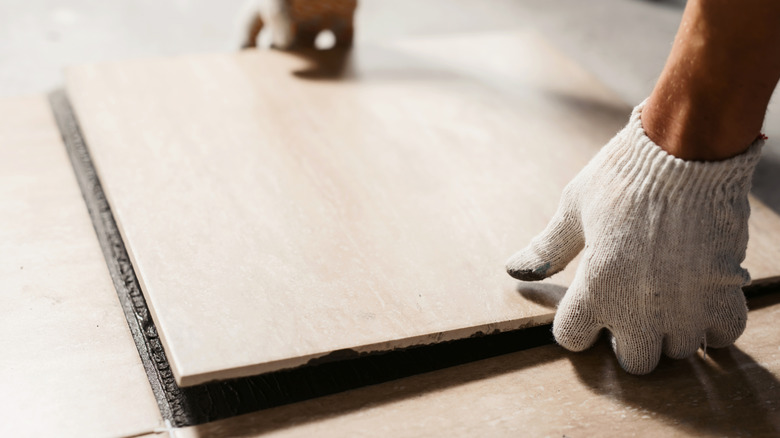
Unfortunately, even though ceramic tile is one of Mike Holmes' top flooring picks, he doesn't recommend that you lay it by yourself in your kitchen or anywhere else. Along with the expense of buying or renting a wet saw, tiling is also physically challenging work that your knees and back will ultimately pay for. "Tiling is not a DIY job. Installing tile requires experience and skill, not to mention the materials, supplies, and tools it takes to complete the job. Professional tile setters have spent years perfecting their art," he wrote in another blog post.
The expert has seen his fair share of expensive tile disasters in the contracting world, too. On one particularly memorable episode of "Holmes on Holmes", homeowners were left with cracking tiles that never bonded to the floor after a contractor used the wrong techniques and materials. Once a floor is laid incorrectly, Holmes says there's absolutely no way of repairing it. "The grout would continue to crack on a monthly basis. The tiles would eventually loosen and snap up everywhere," he explained during the show (via YouTube). If it wasn't for a very understanding supplier, the homeowners would have had to pay for the entire floor twice, plus the cost to rip up the shoddy work!
If hiring a professional to tile your floors simply isn't in the budget, there's one piece of advice from Holmes you should take. "The most important thing to start with? A level surface," he said in a short video on his YouTube channel. Consider products like Sika Level 125 Self-Leveling Cement Underlayment, which you can get at Home Depot.
Avoid huge or cheap bathroom fixtures (or live to regret it)
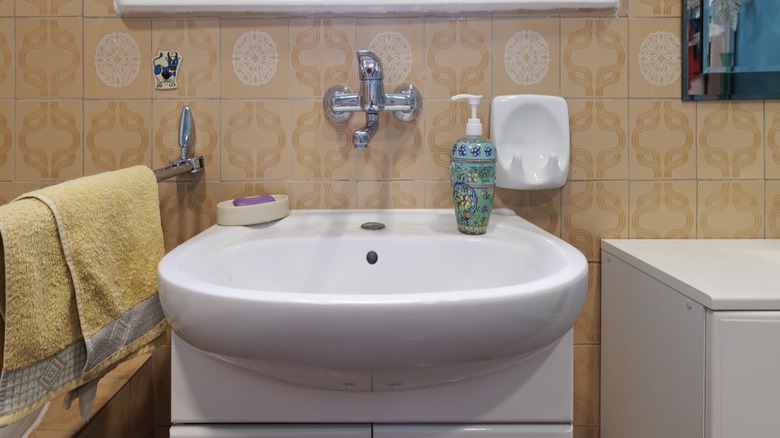
A bathroom renovation is another home upgrade that can add significant value when it's done right. However, whether you hire a pro to help or decide to DIY, Mike Holmes says there's one way to really waste your money. "Don't use large fixtures in a small bathroom as it will make the room seem smaller," he wrote on the Make It Right blog.
That's right. It turns out bigger isn't always better. Not only will large fixtures, like oversized vessel sink basins and elaborate faucets, make a small space feel even more cramped and crowded, they're also way more expensive. "Instead, choose a fixture that complements your small vanity," Holmes advised. Although buyers may be willing to pay more for spa-like features, the same goes if you opt for a rain showerhead or elaborate shower system. Since these fixtures can cost hundreds, and sometimes thousands, of dollars, make sure to carefully consider the overall proportions instead of just your personal preference.
Holmes also has some other tips to make sure your bathroom renovation investment is well spent. "Consider chrome or polished finishes as they reflect light better than matte finishes. It's also important to choose a good quality faucet, made of brass for example, as they are very durable and typically don't corrode," he wrote in his post. Choosing a cheap faucet may feel like an upgrade for the first year or two, but what you'll save at the home improvement store you're likely to spend on repair calls or replacements within a few years.
Do not paint your brick house
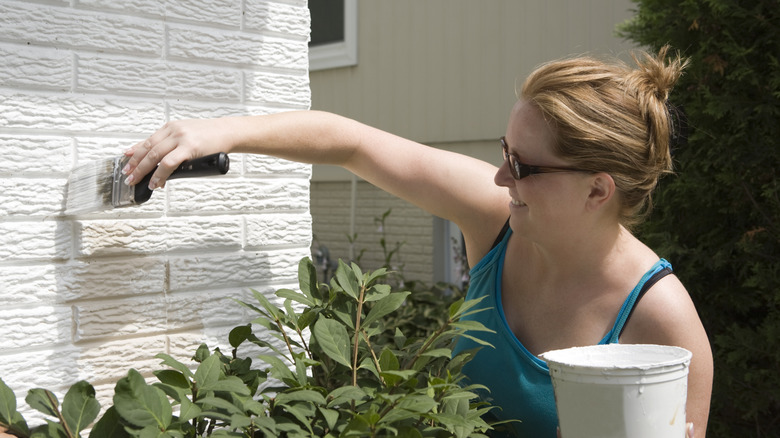
Despite its trendy look, Mike Holmes says you should think twice before painting your home's brick exterior. While he acknowledges that curb appeal really matters, in another blog post, the contractor echoed what brick industry experts, as well as some interior designers and realtors, think about taking the painting plunge. "Generally, brick is pretty low-low maintenance and hands-off. That changes when you paint it," said Holmes. "So while it is possible to do so, bear in mind that you're signing yourself (and any future homeowners) for a lifetime of extra brick maintenance. Is a fresh look worth that?"
According to Angi, painting a brick house can cost up to $13,000. You may feel tempted to spend the money, especially if you have ugly or cracked brick that you want to hide. But the contractor warns that this could cause even more costly problems. "Paint can block a brick. It's organic. It needs to breathe," he explained during an episode of "Mike Holmes Makes It Right." Paint creates a barrier on porous brick, which can make it start flaking, cracking, or growing mold. These are costly issues on their own, but painting a brick house will also cost you more on maintenance. Plus, it's extremely expensive to remove if you change your mind down the road.
When you're set on changing up the look of your brick home, Holmes recommends using stain instead of paint. As he wrote on his blog: "This seeps into the pores of the brick, giving it a new look, without simply covering the surface."
Cutting corners on permitting will cost you later

No matter what upgrades you're considering, Mike Holmes says most homeowners make the costliest mistakes before their project even gets started. If you're not DIYing, you're likely wondering who you should hire and how expensive they will be. "The nub of the problem is that most [people] simply don't know what questions to ask when choosing a qualified contractor. They don't know what they don't know," Holmes explained in a Holmes Approved Homes blog post. "As a result, they make assumptions that lead to five big (and often costly) mistakes when planning a renovation."
Unpermitted work is one of the worst mistakes you can make. "Many homeowners don't realize that it's not their contractor's responsibility to obtain any permits for their project," Holmes continued in his post before adding, "Unfortunately, many contractors are either too lazy or they bypass permit applications to save time and money. The homeowner is initially happy because construction begins or ends when they want; and the contractor's proposal costs less."
However, what you save in upfront hassle you'll definitely spend on those upgrades long-term. According to Holmes, the financial consequences can be devastating. Any home upgrade, no matter how cheap it may seem at first, isn't going to be worth the money if you don't have proper permitting in place before getting started. Along with signaling to appraisers and potential buyers that you've cut corners, you can face serious fines, claim denials from your insurance company, or even be forced to tear down, remove, and redo the work that required a permit in the first place.