

3 Things You Didn't Know Aluminum Foil Can Do In Your Bathroom
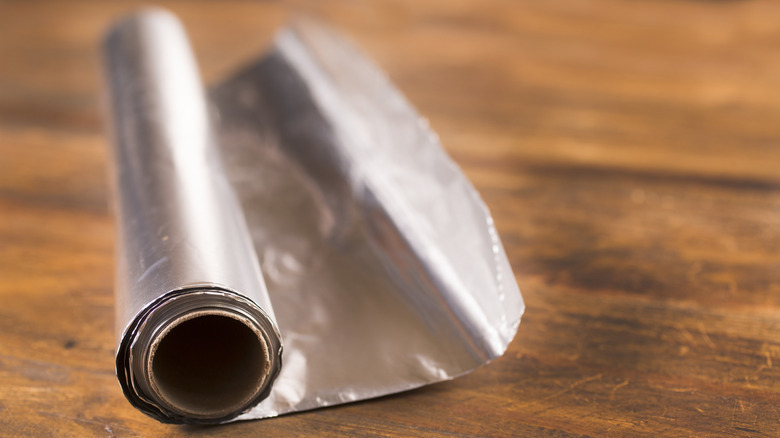
If you tend to reach for aluminum foil when you're baking or cooking in the kitchen, you're certainly not alone. It's one super handy helper in recipes and everyday kitchen tasks, whether you're lining baking sheets to prevent messes or wrapping it over a casserole to lock in heat.
Aluminum foil is more than just a shiny, heat-conducting kitchen tool, though. It can be a great tool to have in your arsenal for tough tasks like cleaning your oven — but you can take it out of your kitchen, too. If you have yet to try putting a roll of aluminum foil to use in the bathroom, we've found multiple ways you can make cleaning and maintenance tasks easier. Discovering how much aluminum foil can do in the bathroom will surprise you!
Aluminum foil is true to its name: It's made up of 98.5% aluminum, plus a small amount of iron and silicon. In years past, foil was often made of 100% aluminum, but alloys have become increasingly popular because they can strengthen the foil, a detail that increases its versatility. While it might best be known as a heat conductor (for cooking) and a barrier (for both cooking and food storage), the material is also moldable, so you can customize its shape to suit your needs, and it's surprisingly durable in the face of stains, burnt-on messes, and high heat. Though you might not be subjecting it to oven-like temperatures in your bathroom, foil can prove its versatility by making entirely different tasks a little easier.
Remove hard water spots on faucets and fixtures
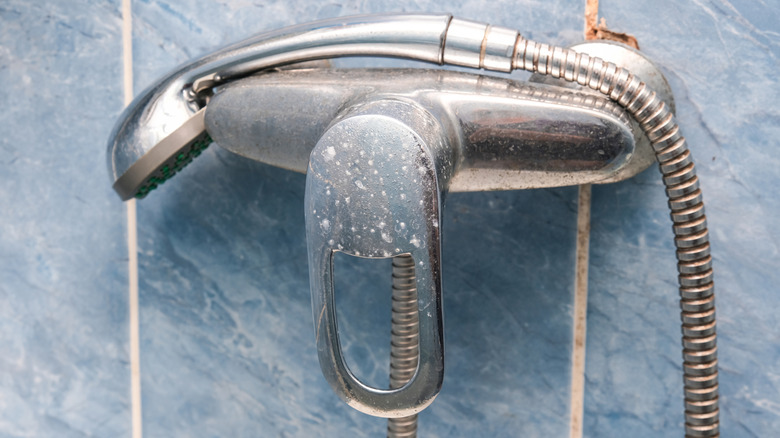
You might not think of aluminum foil as an abrasive material, but it can be — in fact, it can be tough enough to gently abrade the stubborn hard water stains and mineral buildup that appear on bathroom fixtures like faucets if your home's water has high mineral content. If you've tried other cleaning solutions or DIY tricks, aluminum foil can eliminate hard water stains for you with just a little bit of elbow grease required. All you need is a sheet of foil wadded up into a ball; then, you can take that textured ball and start scrubbing your sink faucet, shower, and showerhead, watching as those white spots disappear without any fancy solutions or additives.
Why is aluminum foil so effective and quick-working when it comes to hard water stains? Well, it's partly due to the raised, slightly sharp, and abrasive edges that pop up when you crumple foil into a ball. Those rough edges make the foil abrasive enough to scrub away buildup.
If you happen to have hard water stains building up on your glass shower doors, you can try this aluminum foil trick on them, too. You'll just need one more ingredient: either your go-to dish soap or bathroom cleaning solution. Spray the soap onto your glass shower doors and get scrubbing with your foil ball, then rinse the entire surface clean for a spotless finish.
Prevent bathroom mirrors from fogging up
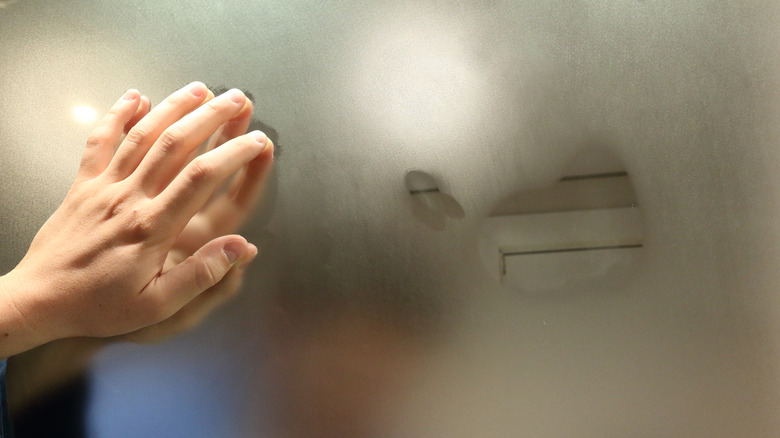
Sure, a hot, steamy shower feels almost spa-like, but all of that moisture can cause surprising damage over the long term and wreak havoc on your bathroom's painted walls (or wallpapered walls), wood surfaces, and more. Plus, it can be particularly annoying immediately after a shower when you step out and come face-to-face with a completely fogged-up mirror. If you're looking for ways to stop the post-shower steam in your bathroom and prevent fogging, you can reach for a roll of aluminum foil.
Bathroom mirrors tend to fog up because hot showers create humid, warm air that's full of moisture. When it comes into contact with the cool glass surface of your mirror, condensation develops and obscures the surface with fog. So, in order to prevent that fogging, you'll need to either warm up the surface of your mirror...or turn down the temperature on your showers.
The former is easy to accomplish with a simple layer of aluminum foil. Just remove your wall-mounted bathroom mirror and lay a single sheet of foil over its backside. The dull side should face the wall once re-mounted (though technically, the shiny and dull sides of aluminum foil are identical when it comes to reflecting heat). This will insulate the mirror so it warms up a bit along with the air inside your bathroom as temperatures change and the foil absorbs heat, which, in turn, helps prevent that condensation effect that creates a frustrating fog.
Sharpen scissors, nail clippers, and more
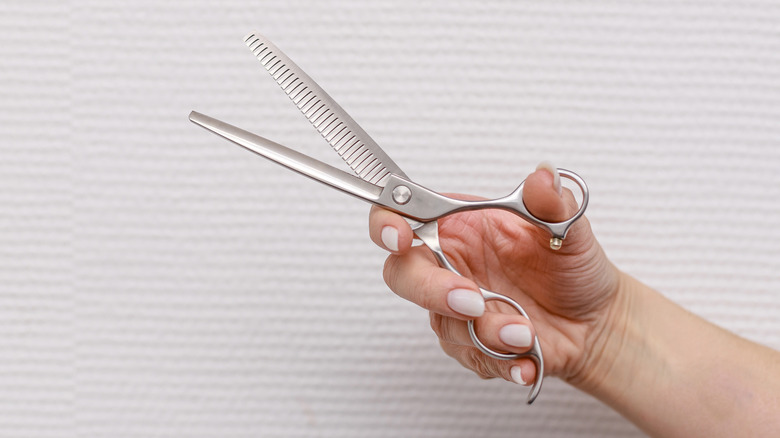
If you've noticed your once-sharp grooming tools, like the scissors or shears you rely on for cuts and trims, or your favorite nail clippers aren't quite cutting it like they used to, it's likely time to sharpen them. Yes, that's right; instead of replacing these items, you can sharpen them yourself in just a matter of minutes and prolong their lifespan. Technically, you aren't sharpening the blades. You're honing them, or maintaining your scissors, nail clippers, or cuticle nippers. While sharpening removes metal from the blades, honing merely realigns their edges and makes them feel sharper, so you can extend their usability a bit longer before you do need to officially sharpen or replace them.
Here's how to hone your bathroom tools: Break out your roll of aluminum foil, and you have a ready-made honing tool you can bring into your bathroom to freshen up blades of all kinds. To bring sharp edges back to your bathroom scissors, you'll want to fold a single 12- to 14-inch sheet of foil five to six times. Then, use your shears to cut into that thicker foil a few times, or until the blades are sharp enough that you're satisfied.
You can follow this same process for cuticle nippers and nail clippers, too. While it may not prove to deliver precision-sharp blades on any of these bathroom tools, it is a quick and easy trick that can give you better short-term results on dull blades without much investment.