

15 Smart Ways To Reuse Mesh Produce Bags: You'll Wonder Why You Didn't Think Of These Sooner
We may receive a commission on purchases made from links.
According to a 2024 EPA estimate, the United States generates over 96 million tons of packaging material waste per year. Since plastic mesh produce bags are also a type of packaging material, it really wouldn't do to add to that already large number by tossing used ones out. Although these bags are very practical for grocery store use since they keep fresh fruits and veggies lightweight and fresher for longer, that doesn't mean that's all they're good for. Instead of throwing away produce bags after a single use, consider repurposing them for various smart tasks and hacks around the house. This is a great way to cut down on plastic waste at home while engaging in easy, creative DIYs.
Below are 15 clever ways to upcycle produce netting. Many of these hacks have practical and functional uses. However, some also have aesthetic and decorative value. From holding bars of soap to supporting a growing vegetable garden, theses bags have a surprisingly wide range due to the variety of colors and simple design. Most of the DIYs below only require household materials to complete, so there's no need to buy costly extra supplies and materials. These projects are budget-friendly and applicable all over the house.
Wrap soap bars in mesh to keep residue off bathroom shelves
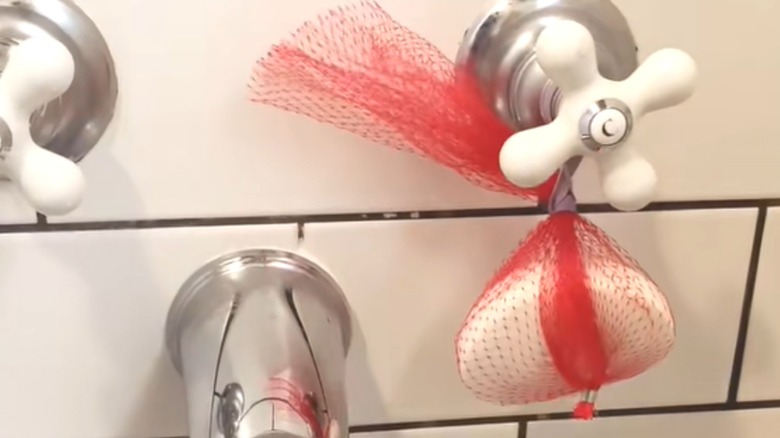
Even though soap bars are better for the environment and can last longer than liquid soap, many people steer clear of them because of the almost inevitable mess. Since they typically sit unwrapped between bathing sessions, they are notorious for leaving soap scum behind. But you can keep the bars from resting directly in a shower or bathtub by wrapping them with a piece of produce mesh bag. Tie the soap with a rubber band then hang it on a faucet or spout.
Keep flower arrangements upright with a DIY mesh
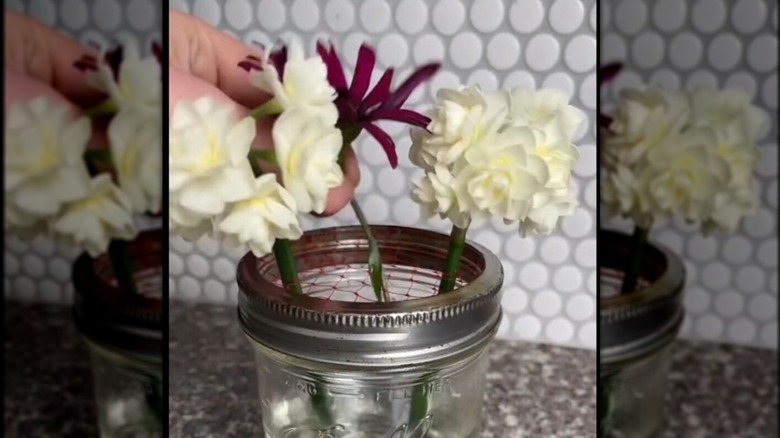
If you have a mason jar with a screw ring, transform it into a great display for bouquets or houseplant cuttings. Take off the lid and screw ring, and cut off a small piece of produce netting to fit over the top. Pin down the mesh over the opening by screwing the ring on top. Tuck each flower or houseplant stem into the individual diamond-shaped holes in the netting. This makes the display look fuller and evenly dispersed around the top of the jar, while also propping the cuttings upright.
Wrap a bunch of mesh bags together to make a scrub sponge
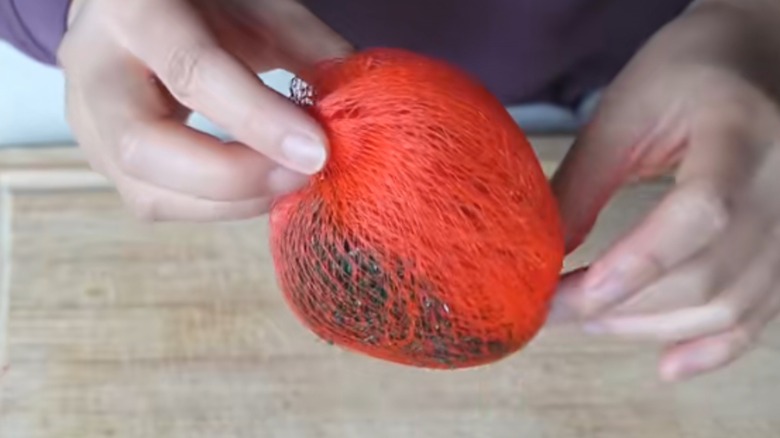
Start saving your produce mesh bags from your grocery store runs. Once you have enough to form a small clump, stuff most of them into one larger piece of netting then knot it and tuck it around itself until you form a sturdy but flexible ball. The mesh-like material is quite abrasive, making it great for scrubbing pots, pans, dishes, utensils, and more. Keep it clean by rinsing it with soap or white vinegar between uses.
Turn a mesh bag into a decorative piece
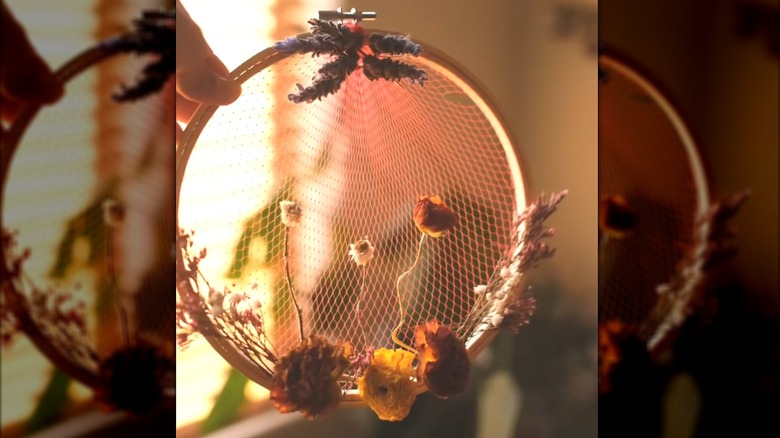
Mesh produce bags are useful beyond being repurposed for functional needs. Take an artistic approach by transforming produce netting into a rustic, one-of-a-kind wreath for your wall. Put a flattened piece of mesh inside of an embroidery hoop and pull it taut. Thread real dried flowers or artificial greenery through the holes in the mesh to create a rustic, farmhouse design like the TikToker @sibster_made. Hang the finished design on a wall or door, prop it against a window, or even add it to a unique centerpiece anywhere in your home.
Add mesh bags to plant pots to keep dirt contained
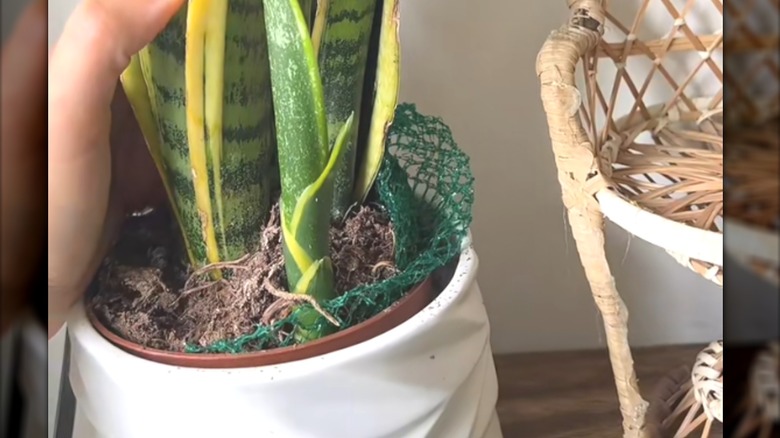
Drainage screens for plants aren't expensive, but there's no reason to pay for them when produce bags are reusable and free. Put a drainage screen at the bottom of your plant pot to allow water to drain while keeping potting soil in place. This helps prevent overwatering while also keeping indoor tables, shelves, and counters clean. The mesh is trimmable with kitchen scissors, making this a brilliant produce bag idea for plant parents.
Upcycle mesh bags into homemade keychains
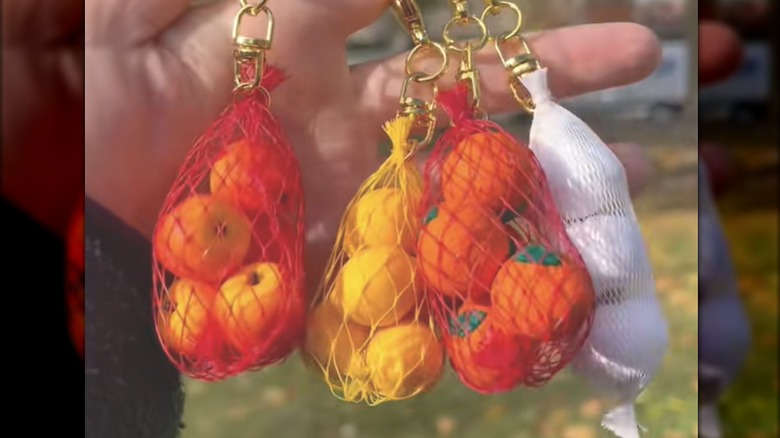
Create mini stocking stuffers or spontaneous gifts for loved ones by cutting a produce mesh with smaller holes into a small square, then tucking Crrezhai Mini Resin Fruits inside, before tying it in a small knot around a keychain ring or clasp. You can make many of these tiny keychains for cheap, especially if you buy a bulk pack of key rings like the Hxsemayig Keychain Hooks with Key Rings. These gifts pack a lot of whimsy and are quite affordable.
DIY a plant hammock from netting to support large produce
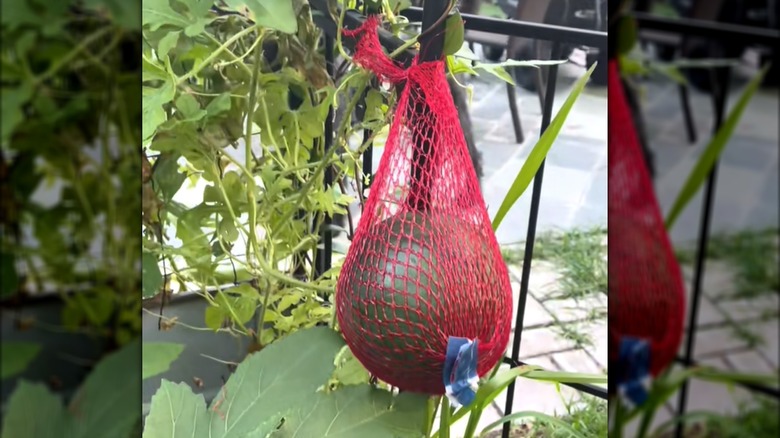
Large melons, squash, and other massive fruits and vegetables will fall if they grow too large for a vine to support. Being large doesn't mean they're done growing, and they may collapse before they're fully ripe. Instead of wrapping your fruits with mass-produced garden hammocks, upcycle produce bags instead. Wrap the produce bag around a growing fruit or vegetable, and affix it to a trellis, fence line, or other supportive structure. This enables fruit to fully develop before being harvested.
Make the mesh netting into mini loofahs
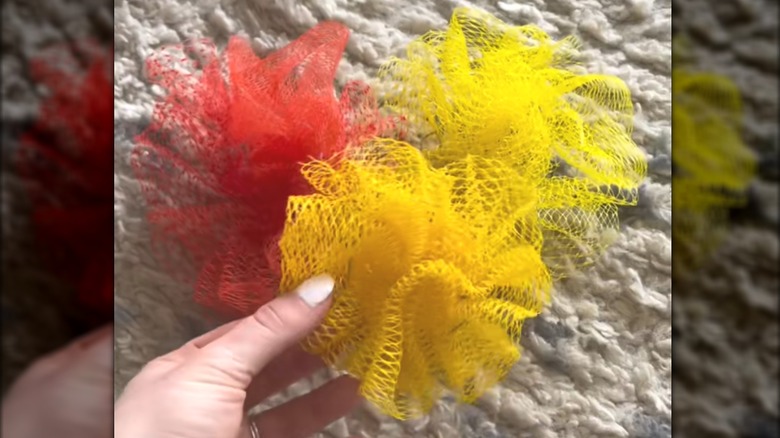
Do your part to save the planet by making your own sponges from leftover produce netting. All you need is a single bag per loofah. Follow the steps in TikToker @meg.gumbo's video, folding a produce bag into a rectangle shape over and over again. Tie the middle with string or twine, and splay out the sides to make a sponge-like shape. These mini loofahs are completely free to make, and you can replace them often at no cost too (well, except the cost of produce, of course).
Create an exfoliating wash cloth from plastic netting
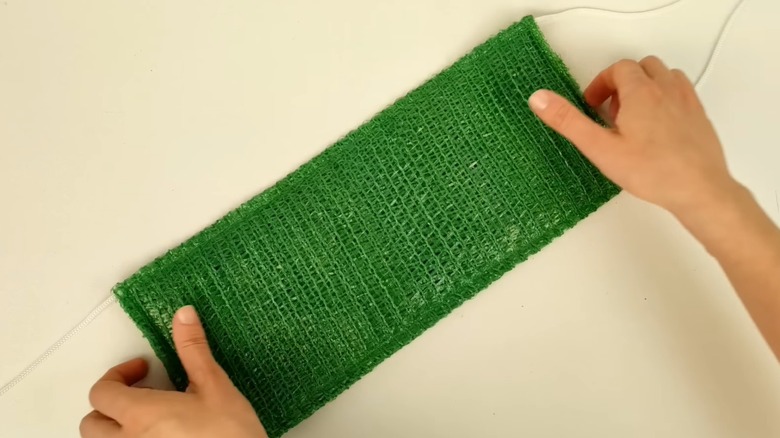
Cover more ground when exfoliating by making something larger than a loofah. Fold a large produce bag into a rectangle, and sew a half-circle of a rope like PH PerkHomy Cotton Butchers Twine on both ends. When holding both ends, you can scrub hard-to-reach places like your back for a full exfoliating experience. Remember to be gentle, let the wash cloth dry between uses, and replace it regularly. Redness and inflammation are signs that the washcloth is too rough and you're scrubbing too hard.
Craft a unique hanging earring holder with a mesh center
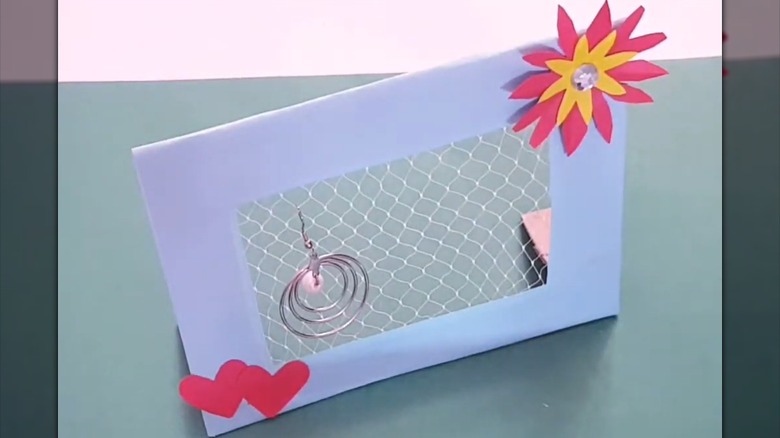
This smart jewelry organizer deserves center stage in your home, especially since you can craft it by solely using repurposed products. Cut out a square frame of cardboard and a similar-sized piece of produce netting, then staple the netting to fill the square. Glue colored craft paper over the cardboard frame and craft small paper embellishments to go on top. Now you can hang pairs of simple earrings on the netting. As long as it's pulled taut, it will support lightweight jewelry.
Skip the hardest step in making dreamcatchers with produce netting
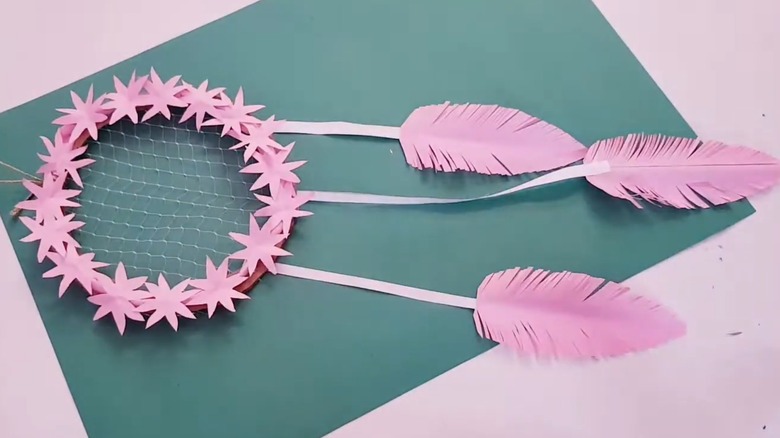
The trickiest part of making dreamcatchers is weaving the macramé center. If you don't mind alternative dreamcatcher styles, replace this step with a repurposed produce bag. Cut a piece of cardboard into a thin, hollowed-out circle, and staple a sheet of produce netting across it. Trim the excess pieces, glue rolled-up craft paper around the circle rim, and add the rest of the dreamcatcher elements as seen in CRAFT STACK's YouTube tutorial. Create the feathers out of craft paper, or purchase a small pack for under $2 at Hobby Lobby.
Use produce mesh to make line art embroidery
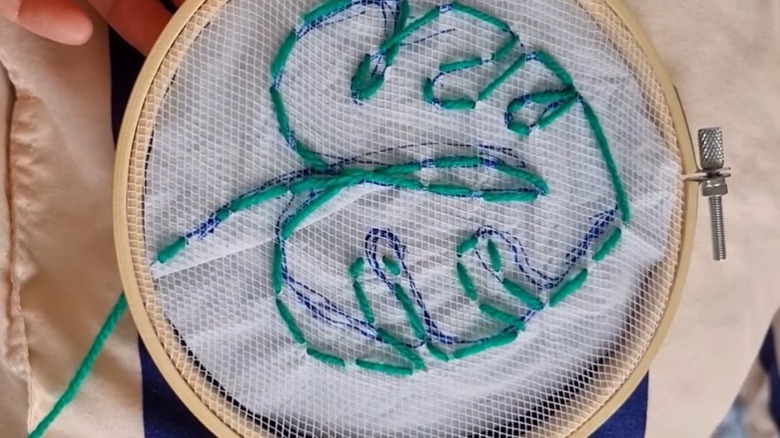
Sewing hobbyists can reuse produce bags with this clever hack. Instead of freehanding an embroidery design, tuck produce netting over the fabric in an embroidery hoop. Use the holes to guide your hand in making even and correctly placed stitches. You can also do this project without any solid backing to create a gorgeous piece of line art with a near-transparent background.
Upcycle plastic netting for gift wrapping
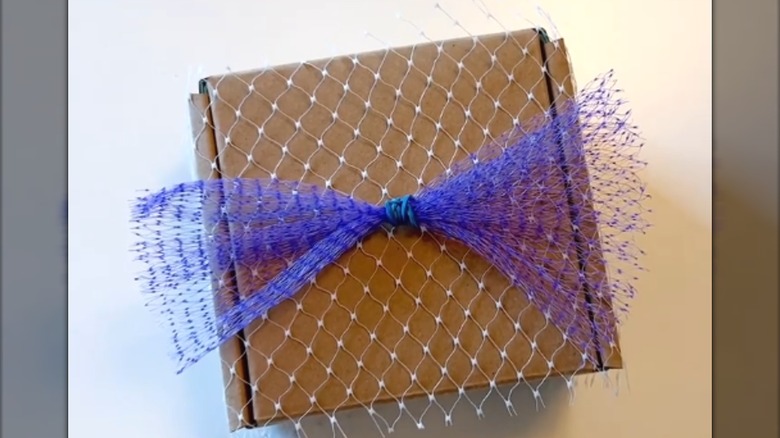
If you're looking for an eccentric embellishment to dress up a gift box or wrapped gift, try adding a produce bag. Cover the box in a layer of produce mesh then twist another mesh piece into a bow shape by tying a rubber band in the center and gluing it to the box. The finished product is a textured, one-of-a-kind wrapping job that doesn't cost anything extra to craft. Fortunately, produce mesh comes in a variety of vibrant colors, giving you plenty of creative options when it comes to this gift wrapping hack.
DIY a sprouting strainer with produce netting
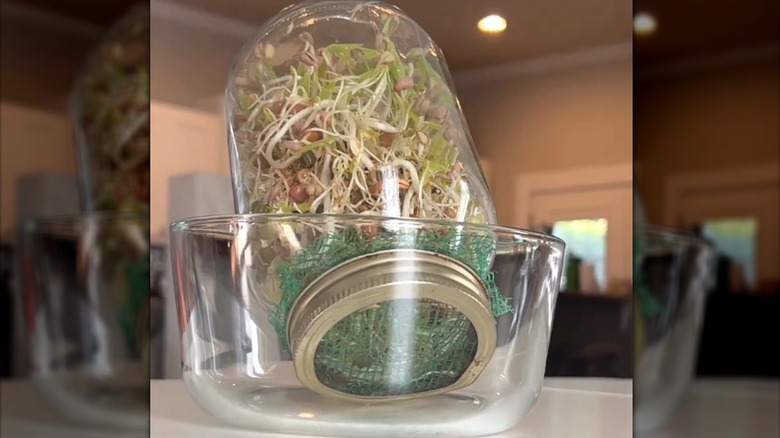
Sustainability has been a huge trend in recent years, and growing sprouts and herbs at home are popular hobbies. Create a sprouting lid for a mason jar without buying a fancy kit. Instead, grab any old mason jar and prop it diagonally and facing downwards using a sturdy glass bowl. Take off the lid, replace it with a produce bag, and re-fasten the screw ring to keep it in place. This creates a sprouting strainer made entirely from objects already found at home.