

The Colorful Flower That Self-Seeds And Naturally Boosts Your Garden Soil
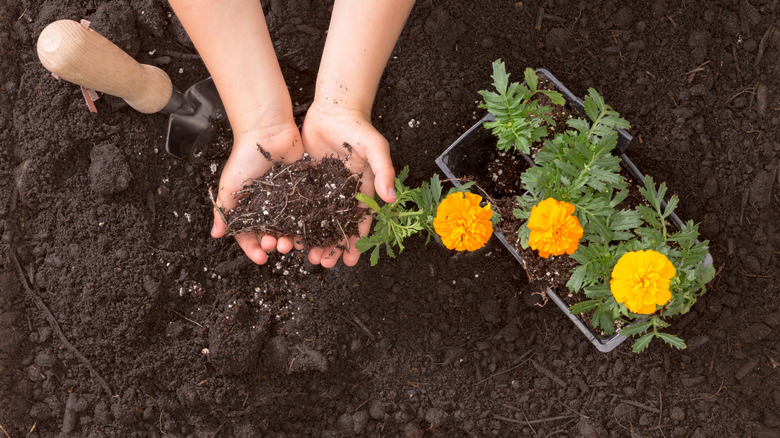
With bright tones of orange, yellow, and red, marigold flowers (Tagetes spp.) will easily make your garden more vibrant. After the stunning blossoms have faded away and the plant has died, the roots will decompose to help return some nutrients into the soil. Plus, marigolds are plants that will help pollinators do their job, attracting butterflies with their nectar and gorgeous blooms. Though these bright flowers are annuals, marigolds will likely come back from year to year. By going to seed after they're done flowering, marigolds set themselves up to return to your garden again the following season. The seeds can also be a snack for birds, bringing more feathered friends to your outdoor space.
Besides adding nutrients to your garden's soil, a chemical that is released by the roots of certain marigold plants could also help make your soil better for the plants in your garden. As marigolds grow and their roots stretch into the dirt, alpha-terthienyl is put off into the soil. This helps to ward off nematodes that are parasitic to plants, specifically root-knot nematodes and lesion nematodes. These frustrating pests are microscopic, and root-knot nematodes will slowly eat away at the cells of the roots of your plants, making them a real garden nuisance. If you've been having problems with nematodes or want to prevent them from becoming an issue, growing marigold flowers is a natural solution. Different types of marigolds may work better against specific species of nematodes.
Growing and caring for marigolds in your garden
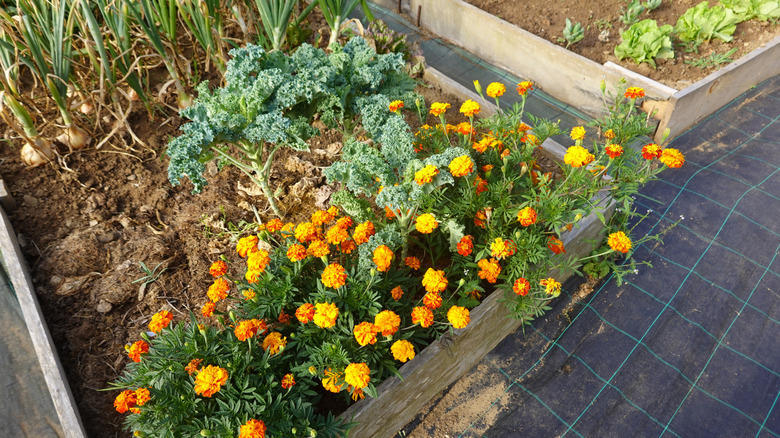
To start growing these colorful flowers in your garden, marigold seeds can be planted right into the ground once the temperature of the soil is consistently over 65 degrees Fahrenheit. Alternatively, you can start growing your flower seeds inside until outdoor temperatures warm up again. Marigolds will thrive in USDA hardiness zones 2 through 11, making them a great option to help the soil in different climates.
When planting marigolds to try to combat nematodes in the soil, you'll want the plants to be near each other. If there is room and weeds grow in your garden, the nematodes can hide and continue reproducing there. Space your flower plants apart by less than 7 inches, giving them enough room to grow without leaving space for weeds. When determining how often to water your marigolds, check the soil to ensure it's started to dry out a little before watering your flowers.
Consider planting your marigolds with your vegetables to protect your food-bearing plants from nematodes. Otherwise, if you just want to add more color to your outdoor space, you could plant marigolds in pots or as a vibrant border around your garden or landscaping. After your marigold flowers go to seed and die, the plants will start to decompose, putting some nitrogen back into your garden's soil. As the marigold's roots break down, they could also help to improve the structure of the soil.