

Why There's Simply No Need For Dryer Sheets Anymore
We may receive a commission on purchases made from links.
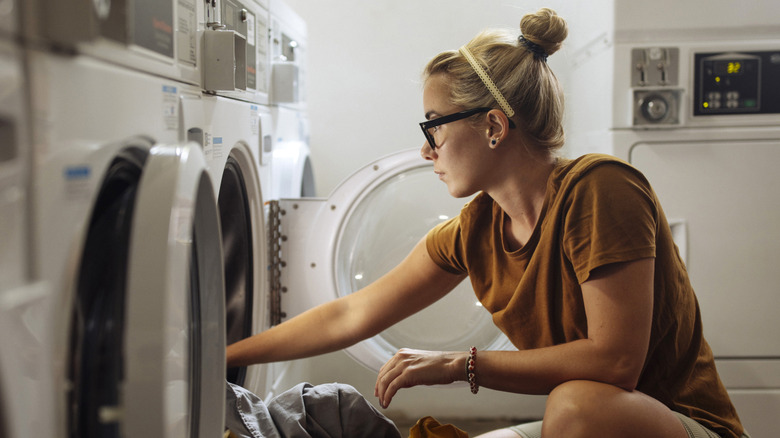
Between sorting and folding your laundry, reaching for a dryer sheet may seem like the simplest part of an otherwise never-ending chore. Invented in the 1960s by a chemist who wanted to make laundry easier for his wife, dryer sheets have long been touted as a way to easily reduce static cling while adding long-lasting fragrance. Made of thin polyester, dryer sheets are coated in several different ingredients, including sulfate-derived antistatic chemicals, fatty acids for softening, chemical fragrances, and clay that influences how these ingredients react when they're heated by your dryer. They represent a sizable chunk of the laundry product market, and demand for high-performance products that offer scent, static reduction, and softening in a single product continues to grow globally. However, as studies continue to reveal their potential downsides, some of us are wondering if we should ditch the dryer sheet altogether.
If you take the time to look at the care tags on your clothes, you already know to avoid using dryer sheets on athleisure made from synthetic fabrics, like your favorite yoga pants or kids' baseball uniforms. You also shouldn't use them when drying cloth diapers, fire-retardant blankets or pajamas, towels, and water-repellent shirts and jackets. In all of these cases, dryer sheets interfere with how these fabrics interact with moisture, reducing their wicking, absorbency, or protective capabilities. But according to environmentalists and toxicologists, dryer sheets may be even worse for your health (and the planet) than they are for your clothes.
What's behind the dryer sheet safety debate
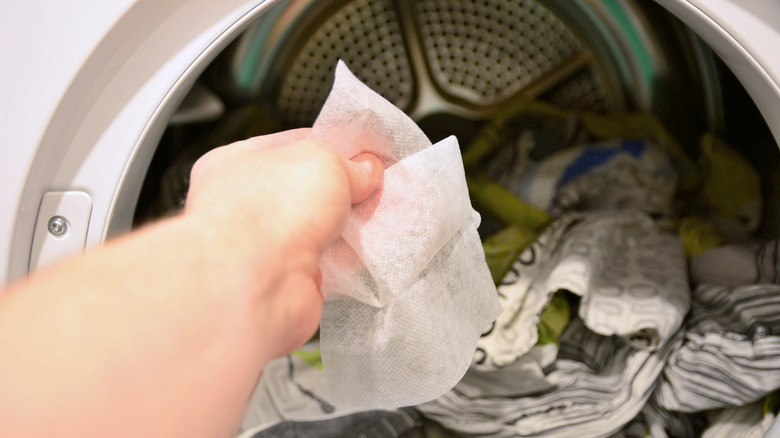
Procter & Gamble, the first company to introduce dryer sheets to the public, has produced "myth-busting" blog posts and videos featuring a white coat-clad laundry scientist demonstrating how to use their dryer sheets and debating the effectiveness of non-toxic alternatives. It's not the only manufacturer to claim that dryer sheets only contain chemicals that are "generally recognized as safe." P&G even goes one step further, declaring on its website that, "We exclude over 170 ingredients from our fragrances — more extensive than the list of ingredients banned by the International Fragrance Association (IFRA). Our unique perfumes are blended with the greatest care and utmost attention to safety. We conduct an additional safety assessment of our fragrances and their ingredients."
That transparency is commendable. So, why do dryer sheets still routinely make the list of household items that are ruining your health? Even if they're technically considered safe, research indicates that highly fragranced products create widespread health problems. Exposure can result in a range of symptoms, from mild skin and eye irritation to severe migraines or asthma attacks.
Adding to that, they're not great for the environment. "Not only do dryer sheets contain a variety of chemicals, but neither the plant-based nor polyester types are reusable, so they create extra waste," the Environmental Working Group (EWG) said in a news release. Along with being single-use, the combination of fragrance and heat from the dryer can release several hazardous and carcinogenic volatile organic compounds (VOCs) into the air.
Dryer sheet alternatives
As long as your washing machine is working, it's likely that your clothes are getting clean and don't really need the addition of extra fragrance. But if you aren't ready to break up with your dryer sheets just yet, according to EWG, some brands are less toxic than others. Plant-based ones, such as The Clean People Fabric Softener Sheets from Amazon, are among the highest-rated options. Other popular brands like Love Home & Planet and Mrs. Meyers are also considered low-concern choices, since they rely on natural essential oils instead of harsh chemical fragrances.
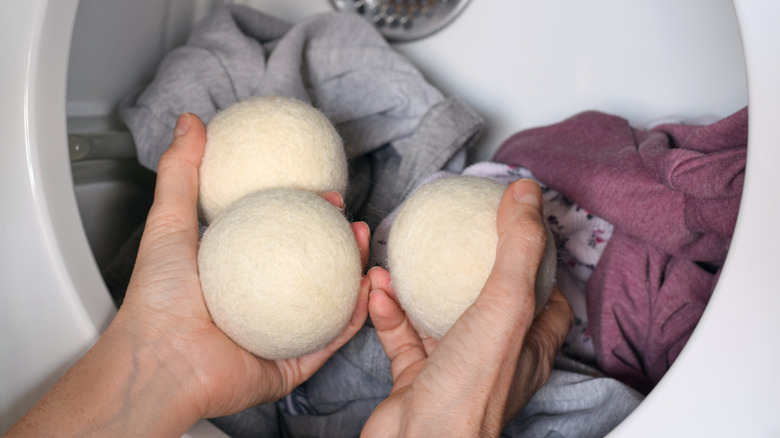
If you want an eco-friendly swap for a more sustainable home, wool balls are a popular dryer sheet alternative. Made from tightly felted wool — a long-lasting material that naturally reduces static — they can help shorten overall drying time as they tumble around your clothes or sheets, separating them in a way no thin dryer sheet ever could. Plus, wool balls provide just enough natural friction to soften fabrics over time without the need for fabric softener (another old-school laundry product experts say you may want to skip). Just add a few drops of your favorite essential oil to give your clean clothes a light scent.
There are other laundry hacks to steal from Instagram and Reddit, especially if you prefer a vegan solution. Some experts recommend tossing a slightly damp towel into the dryer during the last few minutes of each cycle to combat static and wrinkles, while others swear by balling up small pieces of aluminum foil. You can also try the time-honored trick of hanging your laundry on a clothesline to dry in the sun.