

Zoysia Grass Look Brown? Here's How To Know If It's Dead Or Dormant
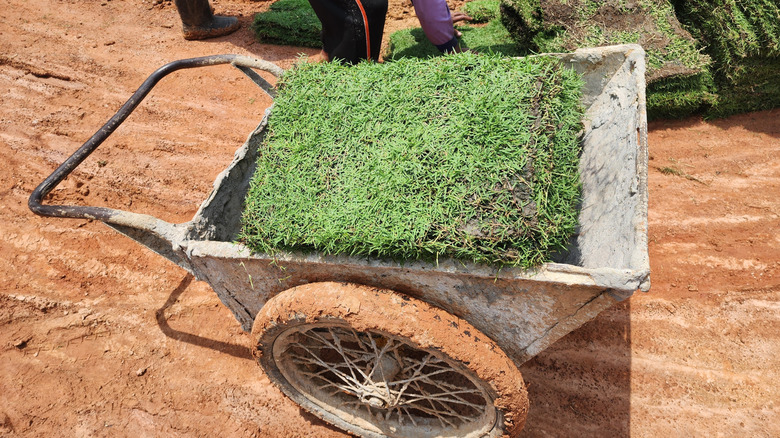
Among all the different types of grasses for your lawn, zoysia can offer several benefits. For one thing, it's soft and comfortable for playtime with your pets and kids (you might even choose to occasionally walk on it barefoot, like I do!). Zoysia also needs a lot of upkeep because of its fast growth rate, and it requires a sharp mower blade due to its density. It's understandable to be concerned if your once-beautiful lawn starts looking more dead than vibrant. Before you take any drastic measures, though, know that zoysia can turn brownish during dormancy. Fortunately, you can test the grass by hand to see if your lawn is actually dead.
Zoysia is a perennial plant that thrives in sunny, humid conditions. This is why it's a relatively common selection in the the Southern U.S., where many households choose to plant zoysia over bermudagrass. If you've recently planted zoysia turf or have moved onto property that already has it, seeing brown spots can be concerning. The grass typically goes dormant in the late fall, and greening occurs during mid to late spring, depending on where you live.
Whether or not you're in the zoysia dormancy period, consider trying a grass tug test to see if the turf is truly dead. As the term indicates, all you have to do is try to tug out several blades of grass by hand. If you feel resistance at the roots, your zoysia is likely just dormant. On the other hand, if the grass comes up rather easily, you could be dealing with dead turf.
Dormancy versus other causes of brown zoysia grass
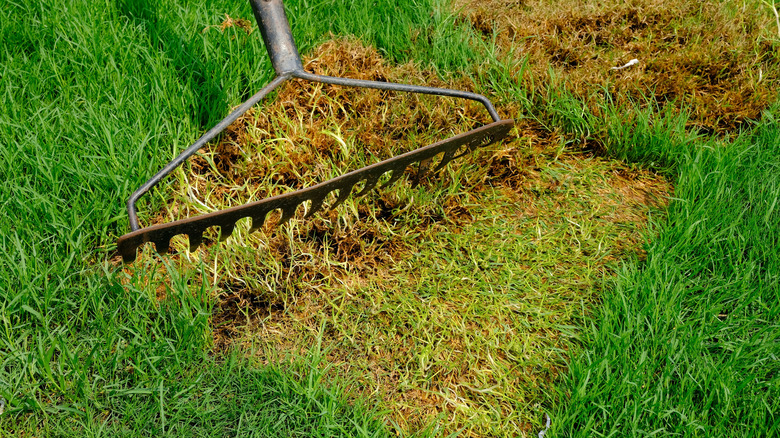
Aside from tugging out a few blades of your lawn, you can differentiate dormant zoysia versus dead grass using a few other key signs. First, this grass' dormancy tends to be a gradual progression. As the days get shorter and cooler, you'll notice some brown blades of grass mixed in with the green ones before it eventually all turns dormant. The entire turf then stays completely brown until warmer spring weather arrives. Around April or May, zoysia grass will start to green up.
Grass that has actually died tends to be an acute problem that happens when the zoysia gets stressed due to extreme drought or disease, like the fungal disease called large patch. You're also more likely to see brown spots throughout the yard rather than the gradual, uniform browning that occurs with dormancy.
Also, while zoysia is usually drought-tolerant, this grass isn't completely immune to problems when conditions are exceptionally hot and dry. If you're at the height of summer and you're seeing some wilting brown spots in your yard, chances are that the grass needs more water. This is particularly the case if your area is experiencing a lack of rainfall. Don't be afraid to give zoysia more water if it looks thirsty during the winter months as well. You'll also want to know the most ideal time to water your lawn for optimal health. Doing so can prevent the grass from succumbing to drought stress.