

Don't Throw Out Wood Ashes - Repurpose Them To Make Your Garden Soil Thrive
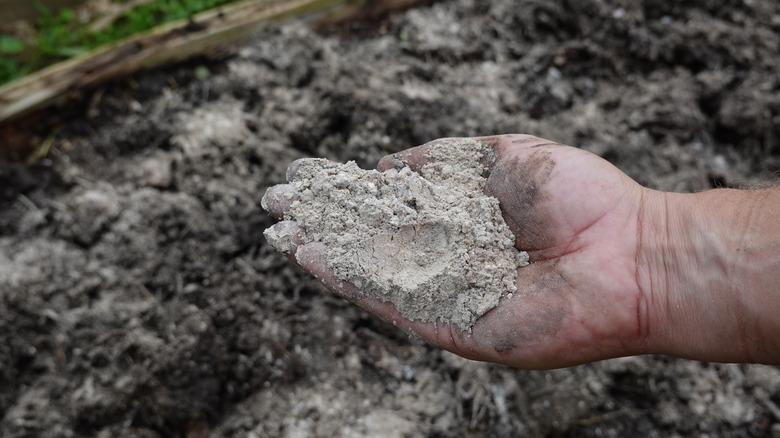
If you've been lighting fires in your fireplace recently, you might want to think twice before throwing out your ash. While those burned firewood remnants might seem useless, they could be quite beneficial for your garden and the soil that helps feed and fuel its plants. Once burned, all that ash can help grass grow, as it holds nutrients that can alter the acidity of soil and give certain plants the boost they need to thrive. You don't even need to turn wood ash into another soil amendment like compost (although you can do that, too) in order for this one-time debris to enrich your dirt in no time.
That's because wood ash can infuse your garden soil with nutrients like potassium and phosphorus, which are essential for plant growth and health. If it was a fertilizer, it would have an N-P-K balance around 0-1-3, making it a valuable, natural amendment. Plus, since it's so fine, it will quickly break down into the soil, giving you relatively quick results. But, most beneficial of all is the calcium in the ash, which acts like a liming agent to alter your soil's pH, making acidic soil more alkaline. Here is how to incorporate it into your dirt.
How to change your soil's potential with wood ash
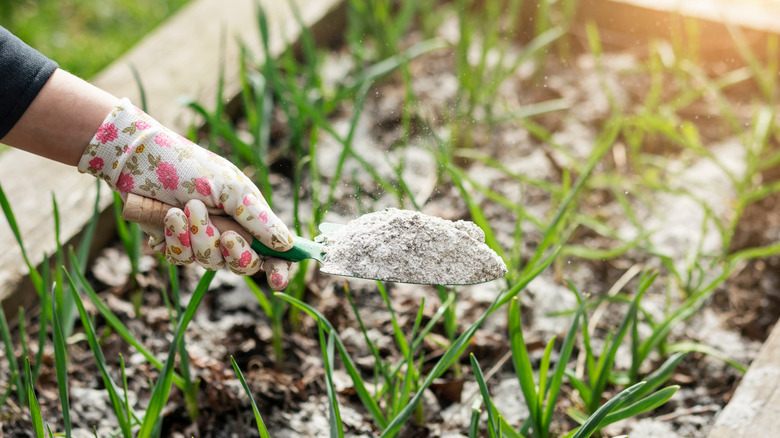
To reap the benefits of wood ash in your garden, there are two different ways you can leverage its potential. The easiest and most comprehensive approach, if your lawn or entire garden bed could use a pH boost, is to spread the ash in an even layer on top of the soil. Alternatively, you can mix it into your compost and apply it in a more targeted manner around plants like asparagus and juniper that thrive in acidic soil.
It's also important to determine how much ash your garden could benefit from. Opinions vary, with some recommending limiting ash to a maximum of 20 pounds per 1,000 square feet, and others suggesting no more than 10 pounds per 100 square feet. Ultimately, the right amount really depends on what your garden's soil needs and its current pH level. For example, acidic soil can use more ash than neutral soils, so if your dirt in neutral or just slightly acidic, err on the side of caution and apply 20 pounds per 1,000 square feet, mixing it into the top six inches so it's more dispersed. (If you're unsure where your soil's pH sits, you can conduct a soil test before turning to ash.)
And here's one more tip: You don't want to add your wood ash immediately after extinguishing a fire. To minimize the risk of any hot embers or burning wood causing a fire, it's best to wait at least 48 hours. However, some sources say to wait a full week to ensure everything has properly cooled. Additionally, you'll want to double-check the kinds of fertilizers you typically use in your garden to ensure the wood ash is safe to mix in. If you've applied (or plan to apply) any fertilizers containing nitrogen, you're better off skipping the ash so you don't run the risk of accidentally creating dangerous ammonia gas.