

How To Build A Simple Owl Nesting Box They'll Actually Like And Use
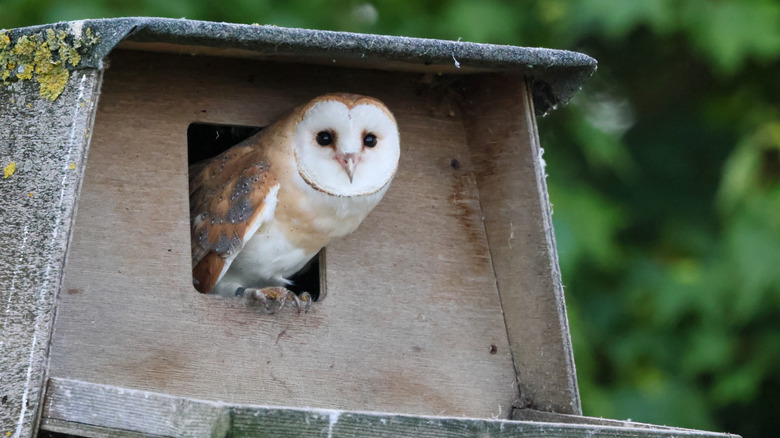
Owl boxes can be one of the greatest additions to your home, as you will not only be building a home for owls but also ensuring your space stays free of rodents. In fact, owls are one of the most ethical and effective forms of rodent control, as opposed to expensive and cruel rodenticides, because their control is completely natural. By building an owl box at your home, you can provide your nocturnal friends a safe place to nest while they raise their babies and get rid of mice. Because owls don't build their own nesting cavities, you can attract them to your yard by building them a perfect place. All you need is some plywood, hinges, and basic tools.
To get started, you'll want to first identify the type of owl you want to attract and build a box for, as different owls have different needs, particularly based on size. Larger owls, such as a barred owl, will need a larger box, while smaller owls, like the screech owl, will need a smaller box. If you know what type of owl is in your area, you can go to CornellLab's NestWatch site, which will provide you with an extensive list of nest box plans for the type of owl you want to house. There are also plans for several other birds in case you want to attract other species into your yard with a modern birdhouse DIY.
Building and mounting an owl box
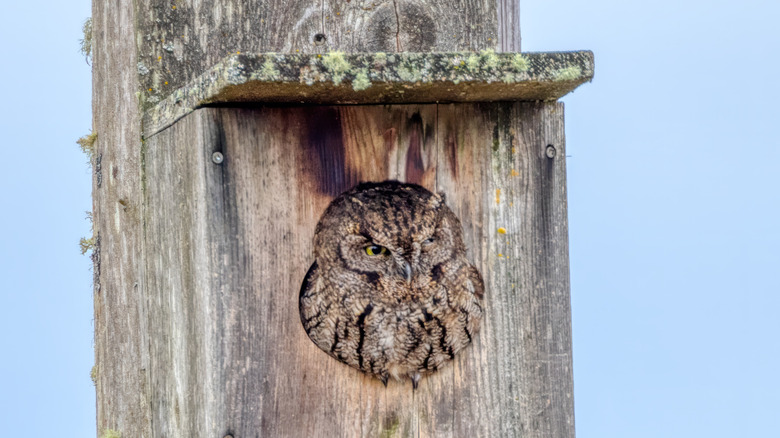
Most owl boxes, like this design from UC Davis for a barn owl, will use simple ¾" sheets of plywood. This design incorporates a raised divider in the middle of the box to leave the babies on one side, where they can't fall out, and provide a side they can't reach with the opening for the adult. To build the box, cut two 4-foot by 8-foot pieces of plywood into a 26-inch by 21-inch piece for the top, a 24-inch by 19-inch piece for the bottom, a 24-inch by 20-inch piece for the top, a 24-inch by 17-inch piece for the back, two 17-inch by 17-inch and 20-inch side pieces with a 3-inch pitch, and a 17-inch by 17-inch and 5-inch divider piece for the interior. Assemble the box with hinges at the top so you can access it after nesting season to clean it out. Of course, you can modify the dimensions to suit the type of owls that live in your area.
You should mount the box on either a tree or a pole, although, depending on the type of owl, you may need to use a metal pole if you choose that route. You should install the box on level ground, with plenty of open space, in a place where you don't expect it to be noisy. For more comprehensive instructions, visit the Hungry Owl Project's website. While this isn't a foolproof way of attracting birds, by providing the owls with the best possible surroundings and mounting box, you can greatly increase your chances of adding new friends to your home.