

Attract More Owls To Your Yard With This Simple Birdbath Tip
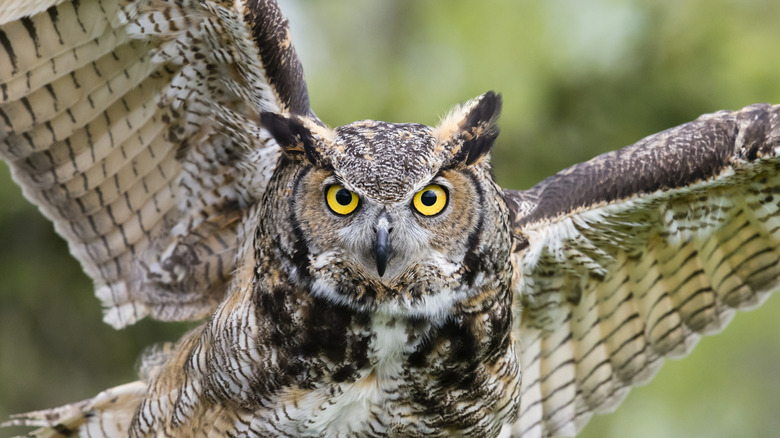
If you've been hearing screeches, hoots, or calls near your backyard, these could possibly be some of the characteristic vocalizations of owls. According to the National Audubon Society, there are 19 species of owls in the U.S. While many are nocturnal and hang out in wooded areas, others might be seen out in the open during the daytime. There are, of course, many more differences between each of these owl species you can learn more about, but there's one thing they all have in common: they need water to survive. Aside from water for drinking purposes, all birds need water for occasional feather cleaning, too. Owls cannot use water from a typical small pedestal-style bath designed for songbirds, though. These fascinating birds will benefit from a bath with deeper water instead of the shallow versions many people have in their backyards.
Fresh and clean sources of water are just one component of creating a bird-friendly garden and yard. Yet there are some key differences in how you can provide these to nearby owls. Most backyard birdbaths are on the shallow end, and they usually do not exceed depths of a couple of inches. This all has to do with the sizes of the birds that use the water source. Smaller sparrows and songbirds cannot safely stand in water that is too deep for them. However, owls are much larger, and they have the opposite needs in a birdbath. With that said, you may need a bath that's between 2 and 4 inches deep. Making this simple change can accommodate the needs of owls and possibly attract them without buying a feeder.
Tips for creating and maintaining an owl-friendly birdbath
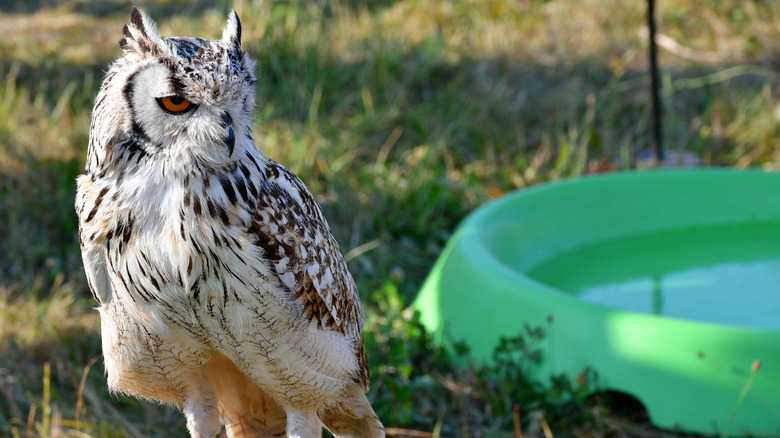
First, while certain types of birdbaths for songbirds are sometimes placed on tree branches, consider leaving your own owl birdbath at ground level to accommodate these larger birds. Doing so also makes the bath similar to puddles that owls might find after rainstorms. You really don't have to buy anything too fancy or elaborate that doesn't really reflect what an owl might see in the wild. A simple metal or concrete birdbath basin on the ground, or even a repurposed deep plastic container, can do the trick. Owls also prefer the bath is in a quiet area so they can keep tabs on their surroundings without being disturbed.
Aside from the right type of birdbath and ideal water depth, you will also need to maintain this structure for the safety of owls and other birds that might visit. Ideally, you should drain and add new water to the bath every day to maintain its freshness and depth. Weekly cleanings can also help keep the birdbath safe and free of algae and bacteria, especially during the warm summer months. This requires draining the bath, hosing it off, and scrubbing it down before refilling with fresh water. To keep water fresher throughout the year, consider placing the birdbath near a shady spot in your yard, if possible. These safety and maintenance rules are the same for all types of birdbaths, including ones you might have for songbirds and/or owls. If you're providing water for nocturnal owl species, though, be sure the bath is not placed near any outdoor lighting.