

Skip The Seedling — Grow This Favorite Veggie From Seed For A More Abundant Harvest
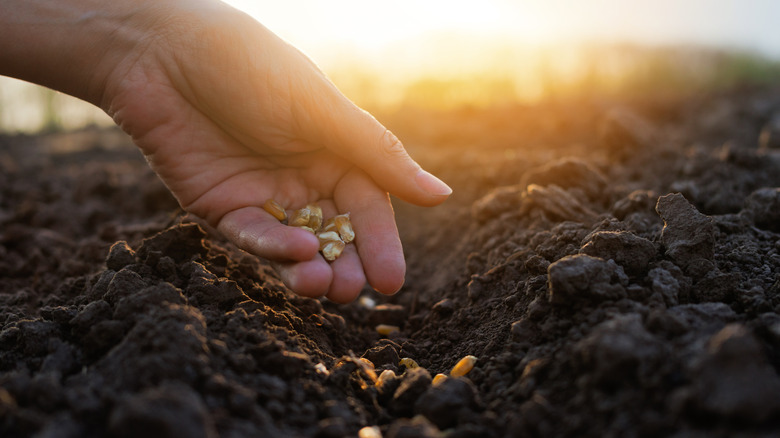
When starting a vegetable garden, you may think the easiest way to do so is to purchase store-bought seedlings. In some cases, you'd be correct. Vegetables like tomatoes and peppers can easily be transplanted, whether you start them indoors or purchase them as young plants. Other, more delicate veggies fail to transplant as well and may not survive once they are relocated. Green beans, for example, are among the crops that grow their best if sown directly into the soil, so you should never buy them as seedlings. They're highly susceptible to transplant shock, so it's best not to disturb their sensitive roots. Luckily, they mature surprisingly fast, so they don't need the head start anyway.
Once you grow green beans from seed, you might even be tempted to grow all of your crops this way. Your options are limited when you're buying pre-grown vegetable plants. With seedlings, however, you can choose from a wide selection of delicious varieties of both bush and pole beans. Additionally, by growing them yourself, you won't have to wonder if the young plants have been treated with pesticides. Plus, seed packets are often far less expensive than seedlings, especially considering direct sowing requires about the same amount of effort.
When and how to sow green bean seeds
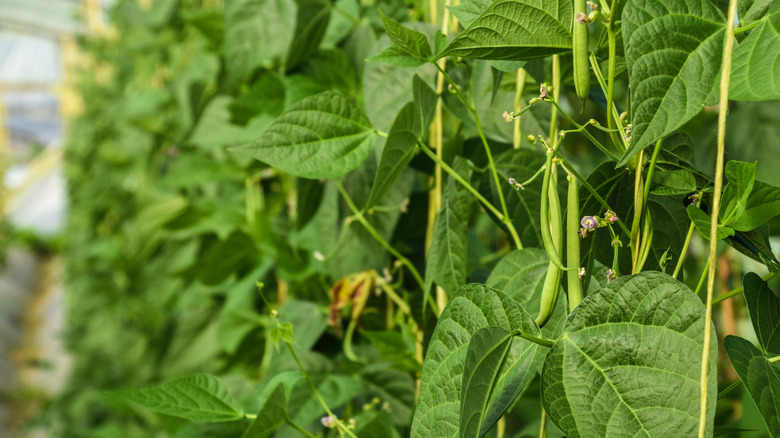
Wait until your area's last expected frost date to plant your green bean seeds. Once the soil is about 60 degrees Fahrenheit, you should be ready to go. Do not soak your seeds beforehand in an attempt to get them to germinate faster, as it'll actually have the opposite effect. Excess moisture can damage the seeds and prevent them from germinating properly. Green bean plants love to bask in the sun, so choose a site that receives at least 8 hours of light per day.
Before planting, it's a good idea to test your soil to determine its pH. Bean plants grow best in slightly acidic soil. If it's too alkaline, you can easily adjust the soil pH by applying aluminum sulfate or sulfur. Choose a soil that's well-drained, but won't dry out too quickly, like a silty loam. Beans grow best in rich soil, so applying a layer of compost before planting can naturally add in nutrients. Plus, this also makes it so the soil can more easily hold water. When you're ready to plant, bury the seeds about 1 to 1/2 inches into the soil. Space pole beans 4 to 6 inches apart with at least 30 inches between each row. Bush beans can be a bit more compact and can be planted 2 to 3 inches apart. Space the rows 18 to 24 inches apart. Water immediately after planting, making sure the soil is moist, but not overly wet.