

Let Your Cilantro Bolt On Purpose — Here's Why Gardeners Do It
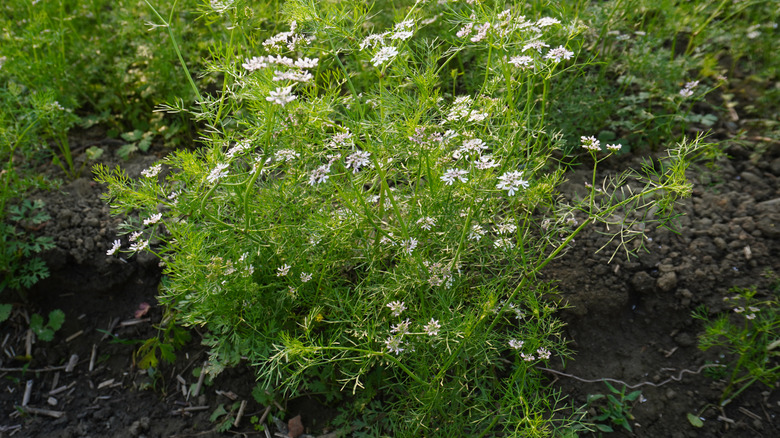
If you're growing your own herb garden and have decided to add cilantro (Coriandrum sativum), you may have heard that bolting (aka blooming) is a common problem. When learning how to grow cilantro, you've likely been told that it bolts too quickly and you should keep it moist and cool to keep it from blooming for as long as possible. That's because its leaves typically taste more bland and bitter after bolting. It also means the plant is devoting less energy to growing leaves, so you're likely to see a smaller harvest, if one at all. However, there are a few reasons why you might actually want to let your cilantro bolt. The flowers are great for pollinators and the seeds are actually a useful spice. That's right, coriander is nothing but dried cilantro seeds!
Bolting is when a plant begins to produce seeds, and the process can be good or bad, depending on the plant. When cilantro bolts, it bolts quickly, growing flowers that are small and white. They don't look terribly impressive, but they have a simple charm to them. Bees love to visit these flowers, so they're worth keeping around even if you don't enjoy the taste of coriander. However, if you do like coriander, then letting your cilantro bolt is basically a two-for-one sale. Plant your cilantro during the cool weather and enjoy the leaves, then watch it bloom in warmer months and collect the coriander seeds as they form.
Harvesting and storing coriander
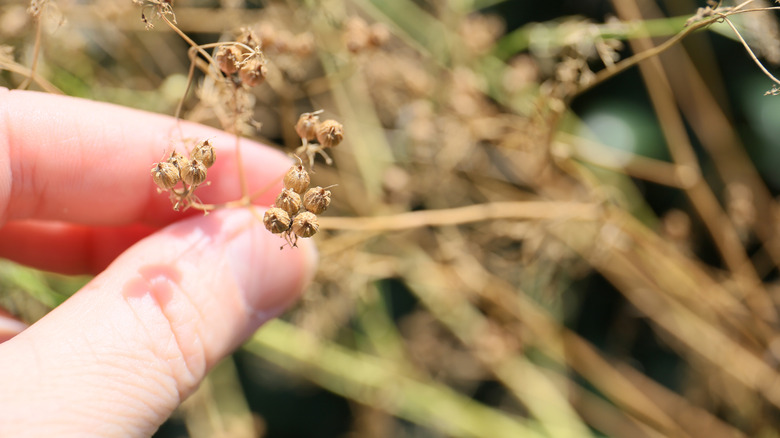
When your cilantro plant starts to bolt, it's nearing the end of its life. Continue caring for it, but prepare to see the seeds developing soon. At first, they'll look like small green balls which you can begin to harvest. Green coriander has a milder taste than the mature, brown version. Unripe seeds can be used fresh or dried. You can harvest a few unripe seeds if you want while leaving the rest to mature.
Mature seeds are attached less firmly as they get ready to drop. If left too long, the seeds will fall to the ground and reseed. However, this tendency to fall can make them tricky to harvest. If you want to use the coriander (or save the seeds to replant cilantro in a different part of your garden), the best approach requires a paper bag, some twine or string, and a pair of scissors. Start when the seeds are beginning to turn brown, but before they are fully dry. Clip the stems and hang them upside down with the bag over the end to catch the seeds. Choose a place that is dark and dry to hang them in, then wait until the stems are brown. Any seeds that don't drop off naturally should come loose with a gentle brush of your hand.
Store the seeds in a glass jar to plant next year or cook with. If you're certain you won't want to plant any, you can give the seeds a gentle rinse, dry them, then grind them to make coriander powder. Avoid getting your coriander mixed up with other spices by making hand-lettered labels.