

The Simple Cleaning Technique That Makes Dirty Grout A Thing Of The Past
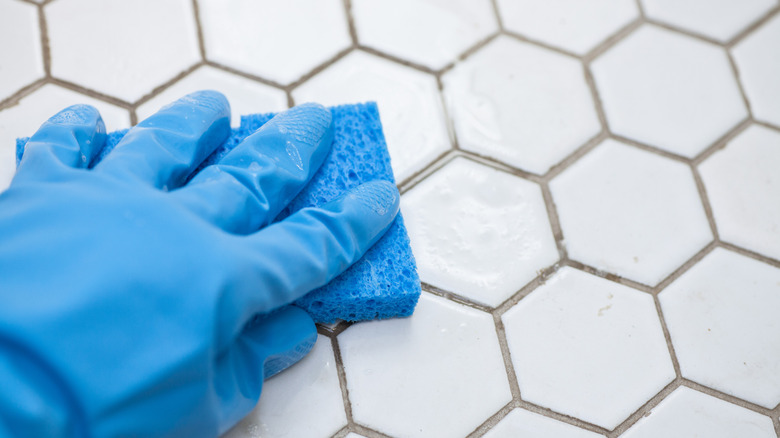
Cleaning tile floors seems pretty cut and dry (well, unless you count the water required to mop them!). But in between those sleek tiles in your bathrooms and kitchen is one particularly tricky material: grout. As life happens on porcelain or ceramic tile flooring, everyday dirt and debris can stick around no matter how often you sweep or mop, ultimately discoloring those once-pristine grout lines and leaving them looking more dingy gray than bright white. That's because many tile-cleaning solutions and methods may not have the same impact on grout, a detail that complicates the process. If you're looking to get your grout sparkling clean without a lot of elbow grease, there's a simple solution. A steam cleaner, like a handheld steamer or a canister steamer, can solve your woes and help you clean dirty grout thoroughly.
Grout gets gunked-up and discolored by spills, stains, body oils, and even mold or mildew so easily because it's a porous material. While different types of tile flooring, like natural stone tile, can also be porous in regard to dirt and stains, grout is particularly absorbent. Steam cleaners work well because they apply high-heat, low-vapor steam to your porous grout. That heat essentially breaks the hold dirt and grime has on the grout, loosening it so you can follow up with a small scrubber or brush to eliminate those caked-on messes and discoloration. As a plus, steam cleaning is effective enough to kill bacteria and mold hiding in grout lines, all without any chemical cleaning solutions in the mix.
Loosen grout dirt and grime with the power of steam
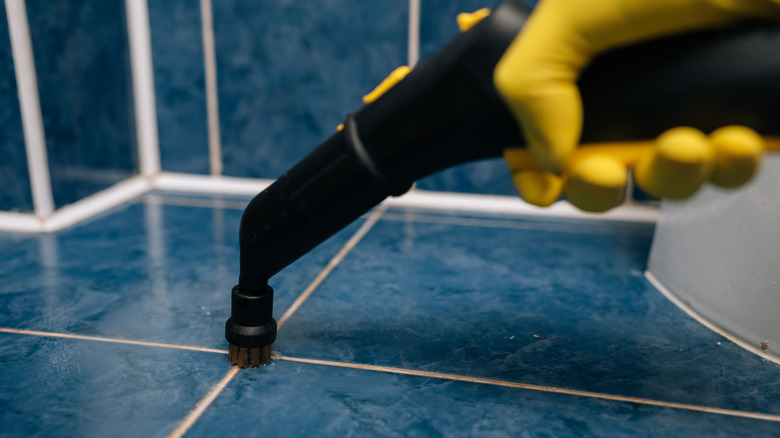
Ready to get to work cleaning your tile grout? You'll need to choose a steam cleaner. For grout in particular, you'll want to look for a multipurpose steam cleaner that makes it easy to get into nooks and crannies on tile floors, bathroom walls, and other tiled surfaces. (Some steam cleaners, such as steam mops, are better suited for flat surfaces and less effective at getting into grout.) Handheld or canister steam cleaners offer the most flexibility, as they typically include versatile attachments (sometimes even grout-specific ones) that allow you to get up close to the gunk on your grout, as well as options for different surfaces or areas of your home.
Before you break out your steam cleaner, start by sweeping your tile to remove any loose dirt and debris. Then, mop it with a tile-safe surface cleaning solution. You can also give it a wipe-down with a cloth or sponge instead. Next, it's time to prep the machine. Add a little water to the reservoir, give it a few minutes to heat up, and you'll be able to steam away caked-on dirt. You'll need to scrub the grout gently as you steam it, and once you've loosened up the dirt, wipe it away with a cloth.
Make sure to choose your steam cleaner's pressure setting carefully as you work. Too much pressure may damage your grout, so it's best to stick with the lowest setting. Likewise, you'll want to test it out in a small area first. Steam cleaners typically clean with water over 200 degrees Fahrenheit, which may damage unsealed grout.