

The 2026 Paint Trend That's Adding A Splash Of Style To Living Rooms Everywhere
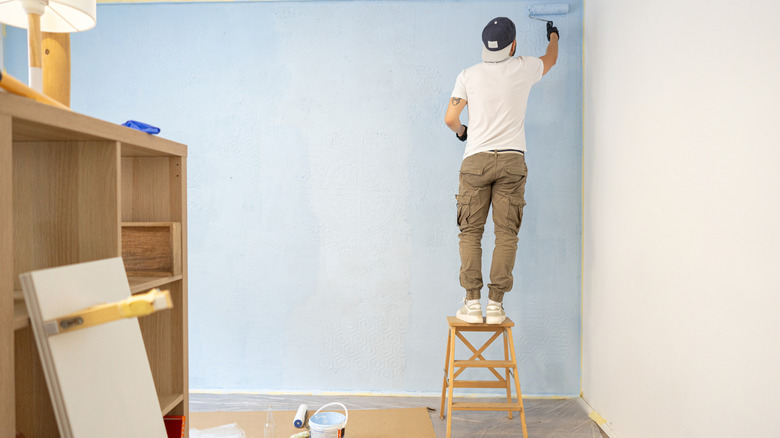
In the past, people have embraced the color drenching paint trend, using one bold color for an entire room. But in 2026, color capping is the new paint craze that's giving a sophisticated and charming flair to living rooms everywhere. Several decor publications, including HGTV, and multiple designers are saying that color capping will be the living room paint trend of 2026, praising its luxurious look and versatile quality. Across social media, people are showing off the unique finish in their color-capped living rooms, embracing the use of multiple, similar shades.
Rather than having the walls and ceilings all one color like color drenching, the capping trend uses a few hues of the same tone to create a slight gradient. While a darker shade covers the ceiling and caps the top of your living room walls, lighter tones work their way down to the floor. This will make the ceiling feel higher, or the room feel bigger, depending on the space.
Helen Shaw, Benjamin Moore's director of marketing, explained the benefits of color capping to House Beautiful UK. "The next big paint trend, colour capping is a clever way to refresh your home and achieve a designer look with just a few tins of paint. By using paint in varying tones from the same colour family, you can completely transform the atmosphere and proportions of the room," she says. Choosing a ceiling paint color to heighten your decor and complement your living room walls can also create visual dimension.
Update your living room with the color capping trend
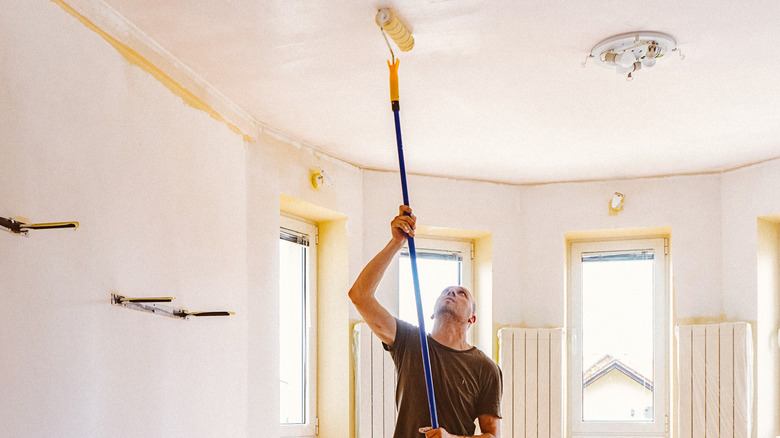
Though this technique looks wonderful in various rooms, it can really elevate your living room, especially when you choose the right colors and gradient shift. Generally, picking two or three colors will create this unique effect, though you can use up to five shades. Benjamin Moore's Helen Shaw spoke to Homes and Gardens about how color capping transforms spaces. "It can be cleverly used to create the illusion of more height and space," she says. "When done with care, a soft, tonal shift between the walls and ceiling allows the eye to travel upward without interruption, visually lifting the ceiling."
With color capping, soft sages, earthy neutrals, and soft blue hues are perfectly suited for your living room, though lighter tans and cream colors also work. While it's common to have the darkest color on the ceiling to add the illusion of extra space, creating a gradient with the deeper hue near the floor also fits into this trend. Jessie Brooks, color theory expert and product manager at Davincified, told Martha Stewart, "Your darkest shade should be at the bottom, graduating to your lightest at the ceiling line."
Brooks explained that capping the ceiling in the lighter shade also makes the room seem taller. So, no matter how you style the gradient, painting your ceiling a few shades off from your walls will make your living room look stunning yet cozy.