

Want Your Rosemary Plants To Thrive This Spring? Do This One Thing In February
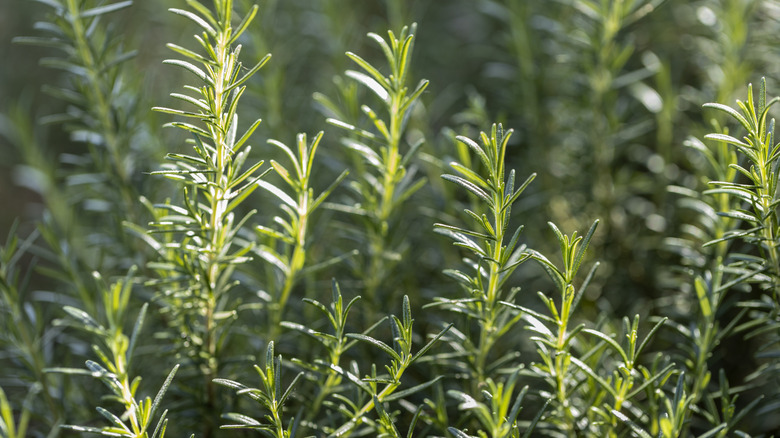
Rosemary, known scientifically as Salvia rosmarinus, is a hardy herb common in kitchen gardens — and for good reason. This fragrant perennial and has hundreds of uses, from seasoning a roast chicken to adding fragrance to a homemade candle. But while this herb is relatively easy to care for, some periodic pruning is necessary to keep it healthy and blooming for years. February is a prime time for breaking out those shears.
Rosemary is hardy outside to USDA growing zones 8 and above, meaning it will tolerate cold weather down to only about 15 or 20 degrees Farenheit. Those who grow it in colder climates often bring it inside to overwinter. If you want to grown an herb garden that has rosemary outside all year, keep in mind that the Mediterranean perennial still can get damaged by cold snaps. When this happens, some of the stems and leaves may turn brown, and your once-green shrub will look decidedly in decline. But if you have any green still on your plant, you can revive it through some targeted pruning. After the coldest parts of winter have passed, February is the time to check on your rosemary and remove any winter-damaged stems so that it can successfully add new growth come spring.
How to prune your rosemary
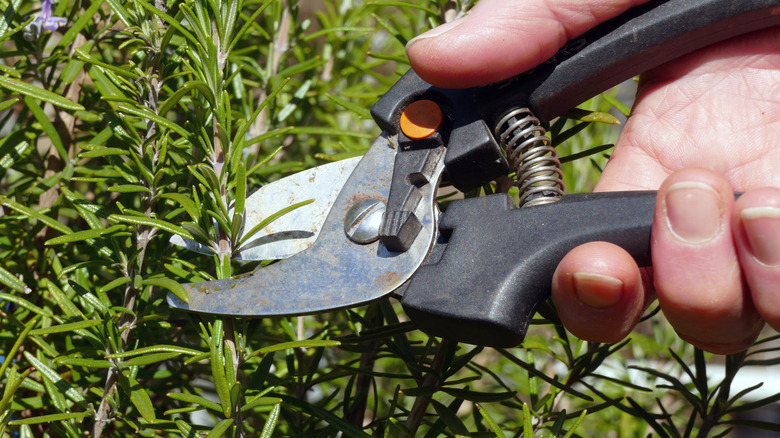
February pruning will focus on targeting dead, broken, or dying parts of your shrub caused by winter damage. The first step in pruning rosemary is to make sure your shears are sharp and clean to avoid introducing dirt and potential disease. Aim to make your cuts as close to the beginning of the dead-looking stems as possible, just above any still-green growth. UC Master Gardeners of Sacramento County emphasize that new growth will not come from leaf-bare woody stems, so be sure to cut where you still have some green. If you have whole woody branches with no green growth at all, you can fully remove those with the help of a pruning saw or lopper. And if your plant looks like a brown, bare shrub with no green at all, it could be time to replace it.
February isn't the only time you'll need to prune rosemary. Without regular pruning, your plant will become leggy and won't produce as many fresh green sprigs you can clip off for your culinary adventures. On a young plant, repeated pruning of the tips of rosemary stems is recommended to encourage it to branch out. After it is done flowering in the spring or early summer, you can do a light, maintenance type of pruning of just the tips to encourage continued blooming. Closer to fall, a more aggressive pruning of up to ⅓ of your bush can encourage your plant to grow bigger and healthier next year. But with all that said, don't forget your February prune to ensure its next new growth isn't inhibited by winter damage.