

The Stunning Flowering Ground Cover That Keeps Weeds From Taking Over The Garden
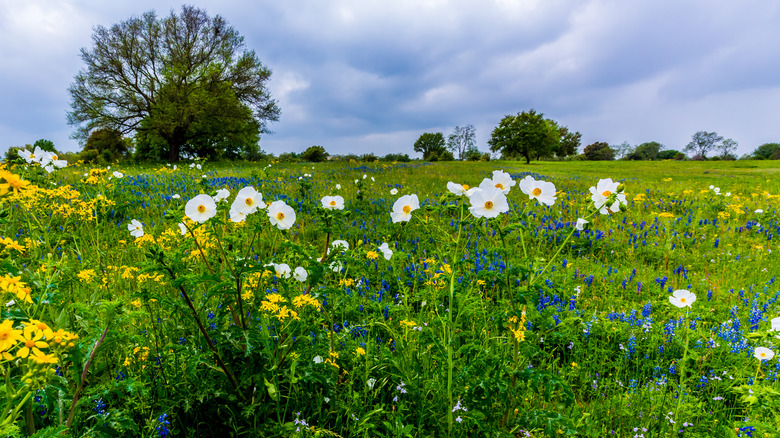
If you want to keep your flower beds free from weeds, there are a few safe and natural weed control options you can choose from. Planting a ground cover to act as a living mulch is a prime example. One fantastic plant you can grow for this is golden groundsel (Packera aurea), also called golden ragwort. This gorgeous flowering plant is native to the U.S. and hardy in zones 3 through 8, making it an excellent choice for most U.S.-based gardeners.
Golden groundsel has dark, heart-shaped leaves that grow close to the ground. They grow thickly, preventing light from reaching the soil and making weeds less likely to sprout up around them. In warmer regions, the leaves stay green all year long, keeping your garden green and weed-free even during winter. Golden groundsel offers more than just functional foliage, though. In mid- to late spring it produces 2-foot-tall stems topped in clusters of bright yellow flowers.
If you want to grow plants that help pollinators do their jobs, then golden groundsel should be on your list. Pollinators love these flowers, and the seeds that form later in the year are appealing to birds. Although it is native, golden groundsel does spread quickly, so you need to keep an eye on it if you're low on space. Additionally, the leaves of this plant are toxic and can cause rashes if you touch them. Avoid using it as a ground cover in high-traffic areas, and be careful when tending to them.
How to grow golden groundsel
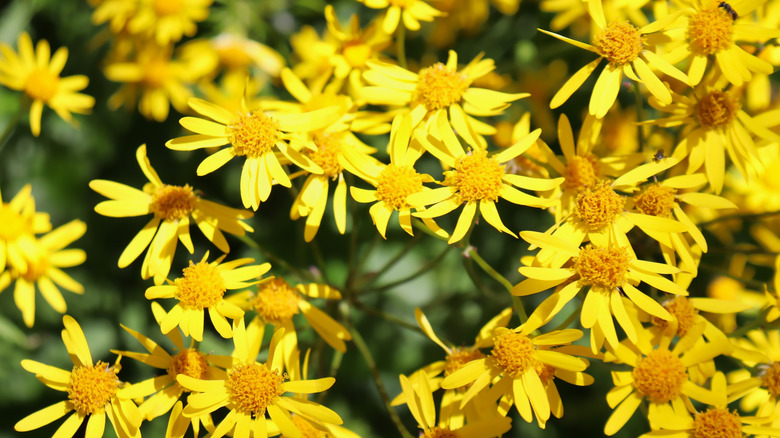
Golden groundsel isn't a difficult plant to grow, as it's fairly hardy and adaptable. It can grow in both sun and shade, and it enjoys acidic soil. While it can survive some dry weather and is relatively drought-tolerant once it's established, golden groundsel prefers moist soil. Regular watering while it is growing and during droughts will keep your golden groundsel in top condition. After it blooms, you can either cut the flowers down or leave them in place so that birds can enjoy the seeds. You don't need to worry about deer or rabbits, as golden groundsel is resistant to both. Avoid using pesticides on or around your golden groundsel because the flowers attract pollinators that could be hurt by the chemicals. If you're concerned about your other plants, consider trying an organic pest control method.
When planting golden groundsel, you should keep in mind both the way it spreads and the changes in height throughout the year. While it makes an excellent border plant for more naturalistic gardens, the taller flower stalks may block your view or cast shade over nearby smaller plants. If you don't want it to spread outside of your flower beds, you can divide golden groundsel in early spring to keep your population small. The extra plants can be replanted elsewhere in your garden or gifted to another gardener to jump-start their own golden groundsel garden.