

Erin Napier Urges You Not To Waste Money On This Home Upgrade
We may receive a commission on purchases made from links.
If any home feature, short of asbestos or lead paint, has ever made a bad first impression, it's the skylight or roof window. When Villum K. Rasmussen invented the first residential skylight in 1942, he surely had the best of intentions. Who couldn't use a little more natural light in their homes, after all? But it wasn't the idea that tarnished Rasmussen's vision — it was the rain.
"We never see a skylight on a house anymore, and people stopped doing it because they get very leaky," Erin Napier explained in Season 8, Episode 1 of the HGTV series "Home Town." To be sure, skylights are a common cause of leaky roofs, especially when they're improperly installed or when their seals and other waterproofing elements fail due to age. And leaks aren't skylights' only problem, either. They can cause heat buildup in the summer and heat loss in the winter; they sometimes produce unwanted glare on screens and other surfaces within the home; and excessive UV light exposure may lead to fading on furniture and flooring. Then, of course, there's the cost: At The Home Depot, a new skylight will set you back anywhere from a few hundred dollars up to multiple thousands — and that doesn't include installation fees, which can cost thousands of dollars more.
On top of all this, many people find skylights don't even look that pleasing from outside the home. In the case of the "Home Town" house, a single skylight in a vast expanse of roofing was off-putting to the Napiers. "It looks so weird, just the one," said the show's co-host, Ben Napier. Later, Erin Napier told a roofer, who was inquiring about the fate of the property's skylight, "We have hated it. It's the first thing you notice when you pull up to this house."
What's wrong with skylights?
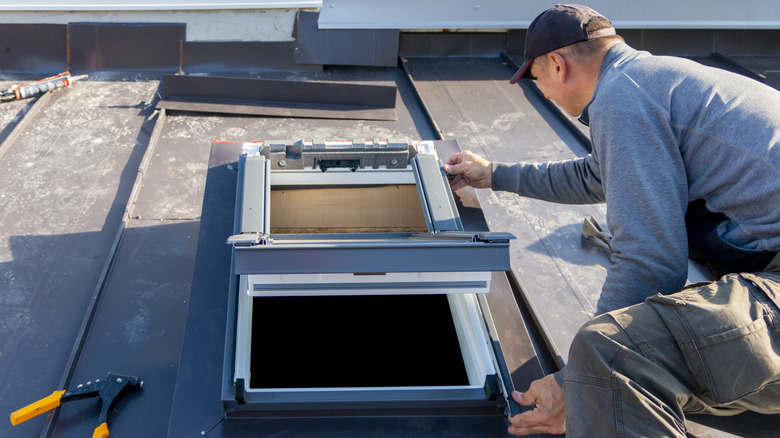
Some of the troubles homeowners have with skylights are caused by poor installation practices, while others are just a matter of normal wear and tear. Improper installation can obviously lead to leaks, but, from another perspective, they're also inevitable. A roof is an inhospitable place, which is why some roofing materials have to be replaced periodically. For the same reasons, a skylight's deck seals, gaskets, and flashing must be replaced when they start to fail.
It's ideal to catch these problems before a leak starts by periodically inspecting skylights to spot issues that have occurred. These include condensation between panes of glass, physical damage like crack or chips in the skylight's glass or frame, or other signs of deterioration, like rust in the skylight's roof flashing. Sometimes, the best you can do is identify issues after they've begun in earnest. A thermal camera can help you find inordinately large temperature fluctuations around skylights, and a visual inspection might turn up water or stains on the skylight or the ceiling around it.
Regular maintenance might also help. In addition to periodic inspections, skylight owners must keep their skylights clean and the surrounding structures free of debris. This is especially true of drainage systems that might cause water to back up or damage the waterproofing structures that skylights rely on. Anything you notice should be repaired immediately — resealing, reflashing, or replacing damaged glass, for example. But even with all this diligence, are skylights worth the risk? Or is Erin Napier's instinctive reaction the safest attitude to have?
The promise of newer skylights
HGTV itself seems to be somewhat at odds with Erin Napier over the question of skylights — and Villum K. Rasmussen is probably a little bit to blame here, too. Rasmussen founded Velux in 1941, and the company later sponsored a number of HGTV special projects that showed off the spectacular results of modern skylight installations; these included "Urban Oasis" in 2024, "Smart Home" in 2025, and "Dream Homes" in 2024 and 2026. In addition to demonstrating fantastic feats of architecture that would surely eliminate most aesthetic complaints about skylights, Velux claims to have resolved all the common leak problems with preattached seals and gaskets, adhesive underlayment, and engineered flashing.
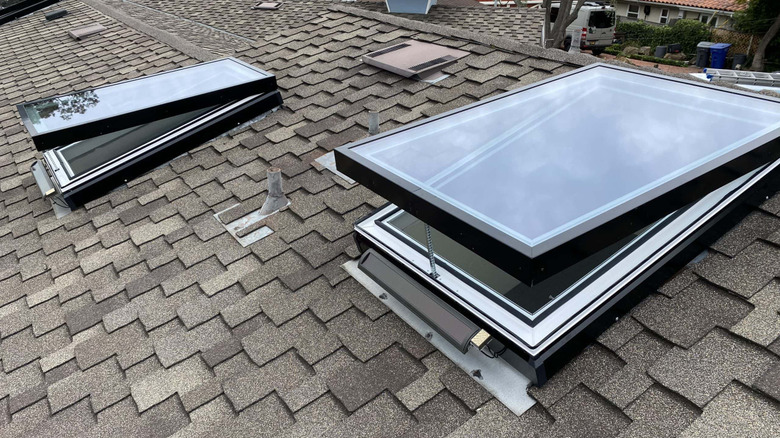
Modern skylights also boast features that may resolve some of the complaints about the models of the 1970s and 1980s. Solutions like low-emissivity coatings, tinting that absorbs heat, argon gas-filled glazing, and other insulation methods have improved the heat gain/loss problem, alongside features like built-in shades. Venting skylights can be operated with solar panels that don't require direct sunlight to operate. And, if opening a skylight makes you nervous, you can opt for a rain sensor feature that automatically closes it when the weather turns wet.
There are also tube skylights like Solatube, which bring light in through a sealed tubular structure that won't leak and requires only a small roof penetration. While they can't help with your view or your ventilation needs, they do take advantage of heat management features, including dimmers and blinds, as well as UV filtering. But are these innovations foolproof in the way you need skylights to be? Only time will tell.