

Tree Stump In Your Yard? Here's How Long It Could Take To Rot
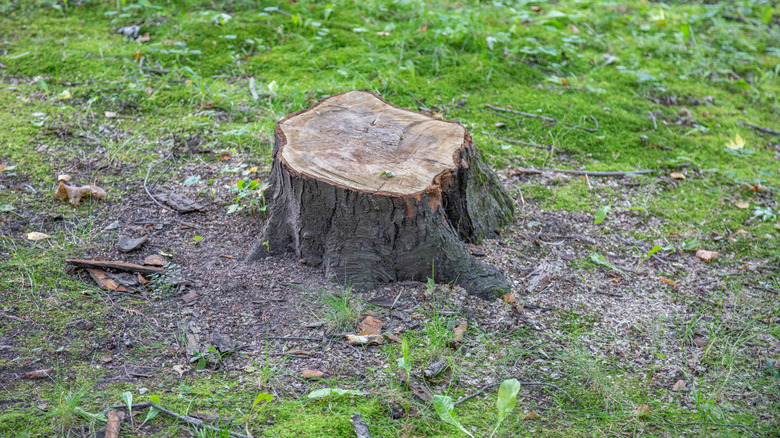
Whether you're looking for aesthetic appeal, increased property value, or a boosted sense of well-being, trees can be a wonderful addition to your yard. Unfortunately, not all trees survive in the long term, though. Storms can snap them in half, while others might succumb to fungal diseases. Whatever the reason, after a tree is cut, you may be left with a tree stump to remove. The good news is that any tree stumps on your property can naturally rot over time without any intervention. The downside? When left alone, you can expect a tree stump to remain for several years — and sometimes even decades to come.
Removing a tree first involves three main steps: felling, limbing, and bucking. A professional company will follow this routine to cut the tree, remove its branches, and then slice the trunk into smaller pieces for transport off your property. However, tree removal doesn't automatically include stumps. Much of this has to do with the complexity of the root systems left behind with these stumps, which cannot be cut as easily as a tree's trunk. Some tree roots can extend several inches or feet, but the actual depth of the system can vary based on the tree type and size. Allowing the stump to rot on its own saves you from the complex task of removing it yourself. It's a lengthy one, though, as the stump will continue to survive for a long time despite the absence of the rest of the tree. Aside from the root system, tree stump survival also depends on the health of the former tree and its surrounding environment.
Understanding the average tree stump rotting timeline
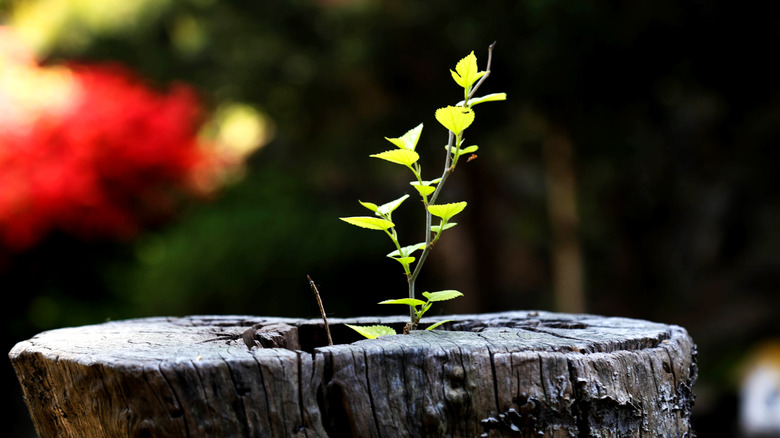
It's first important to understand how a tree stump eventually achieves a natural rotting stage. In general, Iowa State University Extension and Outreach says a stump can take at least 10 years to decay. Part of this has to do with the health of the roots remaining underneath the stump.
A tree's roots help to provide the plant with important nutrients as well as water collected from the soil. These are transported through the trunk to help keep the tree alive. Whether a tree breaks due to natural causes or is purposely cut, the roots still try to maintain any stump that's left behind. In fact, some stumps might sprout new growth as you're trying to let them rot. Over time, though, stumps may stop trying to support tree growth on their own and eventually rot for easy removal later down the line.
With all this in mind, there's unfortunately no set timeline for a stump to rot after removing a tree safely. Another consideration is the type of wood. As a rule of thumb, softwood stumps can take several years to rot, while hardwood tree stumps may require a couple of decades. In the most significant cases, a healthy stump in a natural environment can last for hundreds of years.
Deciding whether you should let a tree stump rot naturally
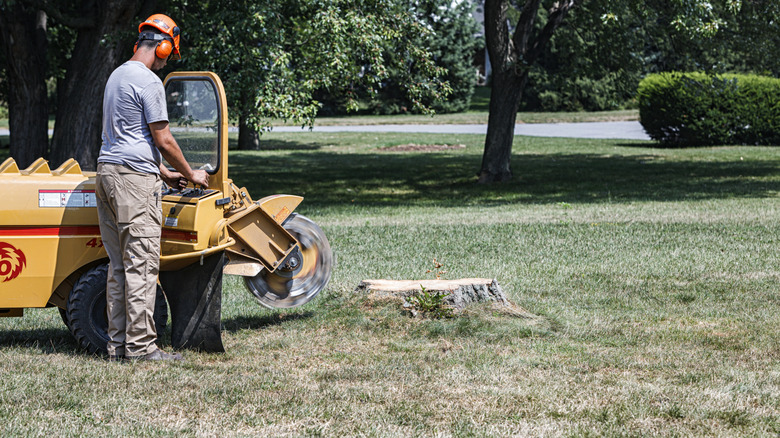
The decision to allow a tree stump to rot naturally ultimately depends on your budget and preferences. Professional stump removal is costly, and you might also have a large hole in the ground to deal with afterward. The larger the original tree, the more complex and expensive this job can be.
Renting a stump grinder yourself is another option, but experience is paramount to safety and success with this method. Some people use commercial fertilizers to help tree stumps rot a bit faster, but keep in mind that these may still take a few years to work. What's more, the dangers that chemical methods can pose to human and animal safety can be more harmful than helpful. Letting the stump rot naturally is arguably safer and cheaper. Once the stump actually rots, it will have a soft texture and can easily be removed with a shovel or other sharp garden tool.
While allowing a tree's stump to rot on its own without removal is a cheaper course of action, it's not always the most practical. A short stump can be a tripping hazard in your yard, especially if you have children or pets running around. From an aesthetic standpoint, a rotting tree stump can also be considered an eyesore to some people. Hiring a professional stump removal expert is the best way to ensure this final piece of a former tree is safely removed without having to wait several years.