

Don't Risk It: Snow Shoveling Mistakes That Could Hurt You
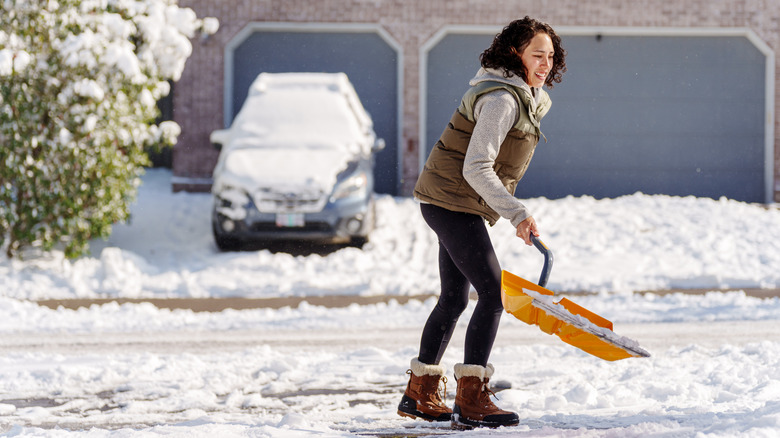
For those who live in snow-prone areas, shoveling snow from sidewalks and driveways is just part of life during the winter season. When you want to leave your home during snowy conditions, whether on foot or in your vehicle, shoveling snow is critical to help prevent slips, falls, and car accidents. However, if not done properly, the act of shoveling can be just as dangerous as the snow accumulated on your driveway. It is essential to avoid snow shoveling mistakes that may hurt you, such as exceeding your physical limits and not using proper equipment or techniques.
To that end, you should neither wait too long nor attempt to hurry through this unenviable task. While few, if any, relish the opportunity to shovel snow, procrastinating will actually make it much harder. That's because the longer you wait, the more snow falls and builds up on your sidewalks and driveway. So, although starting while snow is still falling may seem like an unenticing option, the best time to remove snow from your drive is when there is only a couple of inches accumulated.
During a prolonged snow event, this may mean going out every few hours to remove fresh snow. However, it also means these will typically be shorter, less strenuous sessions. If you let the snow continue to pile up, not only will it take much longer, but it also raises the chances of the accumulation freezing, making it much harder to clear. However, regardless of how often you go out to shovel, don't try to rush through it. Doing so only increases the chances that you pull a muscle or slip and fall.
Ignoring the laws of gravity and physics
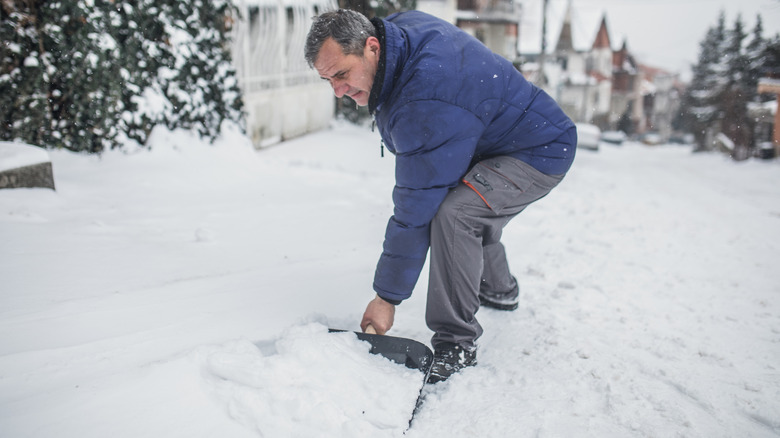
One major mistake that leads to injuries, particularly back issues, is ignoring the laws of gravity and physics. For instance, heavier objects are more difficult to lift. So, rather than make the mistake of using a gargantuan snow shovel with the idea you will be able to more quickly clear your drive, the best snow shovel to use is typically one that is smaller, easier to handle, and easier to lift when full. Additionally, if the handle is excessively long, it can make the shovel more difficult to lift and increase the strain on your body.
Beyond picking the right snow shovel, you need to make sure you are lifting in the right way to avoid injuring your back or other body parts. Though it may sound silly, you should actually stretch and warm up your muscles before diving into shoveling snow. As you begin shoveling, keep your hands spaced wide on the shovel handle. Be sure to bend your knees, not just your back, and lift with your legs. You should turn your entire body, not just twist your torso, when tossing snow.
An even safer and more efficient way to clear snow is to push, rather than lift, shovels full of snow when possible. A two-handed shovel design is ideal for this. Regardless of the type of shovel, pushing snow allows you to more easily use your entire body to move the snow aside, protecting your back.
Exceeding your physical abilities
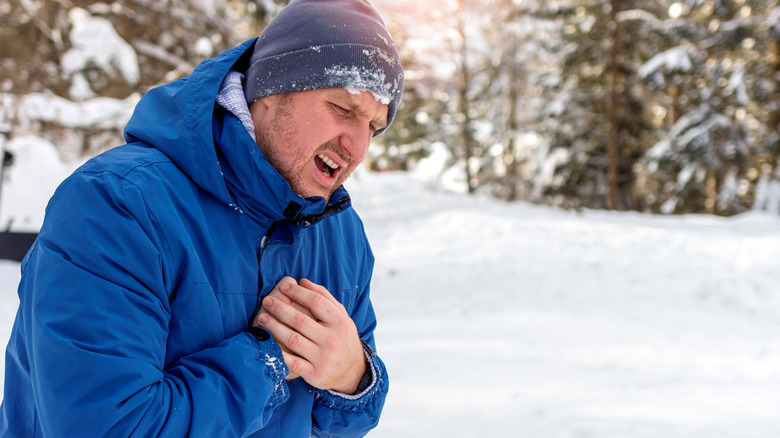
Even when you know how to shovel snow the proper way, it is typically not pleasant. It requires physical exertion in frigid temperatures. With that in mind, a major mistake to avoid is exceeding your own physical abilities. While steering clear of overexertion may, on the surface, seem like a lazy excuse to get out of shoveling snow, the reality is that shoveling snow increases the risk of cardiac catastrophes, including heart attacks and death from cardiac arrest, according to the American Heart Association. This is because at the same time you are performing strenuous activity and causing your heart rate to rise, the cold temperatures are constricting your blood vessels and raising your blood pressure.
With that in mind, not only should you follow proper snow shoveling protocol, but you must also be alert for signs of an oncoming heart attack. These include chest pain, difficulty breathing, nausea, vomiting, back pain, bluish skin, and profuse sweating. If you notice any of these symptoms, you should immediately stop shoveling, go inside, and call 911.
If you aren't someone who regularly works out or partakes in physical activity or you have health issues that put you at risk for heart attack, you may need to ask or hire someone to shovel for you. At the very least, you should be aware of your physical condition, take frequent breaks, stay hydrated, and not try to rush through the task.