

Farewell To Solid Concrete Driveways: This Practical Replacement Is Gaining Popularity
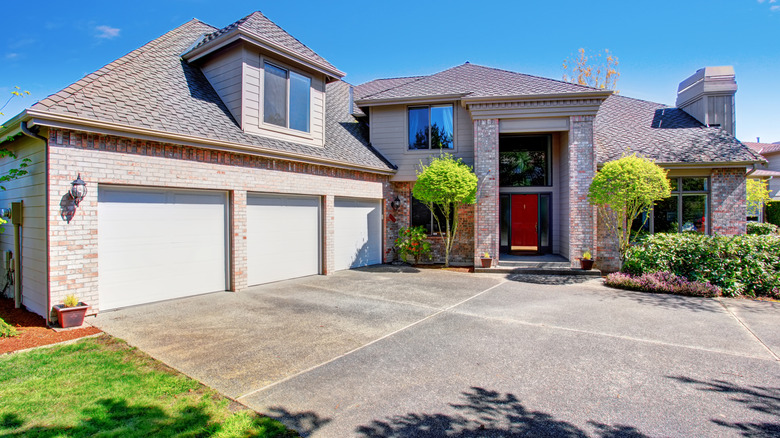
If your car's path to your garage is full of cracks and unevenness and has reached a level of deterioration beyond the scope of common repairs for concrete driveways, it might be time to replace it. But before turning to a fresh pour of new concrete, you might want to consider another trending surface material that looks luxe while providing a practical solution to one of the biggest problems facing urban landscapes today.
Permeable pavement is a type of hardscape specially formulated to allow water to infiltrate through it, instead of running off in sheets and potentially flooding the street, your yard, or your neighbor's garden. This material has been growing steadily in popularity over the past several years, driven by cities and counties looking for better ways to manage stormwater runoff from paved areas, as well as homeowners interested in making their homes more sustainable. Contractor Michael Benoit told MarthaStewart.com that permeable driveways are a growing trend for homeowners who "no longer want solid concrete driveways pushing water off onto the streets or back toward the foundations of their homes." And with many design choices on the market for these materials, this practical upgrade can also be beautiful.
What are permeable pavers?
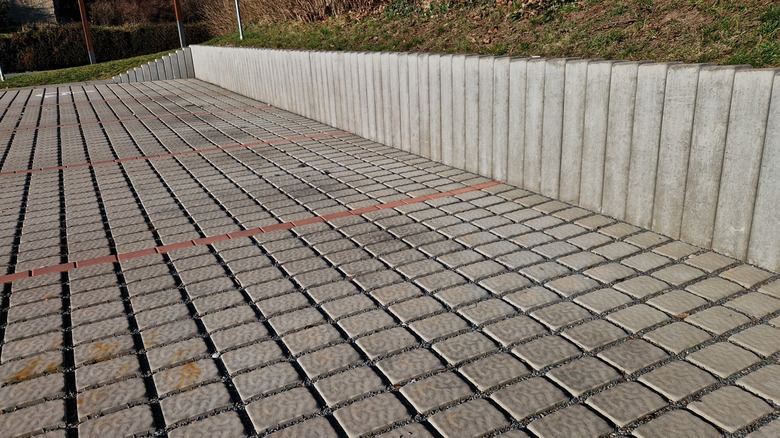
Permeable materials come in a variety of patterns, textures, and shapes that bring visual interest to your driveway. Some of the most common materials are pervious concrete, porous asphalt, and permeable pavers. Pervious concrete and porous asphalt are manufactured specifically to have voids and spaces through which water can flow. These surfaces are poured in a thick slab and have a rough, crushed-stone type of look as opposed to the smooth surface of traditional concrete.
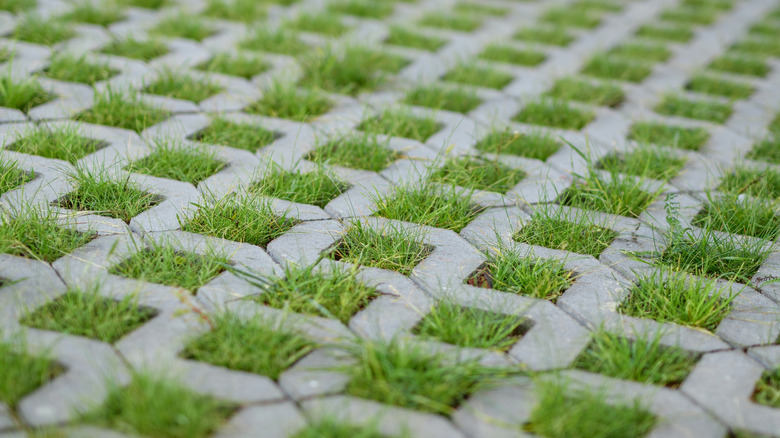
However, the real curb appeal comes from using permeable pavers. From classic rectangular layouts to circular paving patterns, these can be found in a wide range of design options, making it easy to create a stunning hardscape design that complements your home and personal taste. Pavers are laid in a grid pattern, leaving open joints filled with smaller stones or sand that allow water to infiltrate the hardscape. Minnehaha Creek Watershed District demonstrates how beautiful this type of paver can look on a residential driveway and how quickly water can infiltrate through it. For a greener look, some permeable pavers are available in a honeycomb shape through which grass can grow.
Benefits and cons of permeable pavers
In addition to helping control local flooding and erosion, permeable pavers reduce the amount of pollution that might run off your driveway into local waterways. They can also be safer, with rough surfaces that are harder to slip on. In winter, these materials resist ice formation, reducing the risk of a slippery walk or drive to your home. Plus, they are less prone to cracking caused by freezing and thawing than traditional concrete slabs. In summer, pervious surfaces are cooler to the feet on hot days than regular concrete.
Permeable surfaces last just as long — or even longer — than traditional concrete, but they aren't a cheap way to pave a driveway and require a commitment to ongoing maintenance as well. These types of pavers can be more expensive than traditional surfaces (around $10 and $30 per square foot), not only due to the cost of the material itself but also because of the amount of prep work required for installation. Check with your city or county before you are put off by the cost, as some communities offer tax incentives or rebates for using permeable pavers or similar materials. And remember, to maintain their effectiveness over time, pavers may need their joint material refilled every few years, while porous surfaces should be swept or vacuumed regularly so the spaces where water is meant to infiltrate don't get clogged.