

The Genius Way People Are Repurposing Thrift Store Bookends To Upgrade Their Doors
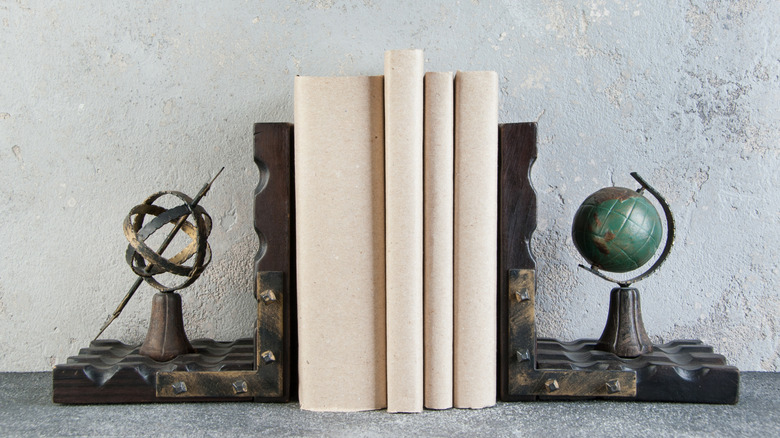
It's no secret that old thrifted books make great decor, but they aren't the only literary items to be on the lookout for. The next time you're perusing the home decor section at a thrift store, keep vintage bookends in your thoughts. There are several genius ways to use bookends that don't even involve books, and one of them is using them as ornate doorstops.
Many antique and vintage bookends are made of heavy materials, like solid metals, dense hardwoods, hardy ceramics, and natural stone. They aren't lightweight like many modern products, making them useful beyond holding up hardcover and paperback novels. Use them to prop open heavy doors while adding a decorative touch to a space. Many thrift store bookends have vintage or antique origins, making them valuable and gorgeous additions to charming interior designs.
These secondhand treasures are also a great way to imbue personality in a room. They show a love for literature, classic art, or whatever niche item they're carved as. If you're lucky, you might find one of these pieces in the same metal finish as other accents in your home. For example, a brass bookend could match the copper-plated knobs and handles on cabinets or furniture. There are so many bookend designs, from minimalist blocks to intricately carved statues, that there's bound to be one that befits the intended room style.
How to find a vintage thrift store bookend to repurpose as a door stop
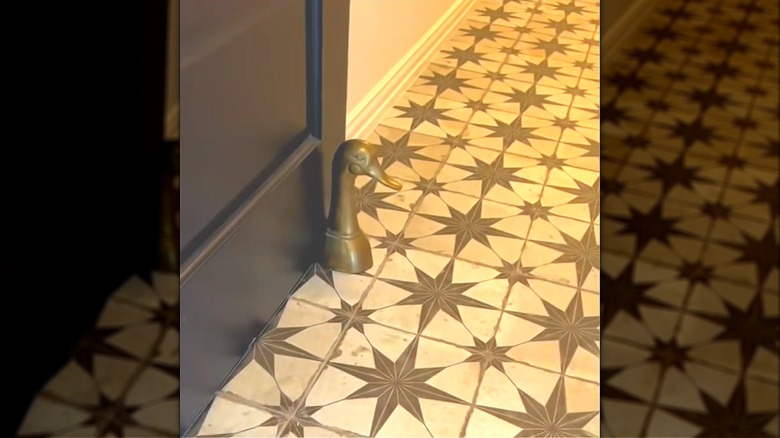
There are several methods to determine if a thrifted piece is worth it, and one of the best ways is to assess the weight. This alone determines if a bookend is sturdy enough to work as a doorstop. If it feels heavy and dense, it's likely an older item. Bookends from the Arts and Crafts period and the Art Deco era were often made with brass. They were carved in animal shapes or in the likeness of famous statues, which makes them easy to spot and identify at thrift stores. With the elaborate and durable designs, they are well-suited against wind and drafts that would otherwise pull doors closed.
Don't forget about the floor-bound bookends once they're in place. If dealing with a hundred-year-old brass design, you're in luck. Copper blends are corrosion-resistant as long as they're cared for properly. Wipe away dust from the improvised doorstop every three or four days. Depending on how much foot traffic goes through a room, dirt and dust buildup may need cleaning even more often. Also, consider using olive oil to polish the brass and maintain a shiny finish. If there's tarnish from previous neglect, know how to properly remove rust from older metals before attempting to clean them up.