

Why Experts Say Shoveling Like This Could Change Your Snow Removal Routine Today
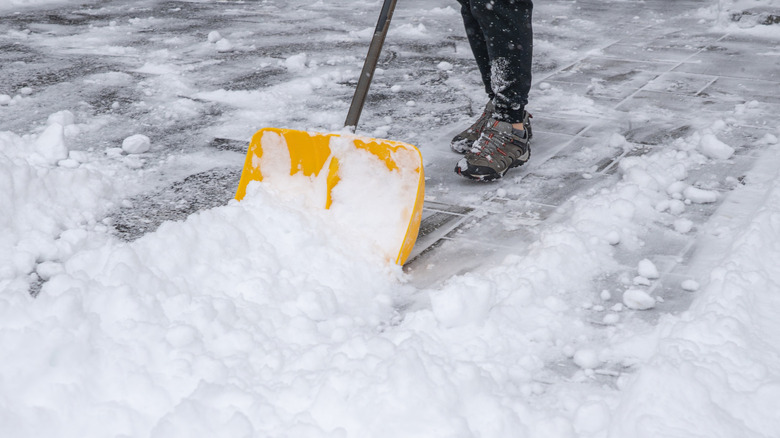
Snow is a beautiful part of winter, but shoveling it is often a dreaded chore. Though you may think you know how to shovel snow, you could be inadvertently making the job harder or even dangerous. Having bad form or lifting heavy amounts of snow and twisting to throw it leads to injuries, but there are ways to make shoveling easier and safer. Lorne Chadnick, a snow expert, gave Homes & Gardens advice on shoveling. "In my experience, the safest and most efficient way to shovel snow involves thinking of it like working out — your stance matters. Make sure to bend your knees, keep your back straight, and lift with your legs — not your back. Additionally, try pushing the snow instead of lifting it when you can, as this also helps you avoid hurting yourself," he said.
This technique can not only make your snow removal routine safer and less tiring, but it can also speed up the process. One of the reasons shoveling is so strenuous is because it's not an everyday task and requires repeated bending and lifting. Ki Hwang, MD, a spine specialist and orthopedic surgeon, told St. Joseph's Health, "Snow shoveling is one of the most physically demanding tasks," he said. "When done incorrectly, it can put tremendous strain on your lower back, shoulders, and even your heart." To protect yourself, Dr. Hwang recommends the exact same approach of bending your knees instead of your waist. Adding to that, he recommends keeping the shovel close to you while lifting and turning your entire body to throw the snow, rather than twisting.
Expert advice that'll make your snow removal routine easier
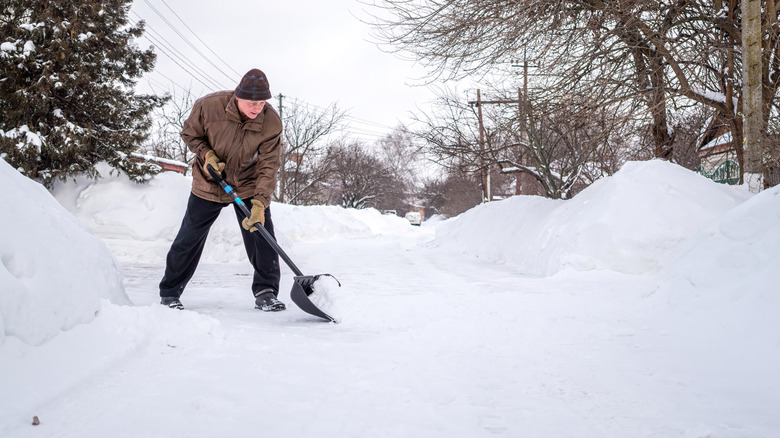
As snow accumulates, it gets heavier, especially if you're dealing with wet snow. Even when using proper form, shoveling can still be tiresome. To save yourself from having to lift heavier shovelfuls, the best time to remove snow from your driveway may be while it's still snowing. As Jeremy Yamaguchi, a yard expert, told Homes & Gardens, "Even if it's actively snowing, go out and shovel for every 2-3 inches that accumulate rather than waiting until it's all fallen so that you can do it in one go." Once snow has been sitting for a while, it'll freeze and be harder to remove, but by shoveling in increments, the snow will be fluffier, and you won't have to lift as much at once.
Following a homeowner's guide to snow shovels will also make a big difference, since some shovel designs aren't as helpful as they seem. Colleen Louw, a physical therapist, explained to Real Simple the importance of using a lightweight shovel with a curved handle. "Make sure you have a shovel that allows you to not over or under extend while lifting," Louw said. "One with a short handle or shaft will cause you to bend more, and one that is too long will make it harder to lift the snow as it will be heavier." By using an ergonomic shovel, maintaining good form, and shoveling a little at a time, your snow removal practice shouldn't be as challenging as before.