

Think Twice Before Painting Your Home's Brick Exterior — Here's Why
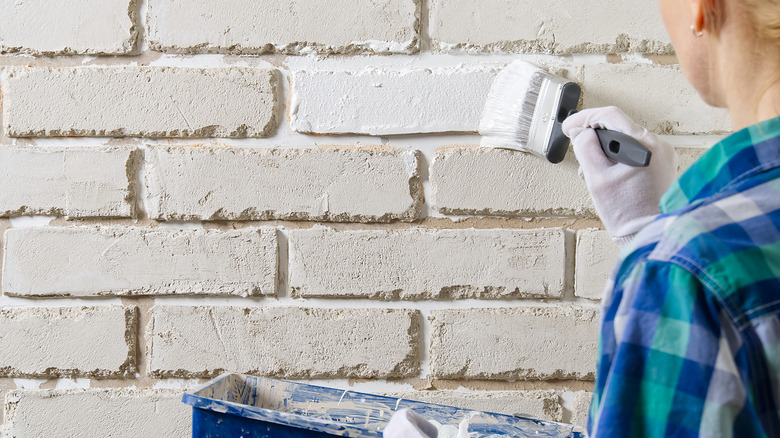
Perhaps you want to paint your home's exterior wood siding or any gutters that are starting to peel or fade. Maybe the overall exterior just looks outdated and you want a fresh start. You might have even received an unwanted letter from your HOA requesting that you get the outside of your home painted for overall maintenance, per the community covenants. Before you visit a paint store or talk with a painting company about your home's exterior, you'll want to pause if you have any brick. Painting your home's brick exterior with latex or oil-based paint is generally not advised, as such substances can ruin bricks and pose other unwanted effects in the long-term.
Brick is a hardy material primarily derived from clay sediments that has been used in building construction for at least 9,000 years, per the Haverstraw Brick Museum. Despite its durable reputation, traditional brick homes may carry a significant downside: they are made with extremely porous materials that require specific care. This can make it susceptible to damage from moisture, particularly if it is not allowed to breathe properly. Covering brick with exterior paint could essentially reduce airflow throughout the brick and lead to moisture-related issues such as mildew and mold. As these trapped water particles expand, the paint is then susceptible to cracking and flaking off.
What to know about painting exterior brick
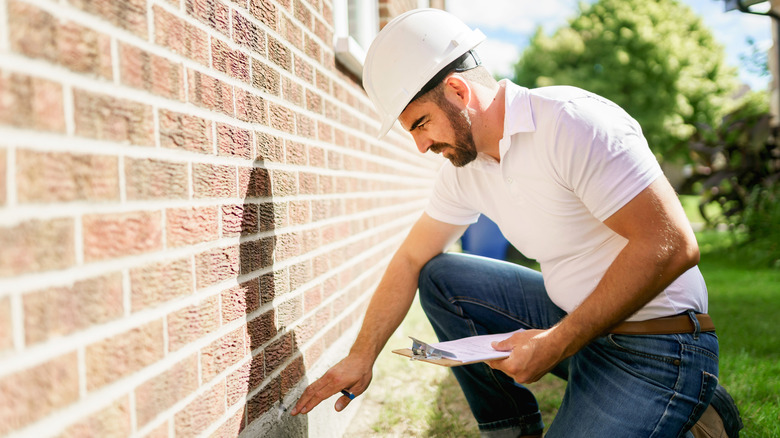
Given the downsides to painting exterior brick, you may want to reconsider. This doesn't mean you cannot change the brick's appearance at all, though. While you cannot use traditional exterior house paint on brick, there is masonry paint specially formulated for brick. These usually contain acrylic, which is not prone to peeling and cracking like other formulas. While this could certainly limit paint damage, be aware that using any form of paint on exterior brick surfaces may still alter the brick over time. Instead, you might consider staining the brick with a masonry-grade product. This can help provide color and doesn't smother the surface and stop the brick from breathing, as paint would. The downside is that once you stain brick, it's almost impossible to completely remove it because of the way it seeps into the material.
Another alternative is spray cork. This breathable material is composed of cork particles and small amounts of water-based paint. Not only does it offer insulation effects, but it won't trap moisture in brick like traditional paint can. You still have a range of color options with spray cork, and you'll notice a subtle texture with the finished product, too. Unlike staining brick, be aware that spray cork may require reapplication over time.