

The Fastest Ways To Bring A Dying Pothos Plant Back To Life
We may receive a commission on purchases made from links.
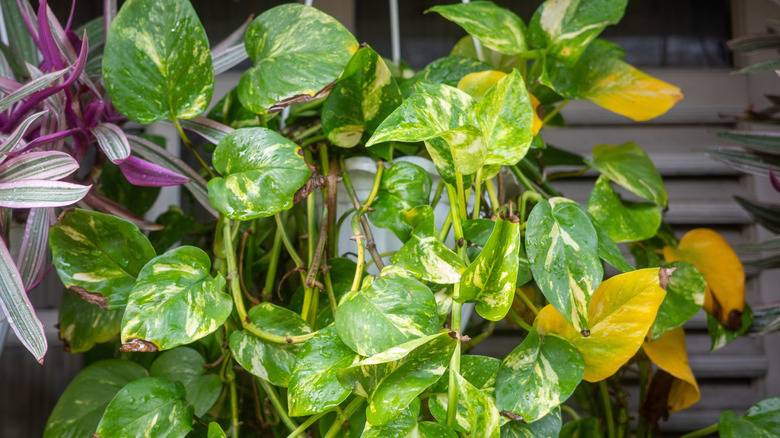
If that easy-to-care-for pothos plant (Epipremnum aureum) that used to spill over your bookcase with lush green vines has been looking a little bedraggled lately, you may be wondering if this reliable plant has come to the end of its life span, or if there is anything you can do to revive it. Despite being one of the best plants for beginners due to its unfussy needs and ability to thrive under the care of even novice gardeners, pothos can start to fade if you are getting some of its basic care wrong.
The two key things any plant needs are water and light, and making sure your plant has the right amount of both is the key to a healthy pothos. While these plants aren't finicky, they do need enough light to stay green, and some attention needs to be paid to watering so that they aren't parched or water-logged. Common signs your pothos is struggling include yellowing and droopy leaves. Consider these signs a check-engine light, not something that means it's time to head to the wrecking yard. You can usually revive an ailing pothos with a few quick and easy adjustments. Here are the fastest ways to bring it back to health.
Getting water and light right
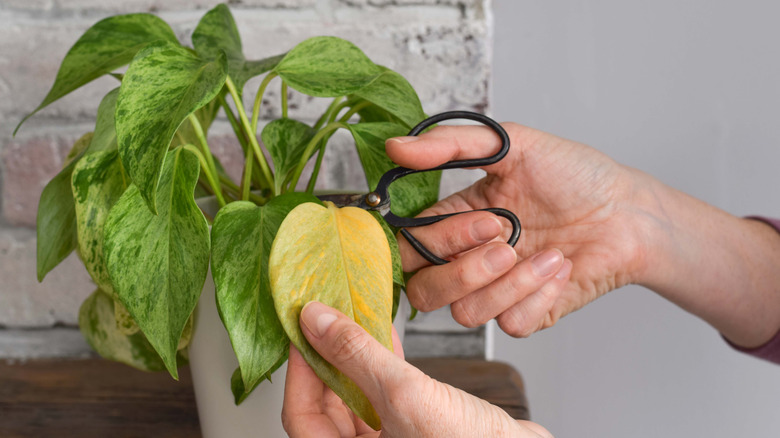
After removing afflicted leaves, focus on making adjustments to either light or water to help your plant. Although pothos is known for its ability to adapt to low-light situations, this plant enjoys bright, indirect sunlight to really thrive. If natural sunlight isn't possible, hitting it with an artificial grow light for a few hours each day may help.
Yellowing leaves can also be a sign of overwatering. Thankfully, this is an easy fix. Just adjust your watering schedule to ensure you are only getting your plant wet after the first couple of inches of soil have dried out. Test this by sticking your finger straight down into the soil. If your soil never seems to feel dry when you finger-test it, the problem may be how your soil holds water. Consider replanting your pothos into a pot with better drainage. Make sure it's in an airy soil mix that has plenty of perlite, bark, or sand to encourage drainage, like Perfect Plants Organic Pothos Soil.
On the other hand, if your pothos soil feels dry and your leaves look droopy and wilted, you may be underwatering your pothos. To bring it back, try to water it thoroughly so that all the soil feels moist to the touch. If your soil doesn't seem to get moist easily, it could be that it isn't absorbing water effectively. Again, repotting with fresh soil is a simple solution. You might also want to invest in some indoor plant products like a moisture meter to keep track of your watering moving forward.
Other interventions to help your pothos survive
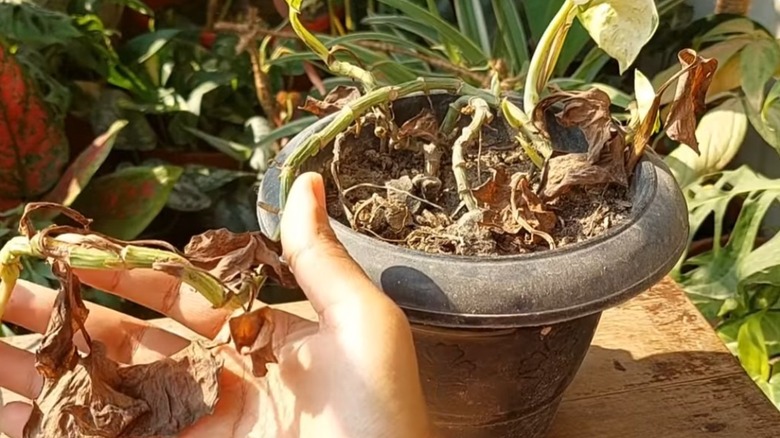
If your pothos is looking really scary, with brown or black shriveled leaves, this is a likely sign of root rot. This is a pretty dramatic-looking ailment, and you may be inclined to simply throw away a pothos plant that starts to blacken. However, you can still nurse it back to health in many cases. Root rot can be caused by a type of mold carried in water, or a fungus from potting soil. As a result, a fungicide may be able to get rid of it. Browning or spotted leaves may also be a sign of pests like spider mites or aphids, which you can see on close inspection. You'll need to manage your indoor plant pests by wiping down the leaves and hitting your plant with a good spray of Neem oil or insecticidal soap to get rid of these critters.
It takes a lot to kill a pothos, and your plant is probably not beyond saving as long as any living roots remain. Reddit discussions about dying pothos are full of stories of bringing near-dead looking plants back from the brink. YouTuber Plantalogy demonstrates how an extremely crispy looking pothos was able to be revived after removing dead growth and replanting, fertilizing, and carefully watering the plant.