

Want Healthier Hydrangeas In The Spring? Do This One Thing In January
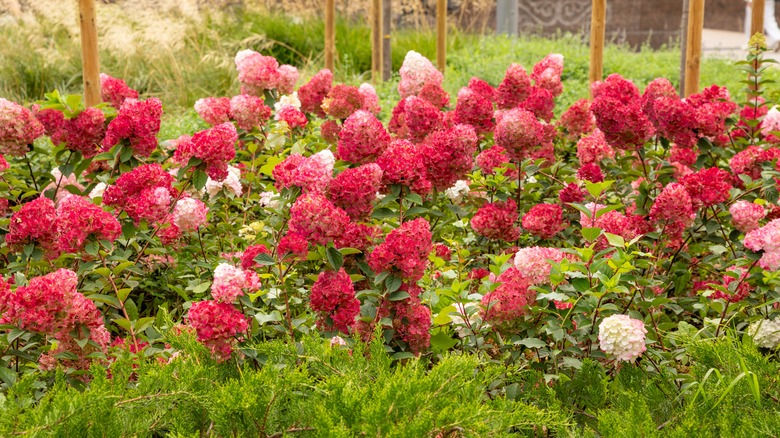
Hydrangeas (Hydrangea spp.) are gorgeous plants beloved by both beginner and expert gardeners. They're robust, being generally hardy in USDA zones 3 to 9, they're easy to care for, and they come in so many color varieties that you can make your garden into a veritable rainbow if you wish. Learning how to grow hydrangeas involves getting a grasp of the plant's basic needs, such as proper sunlight and sufficient water. Get these things right, and you'll have gorgeous blooms come summer. While much of your plant care will be focused on the growing season, though, there's one trick for healthy hydrangea blooms that you can do in January — and that's pruning.
Pruning plants at certain points throughout the year helps with their health and growth. You have to ensure you prune at the right time, however, or you may be shooting yourself in the foot. For example, pruning hydrangeas in January is a hot tip only if you have new wood hydrangeas. This category consists of smooth hydrangeas (Hydrangea paniculata) and panicle hydrangeas (Hydrangea arborescens). If you have old wood varieties, then pruning in January can actually result in fewer blooms and worse health come summer — so it's important to keep your specific plant type in mind as you consider this pruning tip.
How to prune new wood hydrangeas
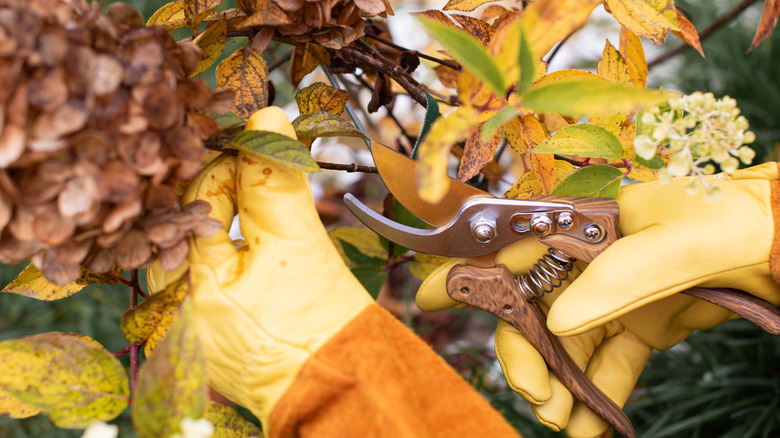
As you get ready to take some shears to your beloved plants, you should keep a few things in mind — knowing the difference between pruning and trimming, for example. Trimming is more about keeping up a plant's visible appearance, while pruning is about keeping it healthy so that it blooms as fully as possible. For a good, healthy late-winter prune, cut back your hydrangea's stems to just above a fat bud using a softly angled cut. They can be trimmed to about 12 inches off the ground, although, if necessary, panicle hydrangeas can be left a little taller. Don't be shy, though, as appropriate pruning will help your hydrangea stay healthy and promote the best blooms.
Now that you've perfected growing visually stunning hydrangeas, you could consider some excellent companion planting for hydrangeas. Options like hosta plants can fill in the space under your hydrangeas with vivid green or blue leaves that will compliment your hydrangeas' blooms. With these tips in mind, you should have a thriving, diverse, and colorful garden to enjoy each spring.