

How Long Can Wet Clothes Sit In The Washer Before You Must Rewash?
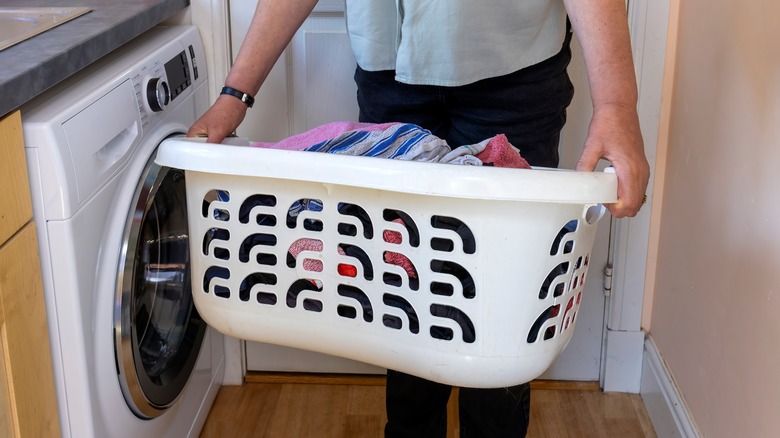
Forgetting a load of laundry in the washing machine has happened to everyone. Maybe you got pulled into a quick work call that lasted for hours, ran an errand that took an afternoon, or sat down to watch one episode but ended up couch rotting all evening. Even if your clothes don't smell musty by the time you remember them, you may be wondering if they need to be rewashed. Most cleaning experts agree that wet laundry can usually sit for between eight to 12 hours without developing serious problems, but that window depends on the type of washing machine you use, and, of course, how dirty the load was in the first place.
The clock starts ticking once your wash cycle has finished. Washing removes some odor-causing bacteria, but unless you're using hefty amounts of bleach, it doesn't sterilize fabric. Tiny amounts of bacteria, yeast, and mold spores are always left behind, and there's nowhere they love to incubate more than inside a dark, damp washing machine. Warmth and moisture allow these microbes to multiply and feed on the residue still clinging to the fibers in your clothes, sheets, or towels. As they grow, they release volatile organic compounds (VOCs) creating that sour smell.
Research published in Applied and Environmental Microbiology showed that microbes can become active again within hours when fabric stays wet, especially on absorbent materials like cotton and in sealed front-loading washing machines where humidity stays trapped. That's why a load that smelled fresh in the morning can get sour by dinner. It's not that your laundry gets dirty again, per se. Microbes just have the perfect conditions to start growing.
How to tell if laundry needs to be rewashed
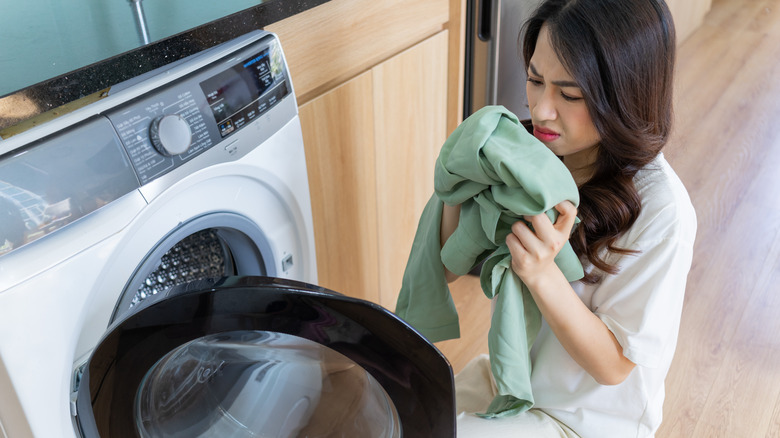
Although there are some definitive steps you can take to do laundry better, understanding where your forgotten load falls on that microbial clock isn't always obvious. Delaying the dryer swap for a few hours is okay, but the longer your laundry stays wet, the more likely it is that you'll open the washing machine and get a whiff of those odor-causing microbes. Smell is your most useful clue, since those sour, musty scents come directly from the VOCs microbes release as they feed on sweat, skin, and soap residue left behind. If you can smell them, growth is already well underway.
Even if a load still smells like your favorite detergent, microbes can still be present and active, which explains why drying soggy laundry can sometimes set odors that weren't obvious at first. Running a quick rinse and spin cycle can flush out early microbial buildup. However, at the first hint of something sour, a full rewash followed by a quick DIY hack to make clothes smell good in the dryer is the best approach.
That's also why the eight to 12 hour guideline is more of a sliding scale than a hard cutoff. Certain factors may influence how quickly a load can start to stink. For example, front-loading washers are more prone to mold than top-loading ones; thick fabrics stay wet for longer than lightweight synthetics; and warmer laundry rooms give microbes a better environment to grow than cooler ones. A good rule of thumb is that the damper, warmer, and heavier the load, the less time you have before it needs a rewash in the case that you left it sitting there.