

Help Your Avocado Tree Thrive With A Natural Remedy From Your Bathroom
We may receive a commission on purchases made from links.
Epsom salt, a compound made up of magnesium, sulfur, and oxygen, is often marketed as a bath soak for sore muscles. However, there are many other ways to use this self-care staple in your home and garden. For instance, Epsom salt may help your orchids stay happy and healthy, and it might keep woodchucks away from your vegetable garden. Some gardeners swear that this substance is beneficial for avocado trees (Persea americana), too. Though it's not a one-size-fits-all solution for avocado ailments, it could be helpful in certain situations, especially ones involving a shortage of the nutrients that Epsom salt contains.
There aren't a ton of definitive research findings about Epsom salt's effects on avocados, but trees growing in soil that's low in magnesium or sulfur might appreciate a serving of the stuff. Avocado trees suffering from magnesium or sulfur deficiencies may grow very slowly and produce fewer fruits than expected. They may also have leaves that look more yellow than green, but insufficient levels of nitrogen and overwatering can also cause this symptom. In other words, don't assume that a magnesium shortage is to blame and be careful of giving your soil too much magnesium because it can keep plants from absorbing calcium properly.
Likewise, an overabundance of sulfur in an avocado tree's tissues may lead to scorched leaves or yellowing foliage. To avoid the problems that come with excessive magnesium and sulfur, perform a soil test before applying Epsom salt. Either request an analysis of your soil's nutrient content from your local cooperative extension office or order a do-it-yourself test such as the MySoil Test Kit.
How to fertilize an avocado tree with Epsom salt
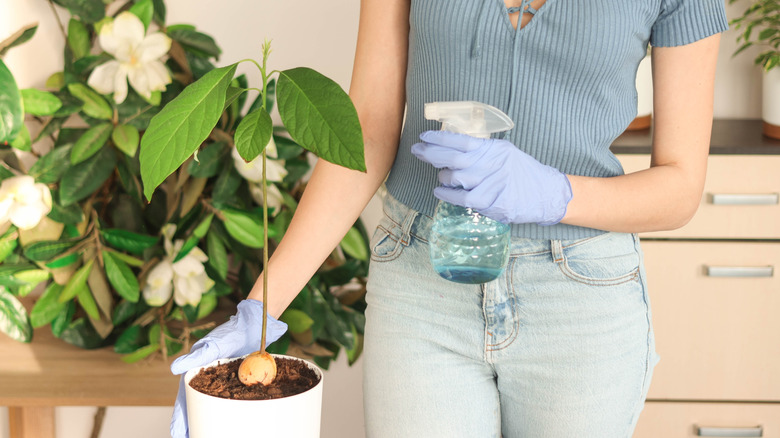
If you're growing an avocado tree that's stunted or yellowing and a soil test shows low levels of magnesium, sulfur, or both, applying a fertilizer made of Epsom salts is worth a try. It's important to use the right concentration of Epsom salt and deliver it in a way the tree can tolerate. Diluting Epsom salt with water and applying it to the soil surrounding your tree's roots is one of the safest options.
Mix ½ tablespoon of Epsom salt into ½ gallon of water and then give your tree a drink of this solution every six weeks or so during its growth period. Or, you can adopt a seasonal approach to fertilizing. If possible, apply Epsom salt fertilizer in the early spring, right before your tree starts to form new leaves. Consider doing it again in the summer if the soil's magnesium level isn't high enough. You can also apply again in the fall to help your tree gear up for winter. As with watering, the amount of water you need to use depends on the size of the tree and whether you're growing it in the ground or in a container.
By getting the right amount of magnesium in the plant's soil, you'll enhance your avocado tree's efforts to make chlorophyll, which is essential for photosynthesis. Similarly, fixing a sulfur deficiency that's been bothering your tree is likely to improve its response to stress while helping it use nitrogen, phosphorous, and potassium more effectively.