

How To Grow An Orange Tree Indoors And Actually Keep It Alive And Thriving
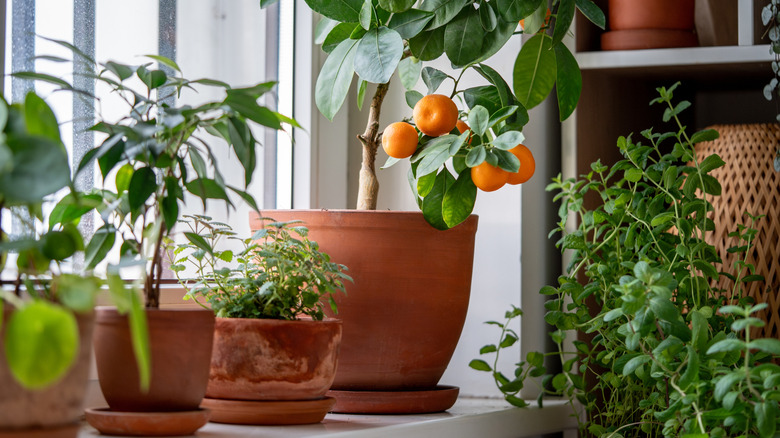
Indoor plants set a tone for any living space, from a tropical oasis of palms to a meditative collection of cacti. If the tone you want to set is elegance and class, consider bringing an orange tree into your home. These exotic plants from Southeast Asia have been synonymous with luxury since they became popular with wealthy Europeans in the 16th through 18th centuries, exemplified in the famous Orangery in the Palace of Versailles. Your home may not be a famous chateau, but if you have a sun-filled living room, you can have your own mini-orangery that will thrive with a few simple growing tips.
A popular and easy-to-grow indoor orange tree is the calamondin (Citrofortunella microcarpa), whose flowers produce a sweet fragrance as well as small, bright oranges that have a tart taste often characterized as a combination of kumquat and mandarin. You can even eat the rind of this little orange. When grown outside, these trees can get to 20 feet, but will stay a compact 3 to 6 feet in an inside container. The trick to a successful, fruiting indoor orange tree is to plant it in a large container, water and feed it appropriately, and most of all, set it in a spot with plenty of bright light.
Caring for your calamondin
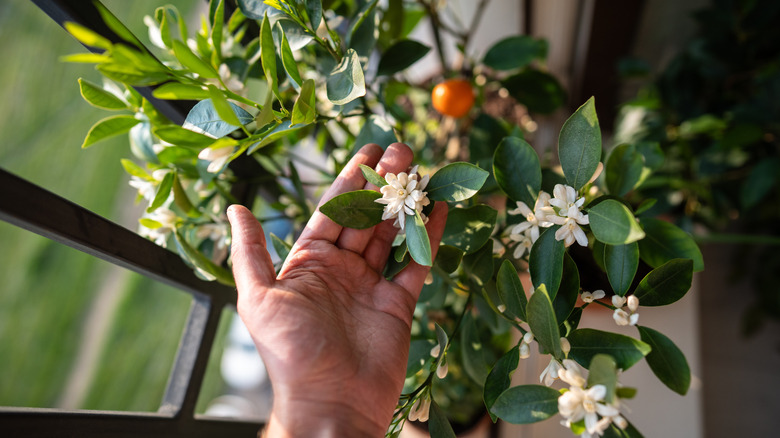
Start with a large pot, at least five gallons, to give this little tree plenty of room to grow. If you are leaning into French country style, consider a large, square pot known fittingly as a Versailles planter. Like most citrus, these oranges are vulnerable to root rot. A well-draining soil like a cactus mix helps ensure your tree doesn't become waterlogged. The soil you choose should be slightly acidic with plenty of perlite or gravel to ensure good drainage. Water when the top layers of soil feel dry. Don't forget to feed your tree. Like all citrus, calamondin orange is a heavy feeder that benefits from a monthly dose of a slow-release fertilizer specifically made for citrus.
Similar to caring for an indoor lemon tree and other types of citrus, light is everything, so you want the sunniest spot possible to place your container. A southwest-facing window with at least 6 hours of direct sunlight per day is ideal. Indoor temperatures are ideal for these trees, which grow successfully between 55 and 85 degrees Fahrenheit.
As long as your little tree is kept sunny and warm, it will produce fruit year-round. Even better, calamondin trees are self-pollinating, so even if you have just one tree, you can expect fruit with proper care. As an indoor plant, the glossy green leaves of a calamondin will gather dust, so give these leaves a gentle wipe-down periodically. Use a mild dish soap and water to wipe it down if you see signs of any pests like mealy bugs or spider mites, common on indoor citrus. If you have a real infestation, you may have to move your plant outside and treat with an insecticidal spray.