

Move Over, Built-In Cabinets: This Up-And-Coming Kitchen Trend Is On The Rise
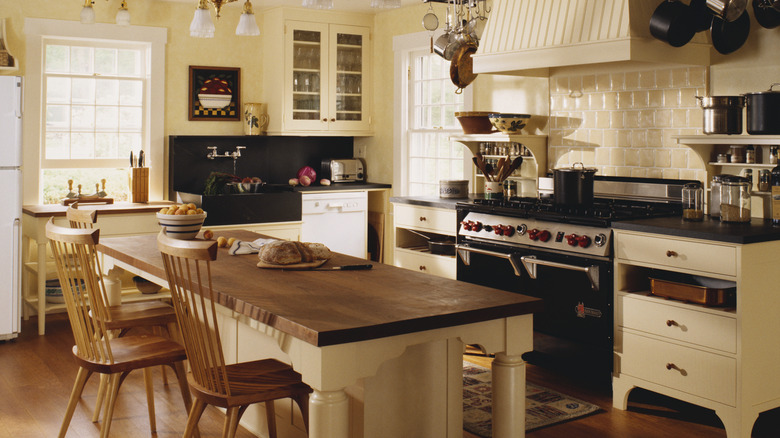
Built-in kitchen cabinets have, in the past century, become so commonplace that there's almost a sort of orthodoxy about them. Everyone has them, so you will too. And this is a weird kind of orthodoxy, because no one really cares if you follow it. The most you'll ever hear is, "Oh, I didn't know there was any other choice."
There is another choice, and it turns out to be quite a good one. Everyone who overthinks such things — cabinetmakers and retailers, interior designers, and the industry trade press – says that freestanding cabinets and cupboards are gaining popularity. They have a lot to offer almost any kitchen, and their benefits are clear: They give you a lot more flexibility to rearrange your kitchen's layout and update its style. And, since freestanding furniture can be less expensive than built-ins, you'll have even more freedom to make changes. They're also often easier to clean, and you can take most of your kitchen with you when you move (although if you do a good enough job, your buyers are probably going to ask for a contract addendum to get their hands on your hutch).
Even the supposed downsides of freestanding cabinets don't really hold water for many homeowners. Their supposedly less efficient use of space is measured against a maximalist approach that uses every possible cubic inch for storage; claims that they will decrease home value seem unlikely given the long-standing appreciation for a classic design approach; and we'll come back to their "limited fit" potential, which is overstated at best.
The trip from freestanding to fitted ... and back
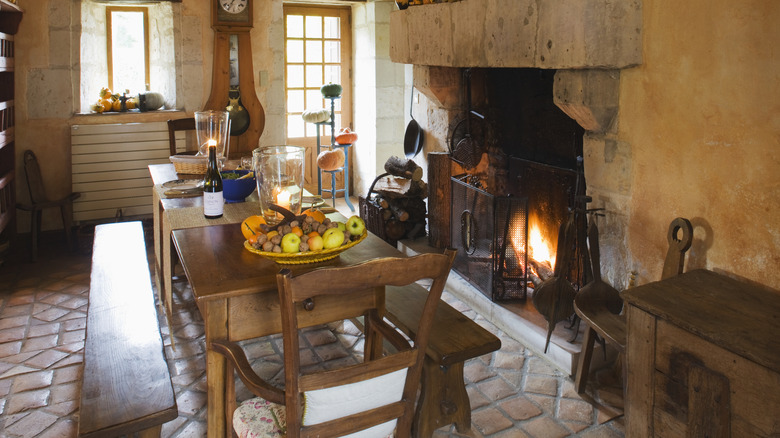
Another supposed downside of freestanding kitchen furniture is that it doesn't have the seamlessly cohesive look of a typical built-in system. But it's not clear that so much cohesion is any more desirable in kitchens than in other areas of the home. Modern kitchen cabinetry evolved when our lifestyles demanded (and technology enabled) less time spent on butchery, prep, and cooking. Efficiency became built in and symbolized by terms like "clean," "bright," and "seamless." The idea became so entrenched that you'll occasionally hear someone referring to built-in cabinets as "traditional" ... the right and proper way to do it.
But discrete pieces of functional furniture were used as kitchen cabinets long before built-ins started to become popular in the 1920s. These "fitted kitchens" came along just as the world was ready for them. Half of U.S. homes had electricity by 1925, and while gas stoves had been around for a century, they were found in most homes by the 1920s. Unlike kitchen fireplaces and later wood-burning stoves, new elements like gas stoves and refrigerators could often be located wherever the homeowner preferred.
Located, but not necessarily relocated. Gas lines and high-amperage wiring for ovens and stoves can't be dragged around like extension cords. And the advent of running water meant the kitchen sink, once little more than a vessel on top of a freestanding cabinet, was now attached to plumbing. As important fixtures became more fixed in space, the freestanding Hoosier cabinet introduced the idea of multifunctional workspaces in the late 1800s. This model presaged the first fitted kitchen — the "Frankfurt kitchen," a modular, customizable, efficient space modeled on railway dining car kitchens that was invented in 1926.
Designing a kitchen with freestanding furniture
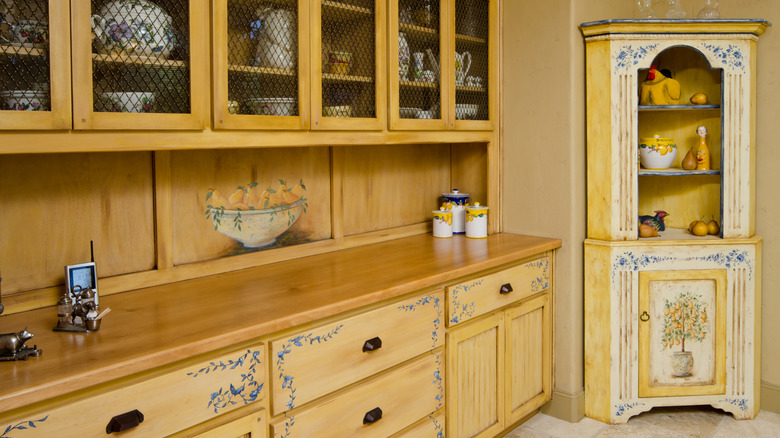
What is more modular than a system that's completely open to using almost anything as a component — where kitchen cabinet ideas and inspiration can come from anywhere? Rumor has it that some writers' spouses have made kitchen cabinet uppers out of an upended bookcase from Facebook Marketplace. While even the least expensive fitted kitchen is still comparatively pricey, there's nothing stopping you and a can of paint from outfitting your own kitchen with freestanding dressers, chests of drawers, console tables, and the like, as your budget and style dictate.
Such an open-ended approach (whether you fully take advantage of it or not) means that a whole world of design flexibility is open to you. Freestanding base cabinets look completely natural with open shelving in place of upper cabinets, which might not work as well with a fitted cabinet system. And you gain quite a bit of latitude when it comes to combining colors and finishes to highlight or ground (or both) your freestanding pieces.
The unfitted kitchen is a natural fit for midcentury design if for no other reason than that it has great legs, which are among the best features of using individual furniture as cabinets. While the curves of midcentury and other modern styles don't always work well with built-in cabinets, they work great with freestanding cabinets. And note that word: "modern." There's no rule that says freestanding kitchen furnishings have to be vintage. Indeed, any modern piece you love has potential in a kitchen with the right collection, and more recent open-plan spaces can benefit greatly from the flexibility of freestanding furniture.
Mix it up instead
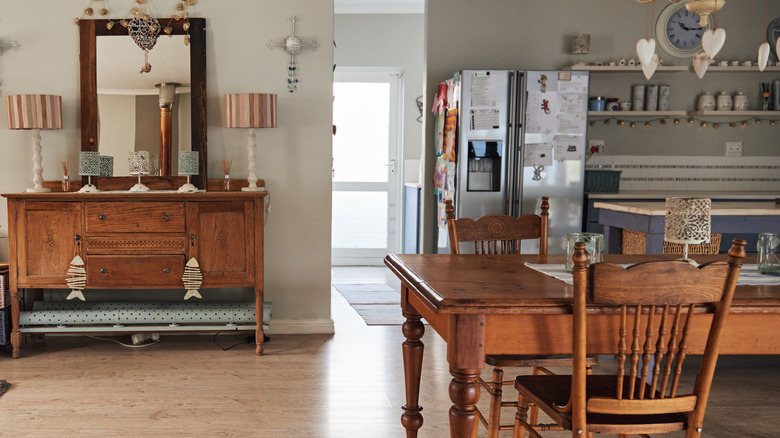
An unfitted kitchen design works as well with a vintage vibe as it does with modern, sleek, and streamlined kitchen ideas. You don't have to commit to only using freestanding furniture, either. In fact, it's perfectly natural to mix built-in and freestanding cabinets, and you can already see this approach in the trend of using freestanding larders. And though the mix-and-match approach doesn't necessarily evoke eclecticism, it can also emphasize a particular period or even the most vague of vibes, from beachy to kitschy. Even if you love your current design, you can always add (or replace) a few pieces to interrupt the uniformity of a fitted kitchen.
The conventional wisdom is that custom cabinetry handles odd architectural spaces better, but it's far easier to fill a corner or small wall space with a freestanding piece for the simple reason that an entire universe of furniture is available to you. Telephone table? Corner cabinet from an entertainment center? Upended bookcase? Sure, as long as it fits your space and style. And reigning in the number of pieces you need might free your budget dollars for more expensive options that can really make a splash. For example, a boring kitchen island can be transformed by a classic cook's table, a statement piece that can simultaneously add lightness and gravity to a kitchen, or even a simpler kitchen island table that you'll want to gather 'round. And if you really want to keep your feet in both worlds, we've even heard of built-in custom cabinets designed to resemble freestanding furniture