

Why You Should Put A Few Bay Leaves In Your Closet And Dresser Drawers
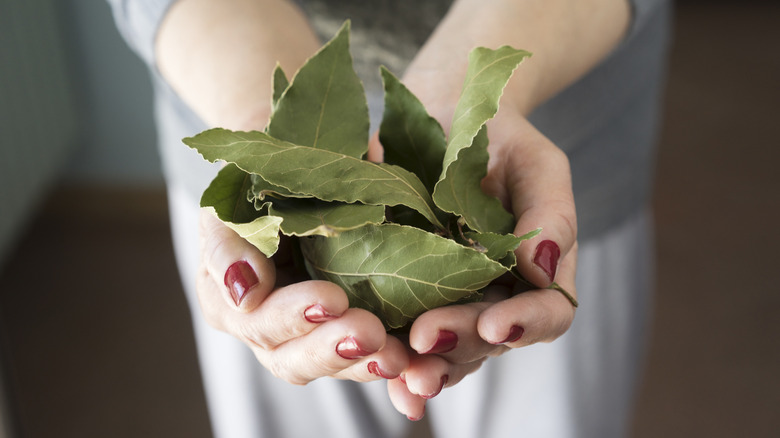
When you're trying to get rid of that musty smell in your closet or make sure your favorite sweater isn't devoured by moths, cedar is probably the first thing that comes to mind. But it turns out that to keep bugs at bay (pun absolutely intended), bay leaves work just as well. The same leaves you toss into a simmering pot of soup or stew can also be an effective pest control option for your wardrobe. Their aroma may be pleasant to you, but bay leaves are extremely unappealing to many of the critters that sneak into closets and drawers when we're not looking.
Clothing storage areas are prone to funky smells and frustrating bug infestations for many of the same reasons. First, they're dark and enclosed, which creates a cozy environment for moths and other insects. Fabrics, especially wool, cashmere, and other natural fibers, hold onto tiny amounts of sweat, oils, and skin, all of which are a veritable feast for bugs. If there's even a hint of moisture or poor airflow where you store your clothes, the combination of darkness, warmth, and odor creates an ideal environment for insects.
That's why putting a few bay leaves in your closet and dresser drawers is one of the best natural pest control remedies. Bay leaves contain highly aromatic compounds that smell wonderful to humans but repel moths and other unwanted visitors. By tucking a few leaves between your sweaters or in the back of your drawers, you're creating a simple and natural line of defense to keep your clothes smelling fresh and your fabrics safe and sound.
The science behind this natural pest control method
So, exactly how do bay leaves repel bugs? It all comes down to chemistry. The bay leaf (Laurus nobilis) is an evergreen plant that's rich in volatile essential oil compounds, including cineole, which is also called eucalyptol. This natural substance easily evaporates from the leaves into the air, making it fragrant. Although it smells pleasantly herbal to people, cineole interferes with insects' nervous systems and sensory receptors, making treated areas seem confusing or even dangerous to moths, cockroaches, and other fabric-damaging pests.
Because they are an enormously expensive problem worldwide, many scientists are devoted to figuring out how to naturally combat pests to protect food supplies, infrastructure, and public health. Research published in the Journal of Stored Products Research found that bay leaf essential oils showed strong repellent and insecticidal activity against common storage pests thanks to their cineole and other terpenes (a geeky word for the smelly compounds inside plants). Another study published in Crop Protection found that cineole compounds caused high mortality rates, suggesting that bugs don't just dislike bay leaves, they actively avoid them.
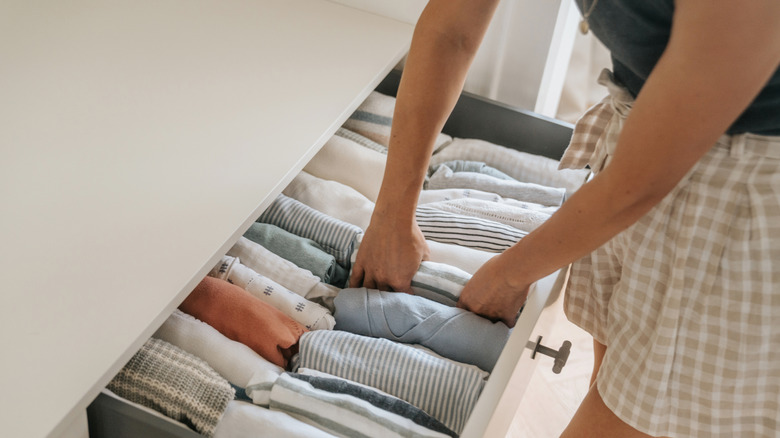
Fortunately, you don't need to be a research scientist to use bay leaves to get rid of bugs. Placing dried bay leaves loose in drawers, on closet shelves, or tucked between folded garments is a low-effort, low-cost trick that gets the job done without sprays or chemicals. Aim for three to five leaves per drawer or shelf, and more for larger closets. Over time, the bay leaves will lose their scent as the volatile oils dissipate into the air, so you should swap them out every few months.