

Farewell To Stale Winter Air: The Simple German Practice That Keeps Indoor Air Fresh

The cold, brisk winter air means to stay warm, you tend to close things up for the season. You bolt the windows and doors and block out any air leaks. The goal is to stay nice and toasty warm. But with that switch also comes the recycling of the same air inside your space, and over the course of three or so months, the common causes of indoor air pollution can add up. A simple German practice called lüften might be exactly what you need to bring some fresh air back in.
Lüften is the act of bringing fresh outdoor air into your home and letting stale indoor air escape. It's a way to improve indoor air quality because that trapped air can accumulate pollutants, humidity, odors, and gases that exceed outdoor levels and harm health over time. Opening doors and windows, running bathroom or kitchen exhaust fans, and using systems that exchange indoor and outdoor air are all forms of ventilation. The American Lung Association explains that fresh outdoor air dilutes indoor air contaminants, helping reduce moisture and airborne pollution that can otherwise linger in an airtight home. Improved ventilation can measurably enhance indoor air quality and even reduce asthma symptoms, particularly in vulnerable populations, the Illinois Institute of Technology adds. This is why improving your indoor air quality, especially in winter, is so important.
How to ventilate your space the right way
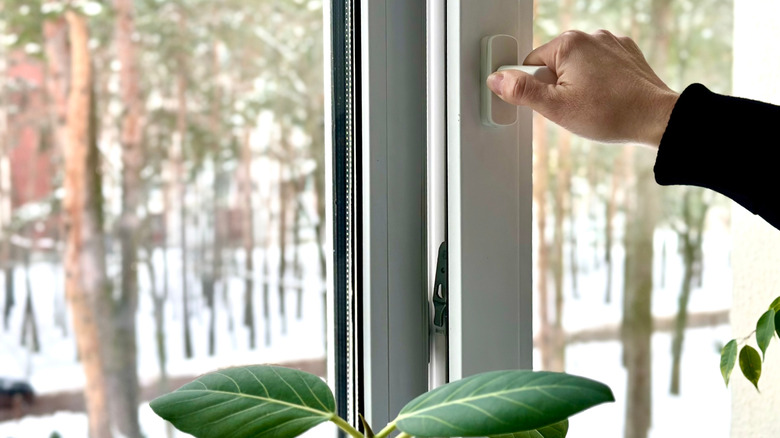
If you live in a home with good cross-breezes, low humidity, no mold issues, and not a lot of off-gassing from new furniture or building materials, a quick air exchange like lüften can help dilute indoor pollutants. @DrKaran on YouTube suggests opening doors and windows 10 minutes a day, as well as vacuuming once or twice a week and investing in an air purifier if you're in a city with poor air quality or a dehumidifier to help keep moisture down in damp areas like your basement.
Problems can occur for people in modern homes where lüften just isn't enough, according to YouTube's Healthy Home Guide. Newer homes are tightly sealed, which traps pollutants from carpet, furniture, paint, and even hidden mold. Opening windows for a short time doesn't meaningfully flush that out, and leaving them open longer can throw off your temperature and humidity, making rooms too hot, too cold, or too damp, which are conditions that actually encourage things like mold to grow.
What's a better solution? An Energy Recovery Ventilator (ERV), which brings in fresh air continuously while filtering it, regulating humidity, and keeping the temperature stable. Unlike bathroom fans or cracked windows, ERVs shouldn't create pressure problems that can pull in air from crawl spaces or walls where mold lives. But the tradeoff is the cost, which is between $2,400 and $3,200, according to Planner 5d.