

The Common Landscaping Trend You Should Avoid At All Costs
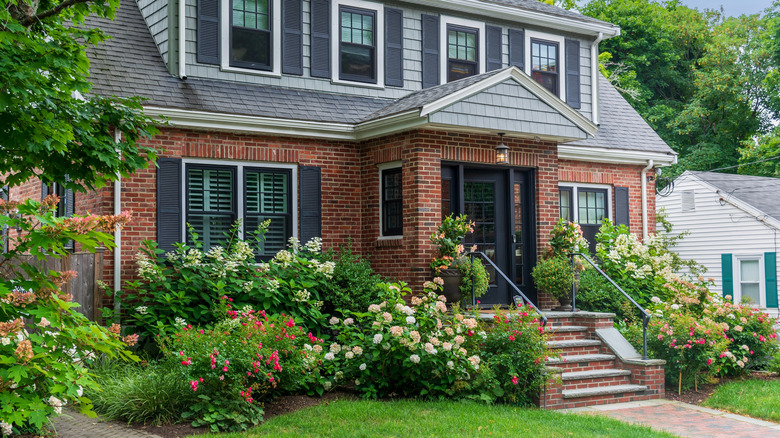
Foundation plantings do a lot of work ... but without guidance, the plants may be perfectly happy to do it all wrong. A good foundation planting roots your home to the landscape and reflects its style and the lines of its architecture. It does these things while managing to look better than a pile of dry twigs all 12 months of the year, without disrupting the local ecology or having plants crowding each other out. This business of overcrowding, it turns out, is central to many foundation planting problems.
If you picture a bad foundation planting, what you're imagining is probably a sparsely populated bed made up mostly of mulch, or a boxwood geometry lesson using topiary versions of toddler shape blocks like cubes, spheres, and the occasional cone, if you're fancy like that. Nobody will argue that the topiary approach is good foundation planting design, but the sparse planting might be closer to perfect than you think. The reason? If you choose and plant well, it won't always be sparse. On the other hand, if you fill up the bed completely today, in two years you'll have a tangled, unmanageable mess. Tell yourself this: I cannot have a mature garden right next to my house on day one.
The mess is not merely visual, unfortunately. Overplanting keeps plants from having enough room to grow into, and overcrowded plants starve each other of light and nutrients. It fosters pests and fungal diseases, and gives those things a highway to the base of your home. This can lead to everything from foundation and siding damage to an increased risk of ground fire spreading to your house.
Planning for successful foundation plantings
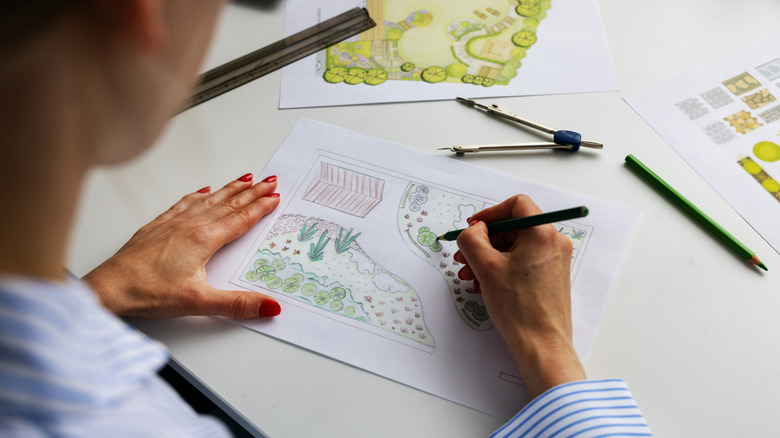
Getting better foundation plantings isn't super challenging, but the task can seem awkward and counterintuitive. It helps to start planning with a sheet of paper, some colored pencils, and your favorite plant reference website (or a book, if you're analog like that). Start finding plants with the principles you need for your climate and yard conditions, and sketch them with colors that are roughly appropriate to either their foliage or flowers, and maybe shade the taller plants darker than the shorter ones. Draw to scale, and make the plants fit their mature size. Leave a little space for airflow and for you to work the bed and access the house's foundation.
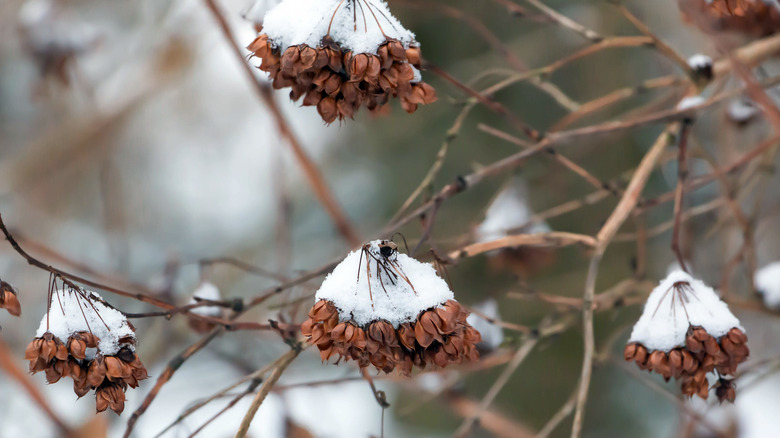
Privilege native plants and shoot for 12-month interest. That means that at least some of the plants will provide something interesting to look at — foliage, blooms, plant shapes, and even fruits or seedheads that persist into winter. Taller plants go closer to the home, to draw the eye up to the house itself, but keep large trees well away from walkways, driveways, patios, and your foundation. This layering means the beds might be deeper than you originally planned, and should usually be somewhat curved and irregular unless your home has a distinctly modern geometry to it.
Your foundation planting design should complement and enhance the style and shape of your home without blocking its view from the street ... or the view of a street from inside the home. Use low borders and groundcovers to blend the foundation beds with the surrounding landscape. Keep mulch to a minimum, and replace it with ground covers when you can.
Focus on natives when selecting plants
Choosing plants for your foundation beds should be the fun part, but don't have fun without attending to potential consequences. (That should stay in Vegas.) So, there are a few good rules to keep in mind. The key is choosing plants native to your area whenever you can. Avoid invasive garden plants and any non-natives that are overly common in your neighborhood; they don't support biodiversity, which creates a broad susceptibility to pests. And uncontrolled invasives can destroy wildlife habitat and choke out the native plants that are good for the local environment.
The emphasis on natives isn't theoretical; plants that evolved in the local climate will tend to have growth patterns that are manageable and predictable. They'll usually reach maturity at a reasonable pace, reducing any sudden need for unplanned pruning to avoid overcrowding. And they support biodiversity and will be appropriate for native pollinators.
When you're tempted by a non-native or invasive landscape plant — and there are some truly beautiful ones to choose from — you can usually find a suitable native alternative. Instead of Japanese barberry (Berberis thunbergii), consider common ninebark (Physocarpus opulifolius), which has cultivars in various sizes and multiple shades of foliage (including some stunning purples). You can get year-round interest and some of the color of burning bush (Euonymous alatus) by planting native Virginia sweetspire (Itea virginica) instead. Ans steer clear of invasive Asian viburnums, perhaps opting for native arrowwood, maple leaf, or blackhaw viburnums instead. The best native landscaping plants in your state might include sweetshrub (Calycanthus floridus), strawberry bush (Euonymus americanus), New Jersey tea (Ceanothus americanus), inkberry (Ilex glabra), Fothergilla, and many others.