

Not Curtains Or Blinds: A Budget-Friendly Way To Add Privacy To Glass Front Doors
We may receive a commission on purchases made from links.
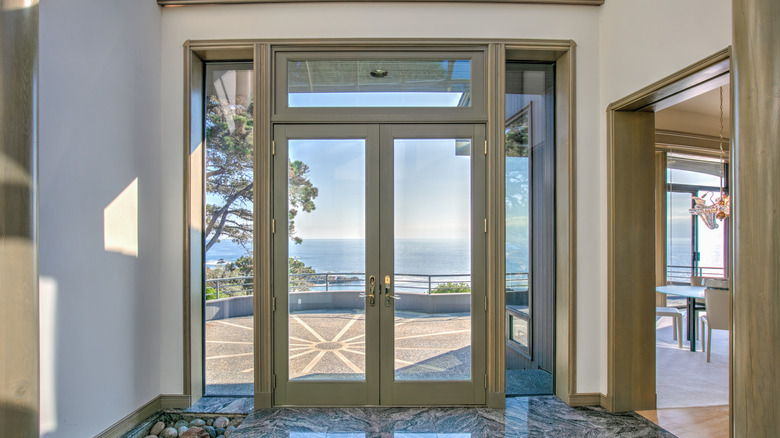
If you have a front door with clear glass panes, passersby may be able to get a pretty good look inside your house, even if they don't intend to snoop. To prevent thieves from scoping out your home, or to keep delivery drivers and neighbors from glimpsing the clutter you left on your kitchen table, it's wise to cover the glass with something that obscures the view. However, installing blinds on a door isn't for everyone. It typically requires precise measurements and access to brackets and a drill. Plus, blinds with cords on them aren't the safest choice for households with small children. Curtains can also be a headache to hang and need to be cleaned regularly. Fortunately, avoiding both of these options is possible if you're willing to paint your glass. There are several products that can give transparent glass a frosted look, making whatever's behind it harder to see. In addition to being easy to apply, these paints are much less expensive than buying new panes of frosted glass for your front door, which can cost between $50 and $200 per square foot.
Frosted glass paint comes in a couple of different forms. Products like Rust-Oleum 342600 Frosted Glass Paint are sprayed onto glass, while options such as DWIL Frosted Glass Paint are generally applied with a brush or roller. The semi-transparent coating they create lets some natural light filter into your home but blurs the glass enough to enhance your privacy. In general, these paints are only intended for interior glass, so they should be used on the side of the door that doesn't get battered by rain, snow, or wind.
How to apply frosted glass spray paint to a door
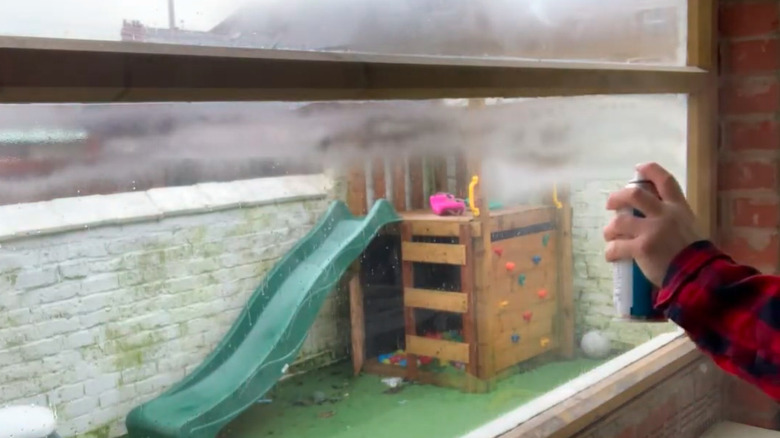
Frosted glass spray ordinarily costs less than similar products you apply with a brush or roller, so it's likely to be your top choice if you decide to paint your front door's glass for increased privacy. Be sure to apply this type of spray in a well-ventilated area and wear a safety mask to prevent inhalation. Also, cover any surfaces you don't want to frost with masking tape, a drop cloth, or something similar. Before spraying paint onto the panes, wash the glass with baking soda and vinegar, and buff away any smudges with wax paper. Once the glass is spotless, shake the paint can for about a minute and then spray its contents onto sections of glass that are a few inches wide.
To achieve even coverage, begin at the bottom of one section, spraying back and forth horizontally as you guide the can upward. When you reach the top of the pane, switch directions, moving the can downward as you coat the adjacent section of the glass. Continue this process until you've covered each of the panes entirely, moving the can at a slow and steady pace and keeping it about 4 inches from the glass. Let the first coat of paint dry according to the instructions on the can. Then, follow the same application process to add more coats. You're likely to need at least two coats for each pane of glass on your front door. If you don't get the frosted effect you want, don't despair: You can always remove the paint with a scraper and install privacy-boosting window film instead.