

Martha Stewart's Creative Plant Riser Hack Repurposes A Common Backyard Object

We may receive a commission on purchases made from links.
Removing tree stumps from your yard can be costly, and it's grueling work to attempt yourself. Sometimes the best option is giving old stumps a new job to do. For instance, you can place container-grown plants on stumps to create an attractive display. Stumps that are still rooted to the ground can perform this task in an outdoor garden, and some chunks of trunk are suitable for use in greenhouses, enclosed patios, and other indoor spaces where you might overwinter cold-sensitive plants. Home and garden expert Martha Stewart uses these kinds of tree pieces in the gardens on her farm in Bedford, New York. "I repurpose stumps from downed trees to use as risers for some of the potted plants or for the legs of tables. It's important to make use of both horizontal and vertical space when storing," she explained on The Martha Blog when discussing how she overwinters tropical plants.
In addition to making good use of vertical space to make room for more plants in tight spaces, putting potted plants on risers is a practical way to support their health. Stewart uses her stump risers to elevate potted species such as agaves, lemon cypress trees, and other tropicals she stores in a hoop house during the winter. Moving these specimens onto dedicated platforms is an easy way to keep their leaves from brushing against each other. This natural boundary promotes airflow and inhibits the spread of pests and pathogens. Platforms can even help sun-seeking plants find the light they need to thrive. Stump sections are a good choice for many of Stewart's potted plants because they're sturdy and can support lots of weight.
Choosing stumps and reinventing them as plant risers
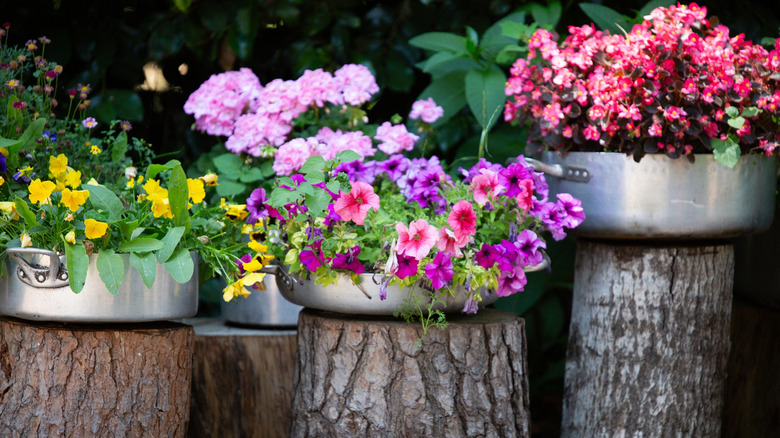
The first step of turning a stump into a plant riser is choosing a good piece of wood. The trunk piece should be strong, show minimal signs of decay, and have a level surface that can support a plant pot with ease. Make sure the bottom of the stump section is even, too, which will help your riser stay steady. Also consider the weight of the stump section if you plan to move it with any regularity. If it's too hard to roll from place to place or load onto a hand truck, you probably won't use it for very long.
Try customizing a stump riser to fit your needs. If you have several logs to repurpose, make them different heights to lend your plant display a bit of visual contrast. To prevent the stump chunks from decomposing and give them an artisan-made look, you could strip off the bark, sand them smooth, and apply a stain or varnish suitable for outdoor use. Carpoly Water-Based Wood Stain & Sealer is one low-odor, non-toxic option. While you're in maker mode, DIY some risers for your houseplants to elevate their look or create a table from the rest of your fresh-cut wood.