

How To Prep Your Jasmine Plants For Winter So They Come Back Thriving Next Season
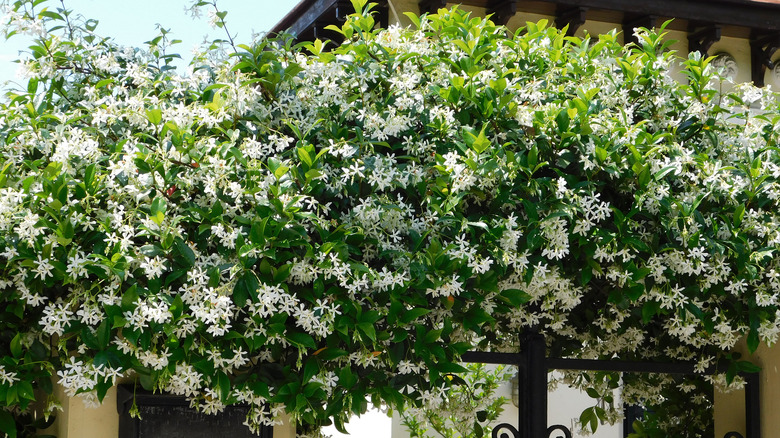
Jasmine (Jasminum spp.) is famous for its blossoms, which give Chanel No. 5 perfume its sought-after scent. In addition to making your yard smell fantastic, jasmine flowers are shaped like stars, adding visual appeal to almost any landscape. To enjoy these benefits, give the plants everything they need to weather the winter. Though there are more than 200 species of jasmine, each with slightly different care preferences, most varieties are happiest in climates that rarely experience frost. Selecting a type that's suitable for your USDA hardiness zone is key. When you do this, preparing your jasmine for winter involves a few simple tweaks to its growing environment. If you're growing a variety that's not well-adapted to your local climate, you may need to bring it indoors to keep it from succumbing to frost or less-than-ideal humidity. Consider growing your jasmine in a container that's easy to move if you need to overwinter it indoors.
Two of the most popular Jasmine species in the United States are common jasmine (Jasminium officinale) and Arabian jasmine (Jasminium sambac). Common jasmine is easiest to grow in USDA hardiness zones 7 through 10, whereas zones 9 through 11 are optimal for Arabian jasmine. As long as you're growing the plants in a climate they find satisfactory, your main winterization task is providing extra insulation. In general, 3 to 4 inches of wood chips or shredded bark should do the trick. If you prefer mulching with straw, give your jasmine plants a 6-inch-thick blanket of it so they stay toasty. Drape frost blankets over your jasmine if unusually cold temperatures appear in the weather forecast.
Helping jasmine plants survive cold winters
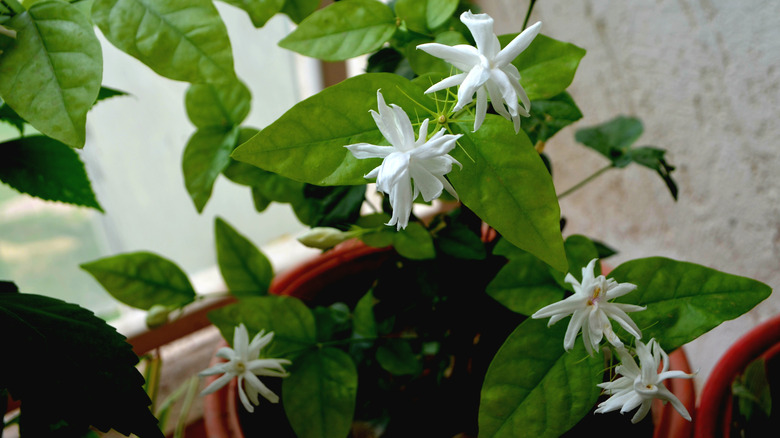
Keeping a jasmine plant from dying can be tricky if you're growing a variety that's not fond of your growing zone's winter temperatures. Bringing it indoors for the season is your best bet for a return to glory in the spring. Jasmine generally performs best when grown in bright light, ideally six or more hours of direct sunlight during a given day. When moving the plant inside, place it by the sunniest window you can find or beneath a grow lamp. Giving your jasmine a taste of indoor living a few hours at a time can help it acclimate in the fall.
Though sunlight is the top priority when choosing an indoor home for the plant, factor in humidity as well. A room with quite a bit of moisture in the air — say, a bathroom or laundry room — is ideal for potted jasmine. If these rooms are too dark or don't have space for plants, put your jasmine by a sun-drenched window in another part of your home and run a cool-mist humidifier nearby.
What if you live in a cool climate and have minimal indoor growing space? Don't worry, you may still be able to cultivate jasmine plants. If possible, choose winter jasmine (Jasminium nudiflorum), which thrives in zones 6 through 10. Its scent isn't as strong as that of other jasmine varieties, but this species isn't fazed by freezing and only needs extra protection in areas where temperatures colder than 5 degrees Fahrenheit are common. As an added bonus, it sometimes offers cheery yellow flowers on bleak winter days.