

Shovel Smarter, Not Harder: The Best Time To Remove Snow From Your Driveway
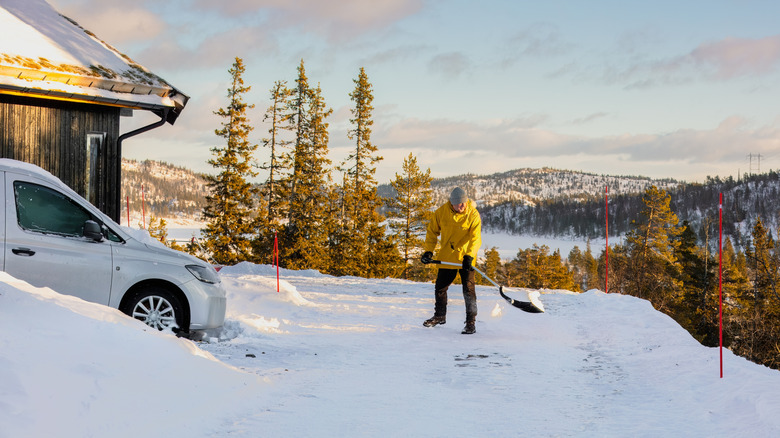
Removing snow from your driveway is hard work, especially if it's heavy or there's a lot of it. How you shovel this snow matters, of course, but so does timing. You can make the job safer and easier by clearing it from your driveway at the right moment. If you're planning to wield a shovel for this task, get ahead of the snowstorm as much as you can. This means giving driveway snow the heave-ho before rain, changing temperatures, or car tires complicate the situation. When freezing conditions are forecasted, also consider using a small amount of salt or another de-icing agent to pretreat your driveway ahead of the snow's arrival.
The longer you wait to shovel your driveway, the greater the likelihood that its snow will turn into slush or ice as other weather conditions move into the area. Rain can make the situation messy, while a mild day followed by a frigid night may create black ice that's especially dangerous because it's hard to see. Ice and slush are also slippery, which increases the risk of falls, and both tend to be heavier than dry, fluffy snow. In addition to raising the difficulty level of your shoveling task, heavy snow can lead to back strains if it's not handled properly.
Need more convincing? Shoveling promptly makes your driveway more functional for cars and prevents them from sliding around on snow that has mixed with rain or melted and refrozen. Plus, the more you drive on a patch of snow, the more compacted it's bound to become. This makes it harder to remove from your driveway and slick for both walking and driving, creating a hazard.
Let snow accumulation guide the timing of your shoveling
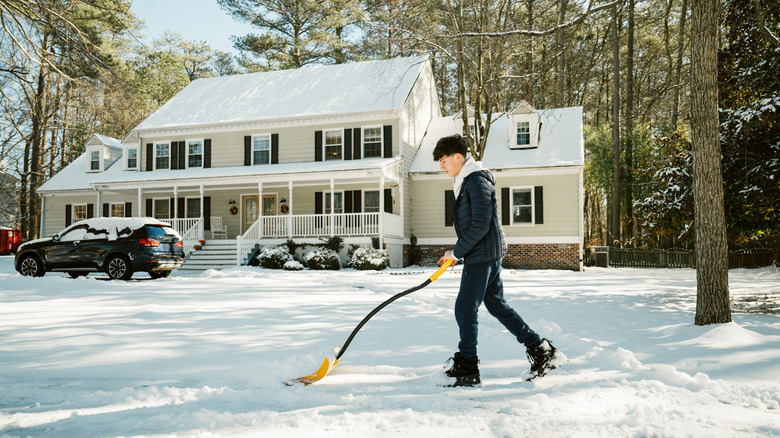
In general, it's best to begin shoveling your driveway when 2 to 3 inches of snow have built up. Starting the snow-removal process while the flakes are still falling is okay as long as you can see what you're doing, your boots' traction is adequate, and the weather isn't too cold, wet, or windy. Why 2 or 3 inches? Well, as more of the white stuff falls, the lowest layers get pressed down. This leads to compaction whether the snow is on your driveway or a giant glacier. It's also why should know how to calculate your roof's snow load.
A bit-by-bit approach to driveway shoveling is crucial if the snow is especially wet and heavy, as a big pile of it may be unmanageable. It's also important to take plenty of breaks when shoveling heavy snow and tackle relatively small sections so you don't overexert yourself. In other words, make a plan and listen to your body. When the snow is heavy, you'll need to factor in more time for removal — another reason to shovel sooner rather than later.
That said, shoveling driveway snow immediately isn't always realistic. You may be at work or looking after toddlers when a blizzard rolls in. Or, outdoor conditions might not be safe for shoveling when the snow is 2 to 3 inches high. Just do it as soon as you can, and remember that every little bit helps. Shoveling two or three times may be necessary when a lot of snow is expected. When the snowfall is more minimal, shoveling right after the storm finishes should be sufficient.